Chang Jae-hoon says 60% to go to manufacturing expansion, with 20% each for emerging technologies and local R&D, talent
PUNE, India — Hyundai Motor Group will allocate 60 percent of its planned $15.5 billion investment in India to expanding manufacturing capacity, with the remainder going toward emerging technologies, research and talent development, as the Korean auto giant steps up its push in one of the world's fastest-growing car markets.
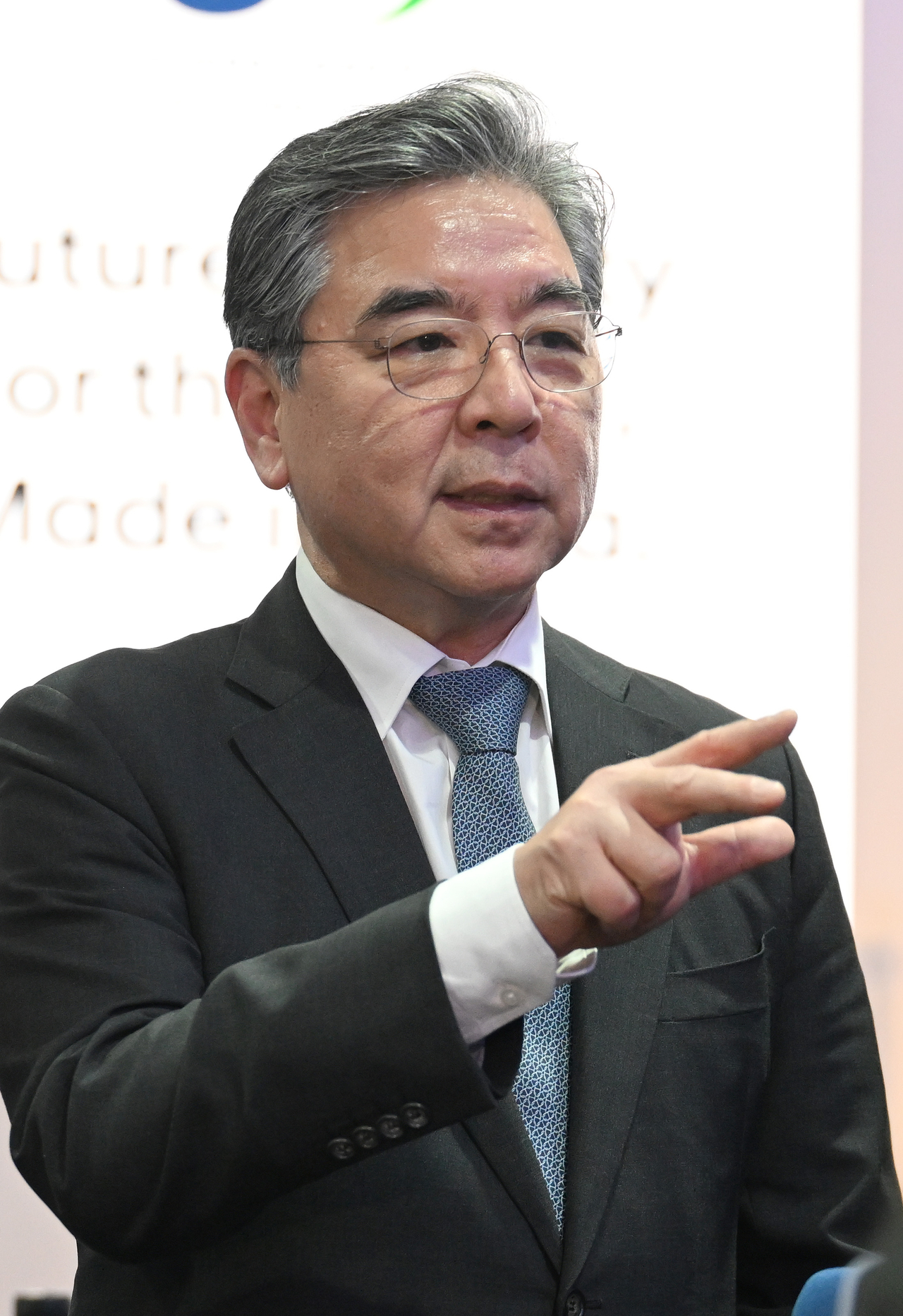
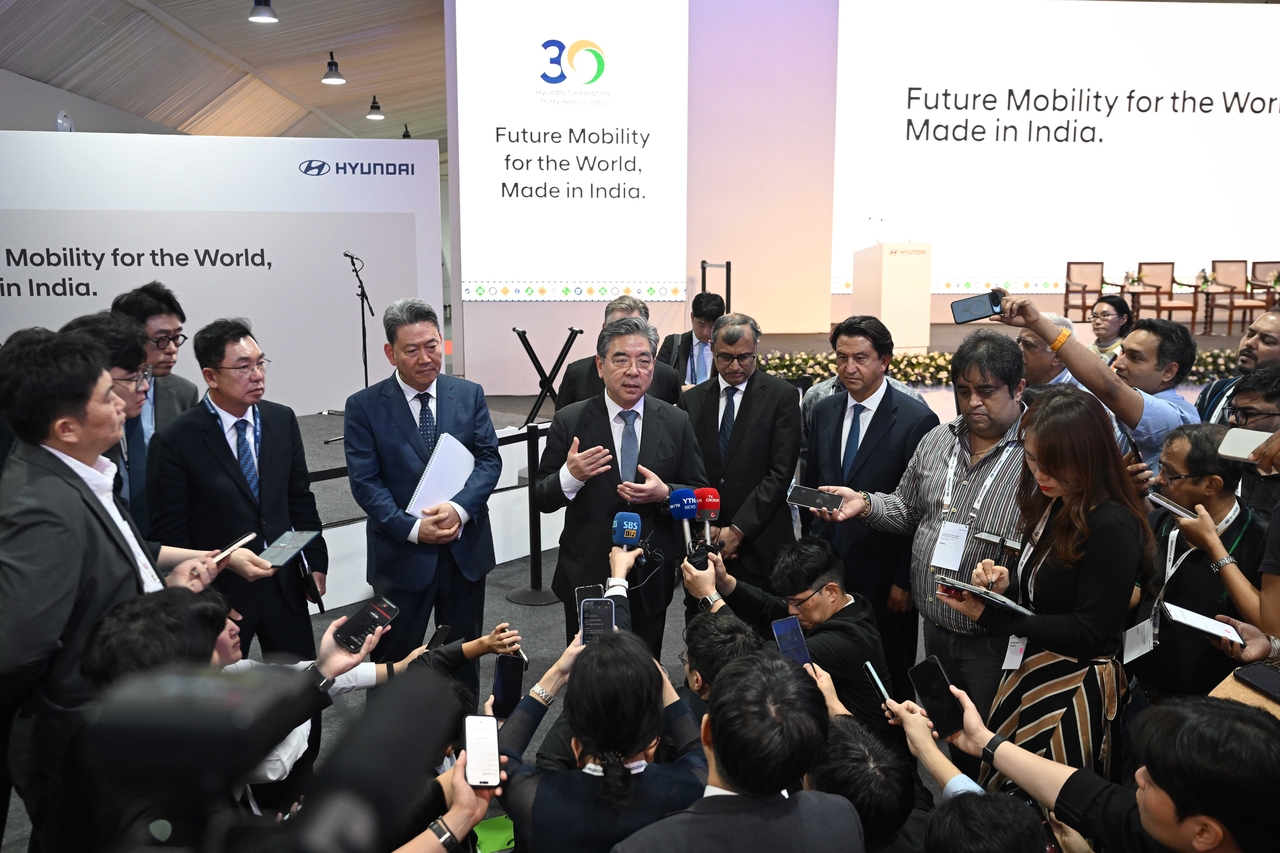
Vice Chair Chang Jae-hoon outlined the investment breakdown Wednesday following the inauguration of Hyundai Motor's new Pune plant, saying 20 percent would go toward technologies such as artificial intelligence and venture investments, while another 20 percent would support local research and development and talent recruitment.
The seven-year investment plan, running through 2032, underscores Hyundai's ambition to make India a major production, technology and export hub.
"At the group level, our immediate production plan is to pull forward the expansion of the Pune plant," Chang said, referring to plans to increase its annual capacity from 170,000 vehicles to 320,000 as quickly as possible.
He said Hyundai aims to reach 1.1 million units of annual production capacity in India by 2030, supported by competitive new models and faster production expansion.
A newly established investment entity, tentatively named HMG India, will coordinate the group's capital deployment and identify opportunities beyond conventional vehicle manufacturing.
Seo Gang-hyun, head of Hyundai Motor Group's corporate planning, said the entity would pursue open innovation and technology ventures, tapping into India's strong IT and software sector. It will also explore energy-related businesses, including power supply solutions, in line with the Indian government's priorities.
Group affiliates, including Hyundai Transys and Hyundai Glovis, are expected to expand their local investments as Hyundai increases production in Pune and Kia considers additional capacity.
Hyundai also plans to strengthen local R&D with testing and proving facilities designed for Indian driving conditions, supporting its efforts to develop vehicles and technologies tailored to the market.
Chang said the group aims to increase its combined market share beyond the roughly 18 percent recorded in 2025, although the pace would depend on overall market growth.
"Leveraging a broad lineup, including EVs, Hyundai and Kia aim to outpace competitors and capture growth faster than anyone else in the region," he said.
The group is also exploring hydrogen opportunities in India, where the government's push for energy independence could support wider adoption of clean mobility technologies.
Chang said Hyundai plans to work with central and local authorities to connect solar-powered hydrogen production with mobility applications, including passenger vehicles, trucks, buses and locomotives.
Hyundai Motor CEO Jose Munoz described India as the company's second-largest regional market after North America, ahead of Korea, and said the automaker would accelerate its electric vehicle rollout with new entry-level and SUV models.
Hyundai Motor India CEO Tarun Garg, meanwhile, outlined plans to regain market share after the company slipped to fourth place in passenger vehicle sales during the first nine months of this year.
The recovery strategy includes 26 new model launches, supported by additional capacity at the Pune plant, and four new EVs by 2029.
Hyundai also plans to deepen supply-chain localization, expanding from locally assembled battery packs to battery cell production, while investing in charging infrastructure. The Pune plant will eventually produce hybrid vehicles as part of the group's broader electrification strategy.
Exports are another priority. Hyundai Motor India has increased exports from 20 percent of its production five years ago to 24 percent this year and aims to raise the share to 30 percent by 2030, reinforcing India's role as both a major domestic market and a global manufacturing base.
hyejin2@heraldcorp.com