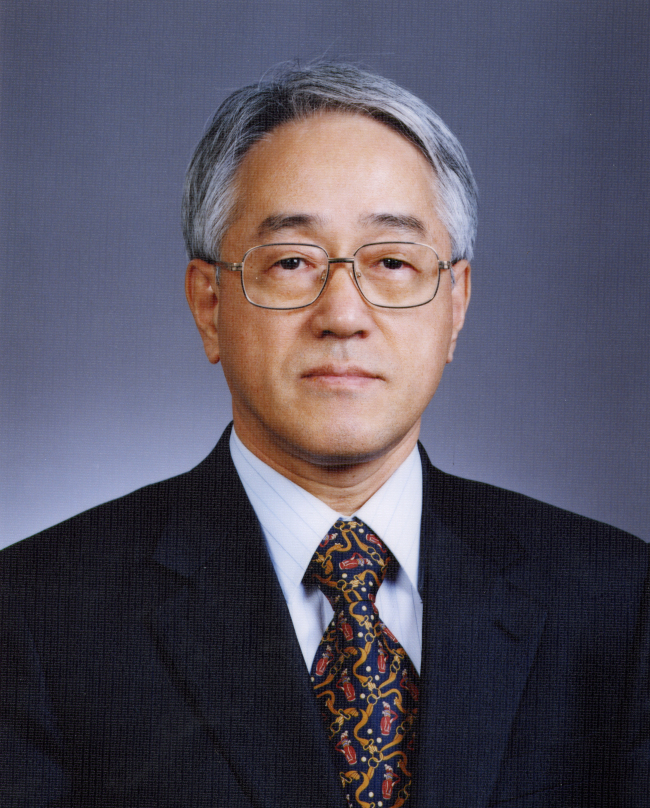
By Kim Byung-dong
It was September 2009 at Cold Spring Harbor Laboratory in Manhattan where an annual meeting on DNA replication and chromatin structure was held. During the conference, I met James Watson in his office of the former president of the CSHL and chancellor of the Watson School of Biology. He was very active at his age of 81. I gave him my recently-published book “Secret of the Unsolved Double Helix, Foldback Intercoil DNA” and he gave me in return a book on CSHL authored by his wife.
Then he told me an insightful story. In the 1980s-90s, the U.S. launched a “war against cancer,” under Watson’s leadership. Genes responsible for cancer were found. Molecular biology and medicine made vast strides, but cancer patients’ incidence did not drop nor did cure rates improve, leading him to believe the direction of the war against cancer was wrong to begin with.
Instead of isolating cancer-causing genes and using them for treatment, they should have followed a preventive strategy, which is being undertaken in Korea.
He pointed to the capsaicin synthase gene that was first identified in my molecular biology lab. Capsaicin, mainly responsible for the hotness of peppers, is known to have effects on pain relief, nerve soothing, obesity control and cancer prevention. It is natural to see fewer problems with obesity and cancer in countries where hot food consumption is high. No wonder Michelle Obama frequently appears on TV promoting the vegetable and hot pepper paste as part of America’s “war against obesity.”
While new drug development based upon synthetic chemicals faces challenges in increasing costs and safety regulations, new biopharm drugs based upon natural chemicals present a new paradigm with the possible help of biotechnology. That’s why scientists of related specialties and policymakers of this country need to put their heads together and develop effective measures.
In our daily food there are various natural chemicals that are good for the body. However, their content varies thousands to tens of thousands-fold depending on the variety and cultivation methods.
The best seeds and produce are made as a result of highly sophisticated science and technology such as breeding, plant production sciences, plant cell and tissue culture, plant pathology, molecular genetics, biochemistry, analytical chemistry, molecular biology, and bioinformatics. However, natural products, especially high molecular weight chemicals, are not very friendly for chemical synthesis and mass production. Medicinal herbs grow very slowly, and effective systems for cultivation and breeding are not established.
Each nation, by various international treaties, protects its native genetic resources from unauthorized transfer. This triggers international competition by all means. Well-established international genomics firms are now expanding their arena to even medicinal herbs and health foods by fusing science and technology.
It is time now for Korea to reinforce multidisciplinary R&D by breaking down the walls of specialization and encouraging the convergence of health foods and new drug development through the breeding of new seeds, production renovation and biotechnology. It should be emphasized that in developing new growth engines for an advanced economy, convergence of applied and basic research may prompt unexpected discoveries in science and quantum leaps in technology.
The writer is professor emeritus at Seoul National University Division of Plant Sciences. The opinions reflected in the article are his own. ― Ed.
종자와 바이오의약을 잇는 신성장동력 산업에 주목하자
koreaherald@heraldcorp.com