Carmaker reinstates 454 workers to revive two-shift system
PYEONGTAEK, Gyeonggi Province ― Four years ago, Kim Byung-mo, a 48-year-old factory worker at Ssangyong Motor, never imagined that his return to work could have taken so long.
In 2009, when the carmaker was placed under court receivership, Ssangyong made a conditional offer to 454 factory workers to call them back once the company regained traction.
The promise was finally fulfilled in January this year.
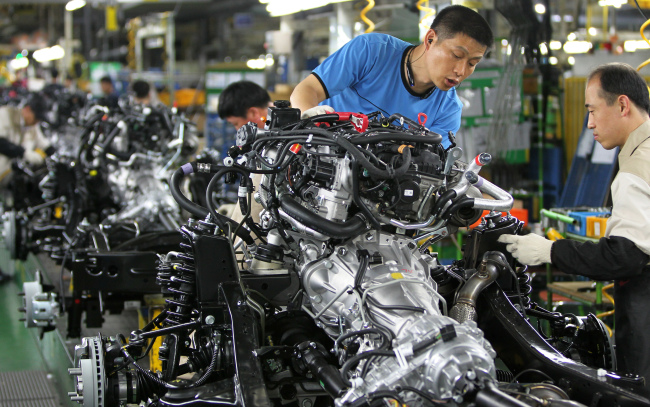
The reinstated workers, after receiving job training for weeks, started their first day of duty on Monday at the Pyeongtaek factory in Gyeonggi Province.
Kim, who used to handle the logistics of auto parts, has been assigned to inspect color quality of vehicles at the third assembly line, where most reinstated workers have been dispatched.
“It’s a new job but I’m trying to adapt to it with help from my colleagues,” said the father of two. “While working as a part-timer, my income was almost cut in half. Now I feel much relieved.”
The reinstatement of workers came after Ssangyong decided to revive a two-shift working system at the factory to meet the growing demand for its vehicles. The company had to stop night-shift work four years ago.
Its car sales, after years of struggling, have been showing some sign of recovery in recent months. In the first quarter, its global car sales increased 18.2 percent to 31,265 from a year ago, largely driven by its flagship SUVs such as the Korando Sports and the Rexton W.
More recently in April, the carmaker sold 12,607 vehicles, the highest monthly sales figure since December 2006.
“With extended working hours, exsiting workers had to see their overtime allowance get reduced but they agreed to share more jobs with their colleagues,” said Kim Kyu-han, the company’s union leader.
Ssangyong expected its production volume would increase from the current 4,000 units to 6,000 per month and to 74,000 units per year under the new working system.
The night shift will also contribute to resolving piled-up orders for face-lifted models and helping the carmaker achieve its sales goal of 149,300 units this year.
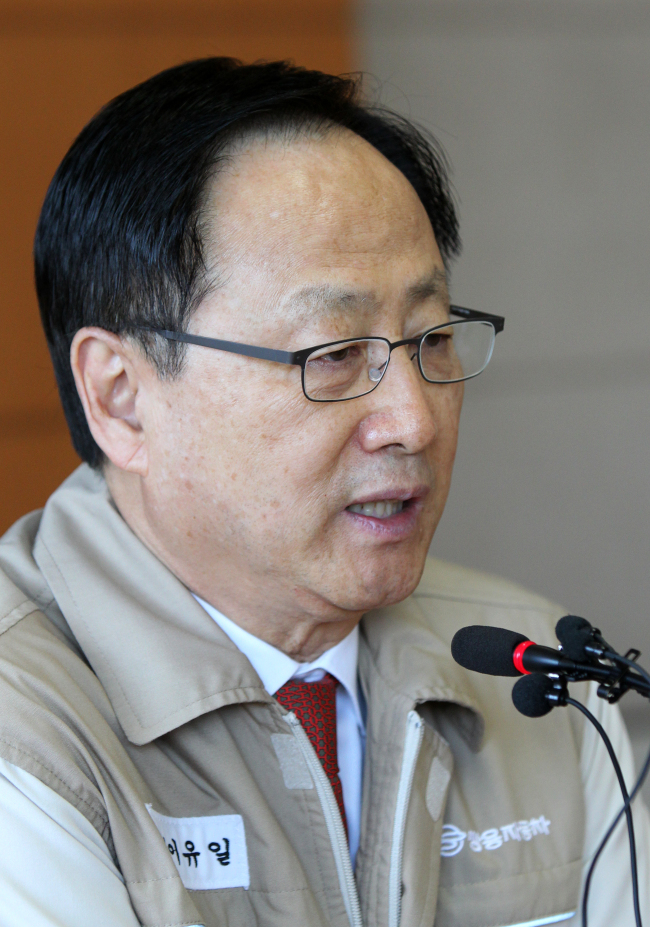
“We expect our sales could reach 160,000 to 170,000 next year,” said Ssangyong Motor CEO Lee Yoo-il, adding that the company could see a turnaround when its car sales exceed the 170,000 mark.
About the possibility that the company could rehire some 2,000 workers who lost their jobs during the 2009 restructuring, Lee hinted that he could consider it when the carmaker starts producing a new compact SUV as early as from 2015.
India’s Mahindra & Mahindra, Ssangyong’s largest shareholder, promised a capital increase of 80 billion won in January to invest into the new car project called "X100."
By Lee Ji-yoon ()
koreaherald@heraldcorp.com