World-class airport connectivity, international conference experience, global industry clusters bolster city's bid
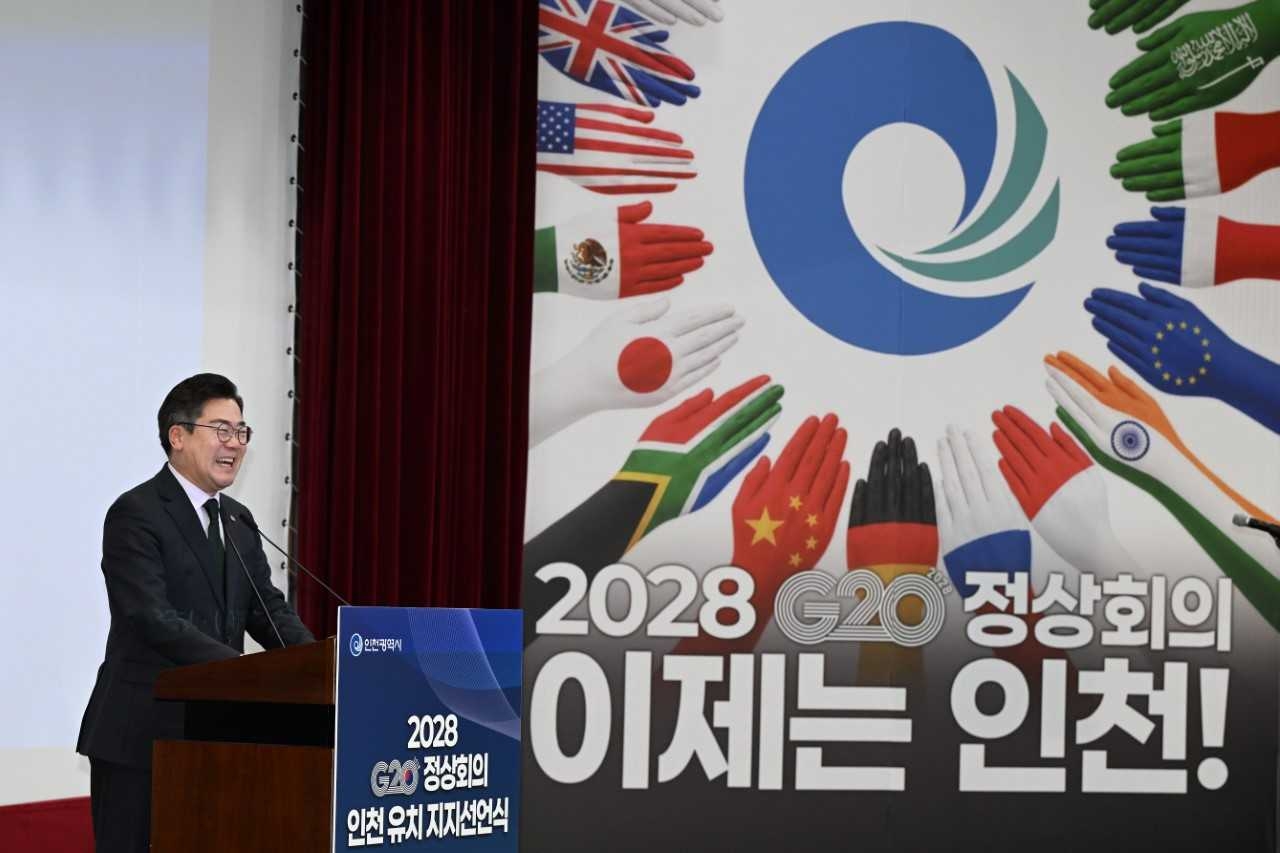
The city of Incheon is stepping up its campaign to host the 2028 Group of 20 summit, mobilizing civic groups, business leaders and diplomatic networks as it seeks to strengthen its standing on the global stage.
Led by Incheon Mayor Park Chan-dae, the campaign has expanded beyond City Hall to encompass the city's business community, academia and civil society, with 135 organizations having declared their support for the bid.
For Incheon, home to some 3.05 million people, hosting the summit would offer an opportunity to establish itself as a global diplomatic and economic hub, building on its international airport, advanced industrial clusters and experience hosting major international gatherings.
Building diplomatic, public support
Incheon launched a task force in September to coordinate its bidding strategy, bringing together municipal departments and affiliated organizations, including the Incheon Tourism Organization.
The city subsequently established a 25-member public-private bidding committee comprising figures from politics, business, diplomacy and the conventions industry. Rep. Maeng Seong-gyu, a member of the National Assembly's Foreign Affairs and Unification Committee, chairs the committee.
Park has also sought to raise the city's profile with foreign diplomats.
On Nov. 13, the mayor hosted diplomatic representatives from 36 countries at Gyeongwonjae by Walkerhill in Songdo International City, outlining Incheon's strengths as a potential summit venue and seeking their support.
Noting that 2028 marks the 20th anniversary of the inaugural G20 leaders' summit, Park expressed hope that Incheon could carry forward the spirit of international cooperation that brought world leaders together during the 2008 global financial crisis.
The campaign has gained momentum locally.
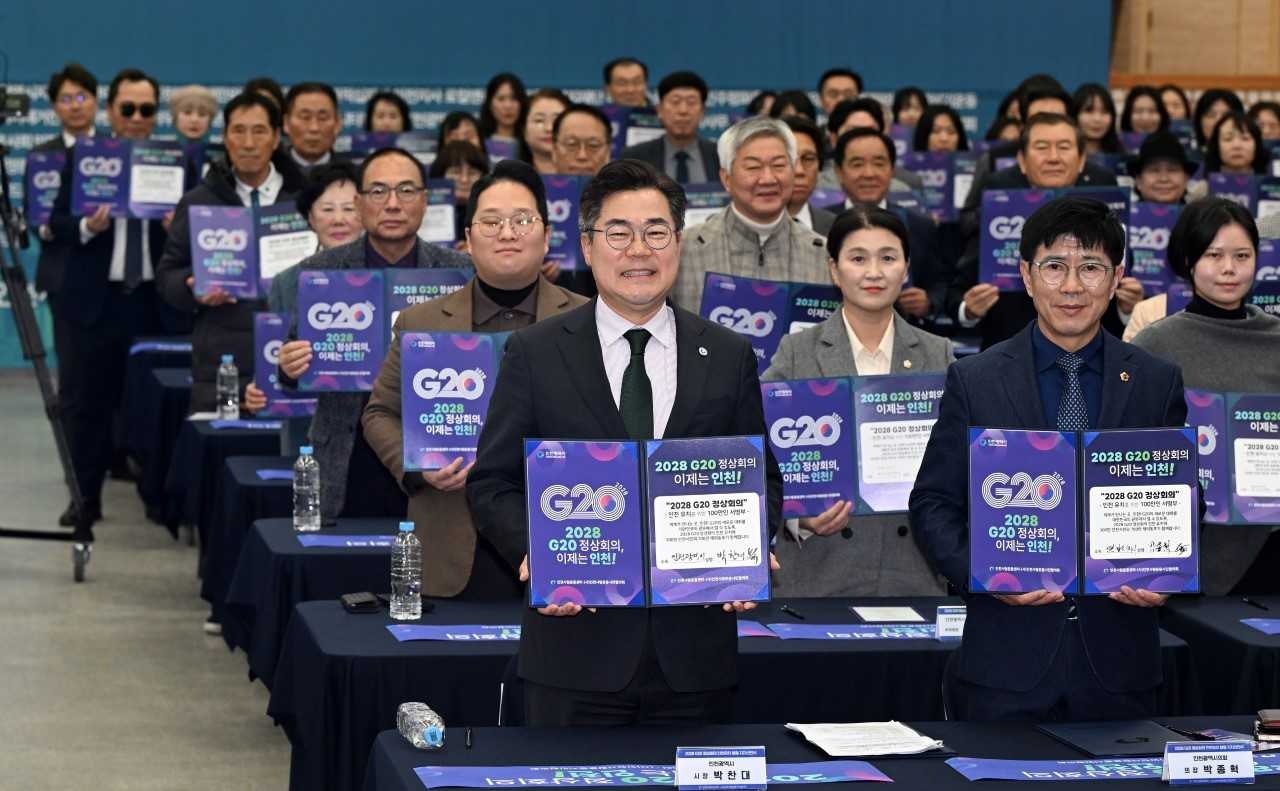
Representatives of 135 civic, business, academic and public-sector organizations recently issued a joint declaration supporting the bid. Around 130 participants, including Park and Incheon Metropolitan Council Chair Park Jong-hyuk, attended the event.
Three major civic organizations, including the Incheon chapter of the Saemaul Movement, have joined a series of public campaigns backing the city's bid.
What Incheon brings to the table
At the heart of Incheon's pitch is its connectivity.
Songdo International City, a business district equipped with convention facilities and international hotels, is approximately 25 minutes by car from Incheon Airport, according to the city.
The proximity of the airport, conference venues and accommodation facilities could simplify logistics and security arrangements for visiting delegations.
Incheon also has a track record of hosting major international events, including a G20 Sherpa meeting in 2010, the 2014 Asian Games, the Asian Development Bank's annual meeting in 2023 and senior officials' meetings of the Asia-Pacific Economic Cooperation forum in 2025.
Beyond logistics, the city is highlighting its concentration of international organizations and advanced industries as another selling point.
Songdo is home to the headquarters of the Green Climate Fund, a major international institution financing climate action in developing countries, as well as a cluster of global biopharmaceutical companies.
Incheon is also pursuing artificial intelligence-powered logistics innovation at its airport and seaport.
The city sees these strengths as closely aligned with key G20 policy areas, including climate action, sustainable growth, digital transformation and global supply chain resilience.
Beyond the summit
Incheon hopes hosting the G20 will generate economic opportunities extending well beyond the leaders' gathering itself.
The city estimates that summit-related events, including ministerial and working-level meetings, could span more than 100 days and attract between 10,000 and 15,000 visitors, including government officials, international organization representatives and foreign journalists.
Such an influx could benefit local industries ranging from hospitality and tourism to transportation, interpretation and convention services, while creating networking opportunities for smaller businesses.
The longer-term ambition, however, is to raise Incheon's international profile and strengthen its competitiveness as a destination for global business and international conferences.
South Korea is scheduled to host the G20 summit in November 2028, with the host city to be selected through a central government bidding and evaluation process.
For Incheon, the challenge now is to translate its infrastructure, international credentials and growing local support into a compelling case for hosting one of the world's most consequential diplomatic gatherings.