Hanchon operator targets 100 billion won in revenue by 2030, expanding beyond restaurant franchises
Iyeon FnC, the South Korean restaurant operator behind beef-bone soup chain Hanchon Seolleongtang, is looking to nearly double its annual revenue by 2030 by expanding its packaged food business and using artificial intelligence to turn decades of culinary know-how into standardized manufacturing processes.
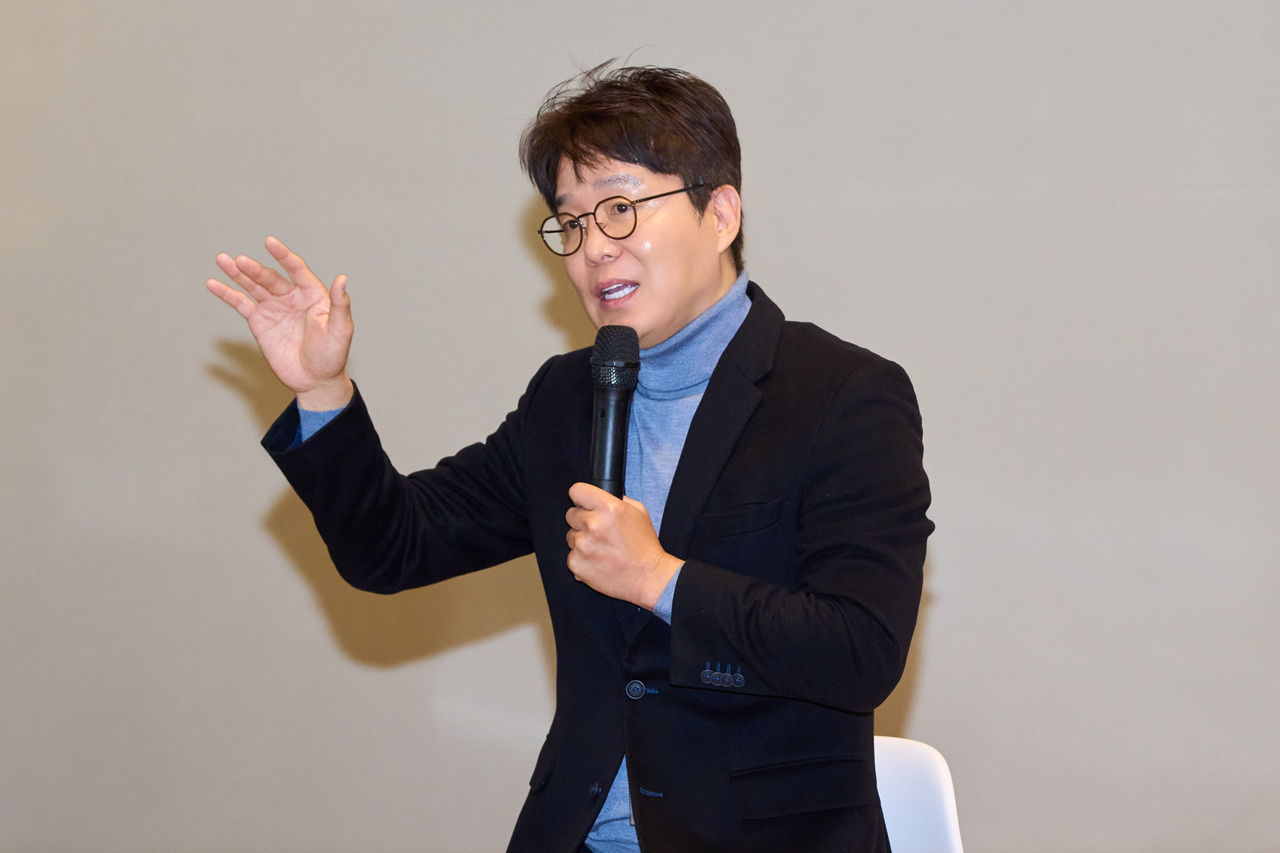
The company is targeting 100 billion won ($74.5 million) in annual sales by 2030, up from an estimated 55 billion won this year, CEO Chung Bo-yeon said Wednesday during a media briefing at the company's factory in Osong, North Chungcheong Province.
“Preserving tradition is not simply about repeating the methods of the past, but about carrying its value forward as times change,” Chung said.
The company traces its roots to a small beef-bone soup restaurant called Gammiok that opened in Bucheon, Gyeonggi Province, in 1982. Today, it operates restaurant brands Hanchon Seolleongtang and Yuksudang, a chain specializing in Korean soups served with rice.
“Our future is not simply about increasing the number of franchise outlets,” Chung said. “We want to connect manufacturing, research and development, franchise operations and the consumer market through our expertise in Korean food production.”
Its next phase of growth will increasingly come from supermarket shelves and convenience stores rather than restaurant expansion alone.
Sales of ready-made meals rose 57 percent from a year earlier in the first 10 months of 2026 to exceed 6.5 billion won. The company expects food manufacturing, including ready-made meals and contract production for other brands, to account for as much as 30 percent of its revenue by 2030.
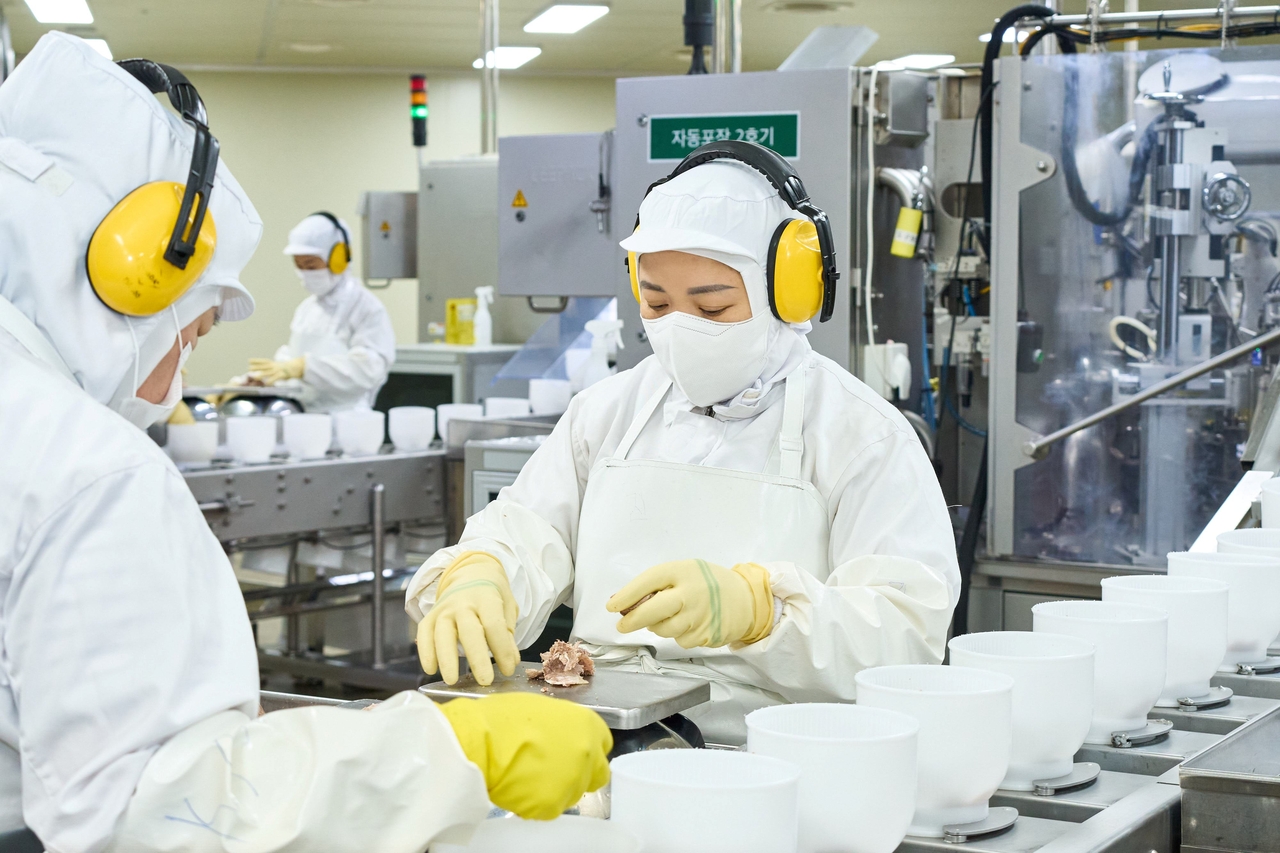
Central to that strategy is its Osong factory, built in 2019 with an investment of about 25 billion won. Equipped with seven eight-ton broth extraction tanks, the facility has an annual production capacity equivalent to about 75 million bowls of seolleongtang.
Originally designed primarily to supply franchise restaurants, the factory now produces 74 different products, up from 15 when it opened.
In July, Iyeon FnC introduced a manufacturing execution system to track everything from raw ingredients and processing conditions to production yields and product quality.
The company also collects real-time sales, profitability and ordering data from franchise outlets through its proprietary management app, Han-Q. It has invested more than 3 billion won in AI and related systems.
The next step is to connect factory and restaurant data, using AI to forecast demand, adjust production volumes and guide product development while reducing taste variations across production batches.
jyoungseon8@heraldcorp.com