Banks, brokerages face pressure to commit, but have limited room
South Korean financial authorities are moving to expand the roughly 10 trillion won ($7.45 billion) stock market stabilization fund, pressing banks and brokerage firms to make additional contributions.
The move comes as market jitters have yet to subside despite a series of measures announced by regulators to stabilize the market.
According to industry sources, state-run Korea Development Bank has recently reached out to major financial institutions, including financial holding companies and brokerage firms, to gauge their willingness to make additional contributions to the stabilization fund.
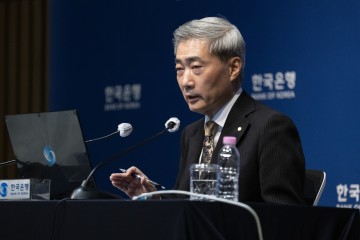
Earlier, the country's top finance policymakers -- including Finance Minister Lee Hyoung-il, Bank of Korea Gov. Shin Hyun-song, Financial Services Commission Chairman Lee Eog-weon and Financial Supervisory Service Gov. Lee Chan-jin -- agreed Sunday to begin preparations for the immediate activation of the stabilization fund, depending on market conditions.
The government also left open the possibility of expanding the fund beyond its current 10.76 trillion won, saying that any decision on its size would be reviewed in light of market conditions when the fund is activated.
The push to increase the fund reflects concerns that its current size may be insufficient to cushion the market against recent sharp declines. The existing 10.76 trillion won represents just 0.28 percent of the Kospi's current market capitalization of 3,847.66 trillion won.
"The Kospi’s market cap has nearly quadrupled to 3,848 trillion won from 1,083 trillion won when the market stabilization fund was established in March 2020. Given the significant expansion in market size, the fund should also be enlarged accordingly to help stabilize the stock market," explained Lim Jae-kyun, an analyst from KB Securities.
But hurdles remain in expanding the fund.
With securities firms reportedly reluctant to make additional contributions amid deteriorating earnings since the third quarter, and banks having shouldered a larger share of the funding when the fund was established, its eventual size is expected to depend largely on how much capital banks are willing to commit.
Furthermore, despite authorities' pledge of immediate activation, the fund may not be ready for immediate deployment, as its investment committee must first revise operating guidelines, including intervention triggers and deployment amounts at different levels of Kospi declines.
How does the fund come to the rescue?
Q. What is the goal?
A. The stock market stabilization fund serves as a last-resort measure to stem sharp market declines.
Q. How does it work?
A. Once activated, the fund mobilizes these contributions to purchase shares in the stock market, providing liquidity and helping cushion sharp sell-offs. The scale and timing of purchases are determined based on market conditions and the fund's operating guidelines. Rather than holding the money upfront, the fund operates under a "capital call" structure, meaning participating institutions are required to transfer their pledged contributions when the FSC decides to activate the fund.
Q. How often is the fund put to use?
If activated, it would mark the fund's first actual intervention since 2008. The current 10.76 trillion won fund created during the 2020 COVID-19 market turmoil was never deployed, while preparations to reactivate it in 2022 did not lead to actual purchases.
Established five times since 1990, the fund has been deployed only three times, most recently during the global financial crisis, when 515 billion won was injected into the stock market between November 2008 and March 2009.
silverstar@heraldcorp.com