Drawing on the Art Institute of Chicago's collection, the show places the painter among her modernist peers
Anyone who makes the trip to Gwacheon, a half-hour drive south of Seoul, hoping to see Georgia O'Keeffe's famous flowers will come away disappointed. Those large, sumptuous petals, still seen by many as erotic metaphors for the female body, are nowhere to be found in "Georgia O'Keeffe and American Modernism," which opens Thursday at the Gwacheon branch of the National Museum of Modern and Contemporary Art, Korea.
That the show offers an unfamiliar version of O'Keeffe owes more to circumstance than to design. There are only 16 of her paintings here, and they all come from a single museum, the Art Institute of Chicago, to which she donated much of her husband's collection after his death.
Then again, O'Keeffe’s work rarely leaves the United States, and Korea has never seen this many pieces at once, organizers say. Taking up the remaining space are more than 100 works from a group of modernist artists who, like O'Keeffe, set out to make art that was distinctly American.
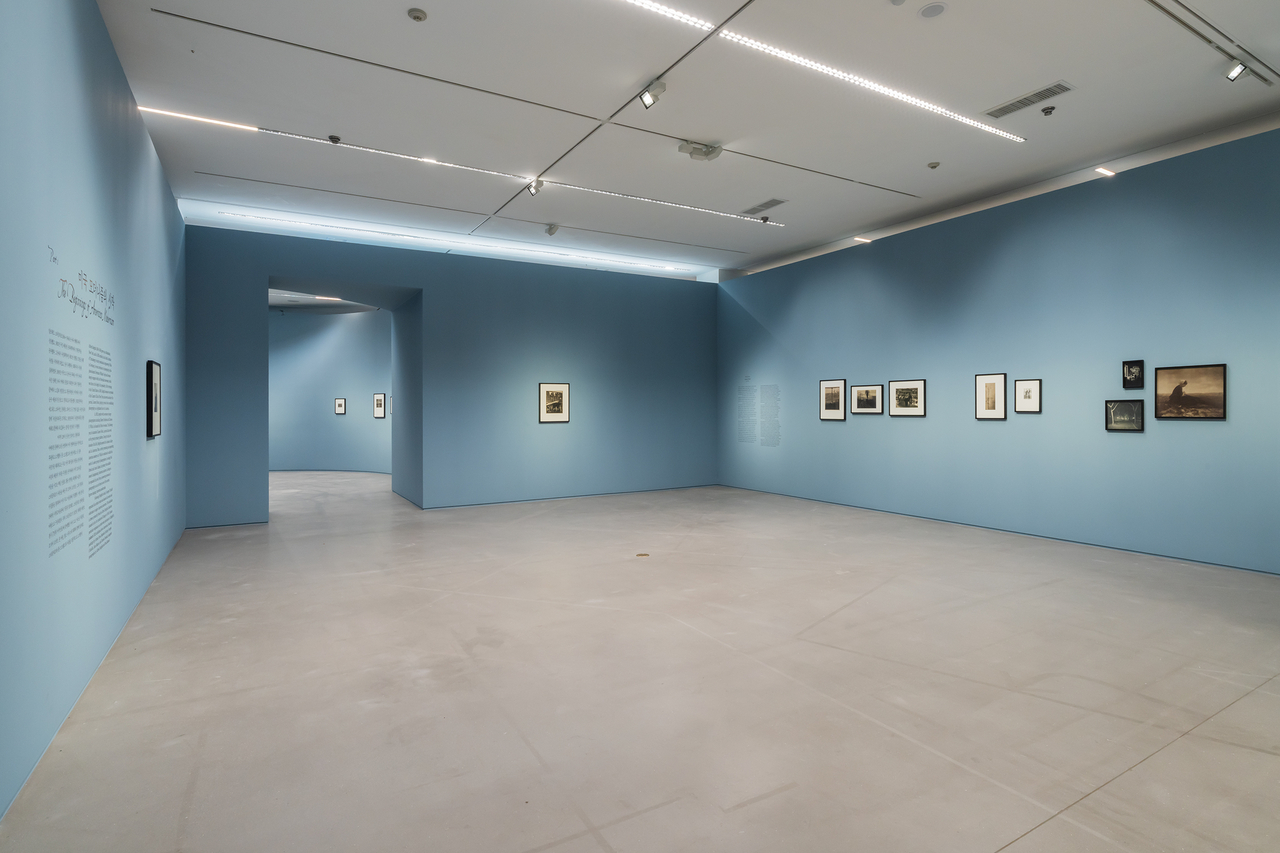
It may seem odd that a show with O'Keeffe's name on the door should open with a section consisting largely of photographs by Alfred Stieglitz, her dealer, patron, mentor and later husband.
Through his New York galleries and connections, Stieglitz introduced European modernism to America and championed the young Americans who made it their own. He was the one who made O'Keeffe famous, and also the one who boxed her into an image of his own making.
In 1921, Stieglitz put dozens of his photographs of her on public view, many of them nudes, inviting the male-dominated art world of the day to read her work as an expression of her sexuality. That reading clung to her flowers for decades, though O'Keeffe refused to accept it.
"When people read erotic symbols into my paintings they're really talking about their own affairs," she once said. The Stieglitz photographs on view, from the crowded deck of "The Steerage" (1907) to close studies of O'Keeffe's hands and neck, leave that part of the story out.
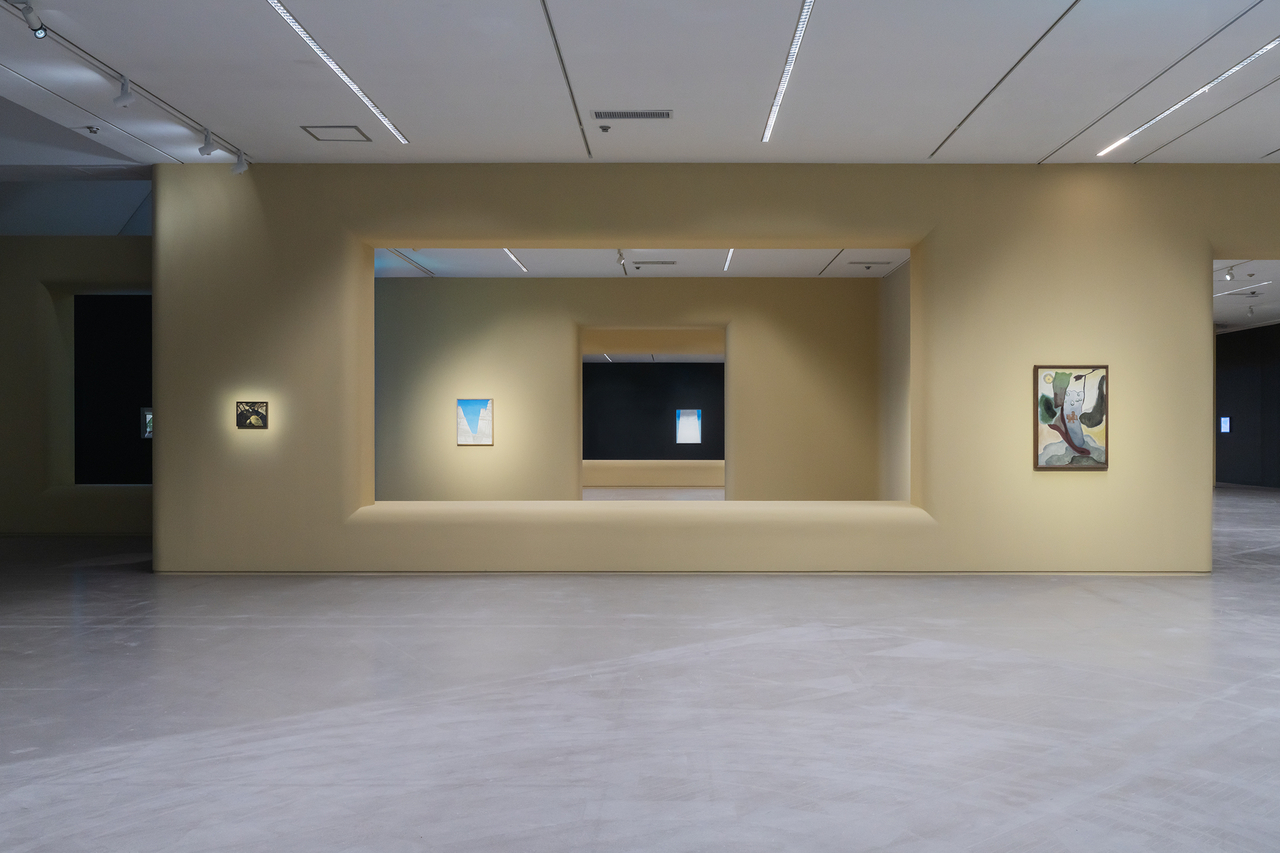
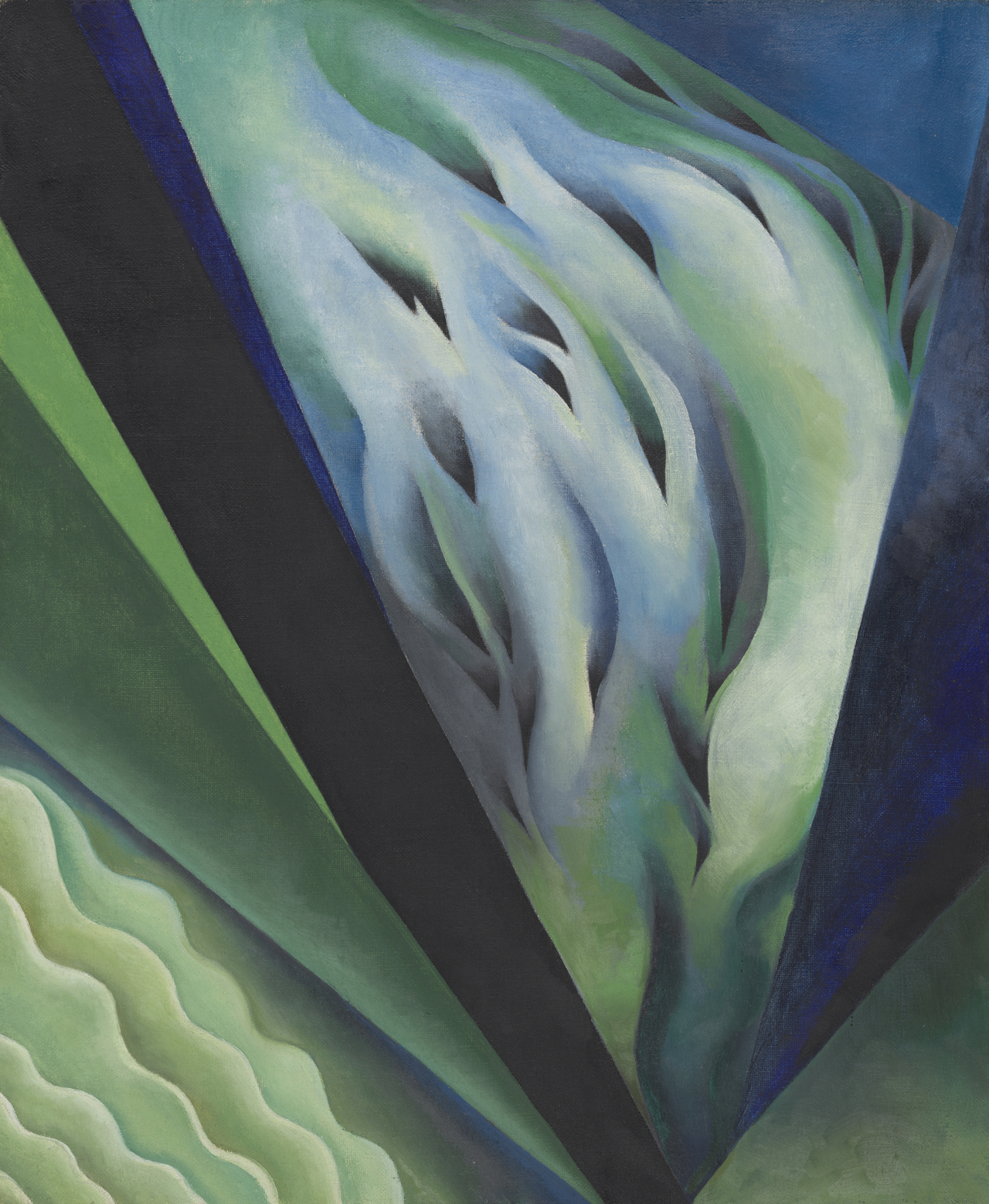
In the second section, "The Development of American Modernism," O'Keeffe's work hangs among that of her peers. "Blue and Green Music" (1919-1921), a near-translucent abstraction, grew out of her interest in Wassily Kandinsky's idea that painting could work like music. "Ballet Skirt or Electric Light" (1927), a haze of gray folds, softens the hard edges of Cubism into something more organic.
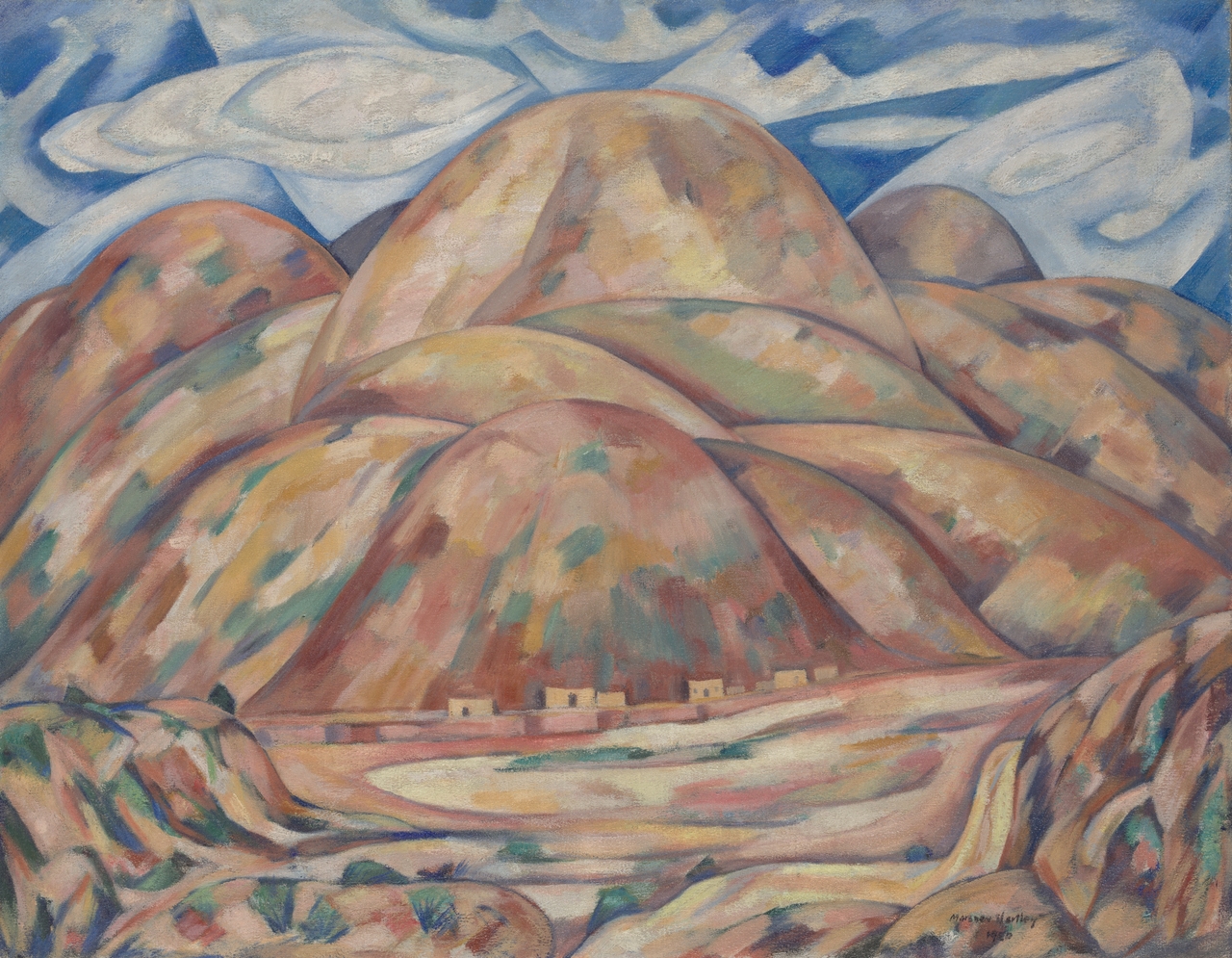
Her contemporaries did much the same, each from a different starting point: Charles Demuth pares the factories of his hometown down to Cezanne-like geometry in "...And the Home of the Brave" (1931), while Marsden Hartley paints the American West in the bold strokes of the Fauves in "Landscape No. 3, Cash Entry Mines, New Mexico" (1920).
O'Keeffe's artistic autonomy is on full display in the final section, "Beyond American Modernism: Georgia O'Keeffe in New Mexico," representing the period when she was away from Stieglitz's orbit in New York.
She first went to New Mexico in 1929, when her marriage with Stieglitz was falling apart, and returned almost every year before settling there for good in 1949. Along the way, she made trips to Canada and Peru. Alone in the desert, she turned to the land and the sun-bleached bones of animals scattered across it, which would become as much her signature as the flowers.
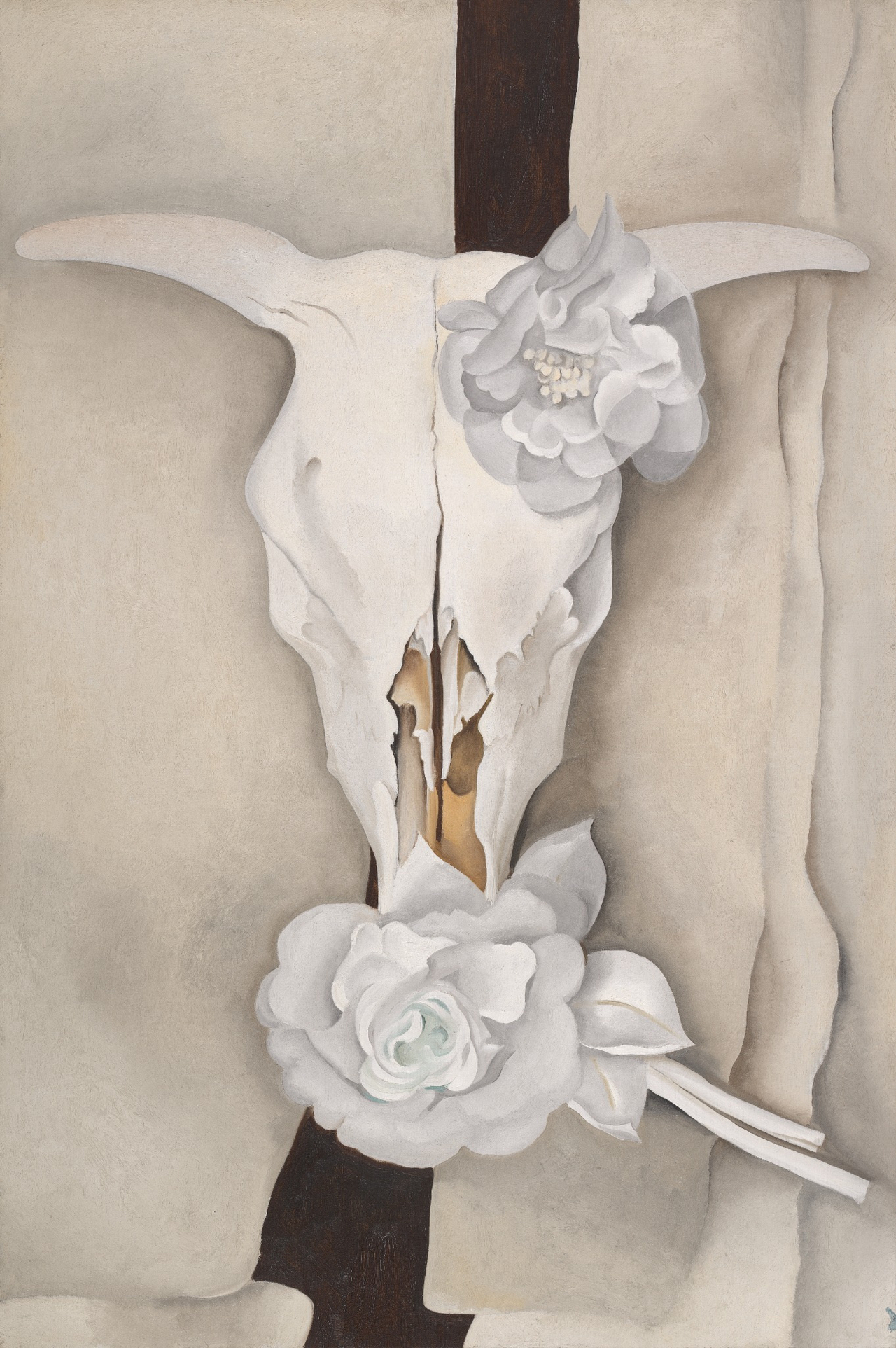
"Cow's Skull with Calico Roses" (1931), among the first of her bone paintings, pairs a skull with the cloth flowers used to decorate local graves, an image that she would return to in the years to come.
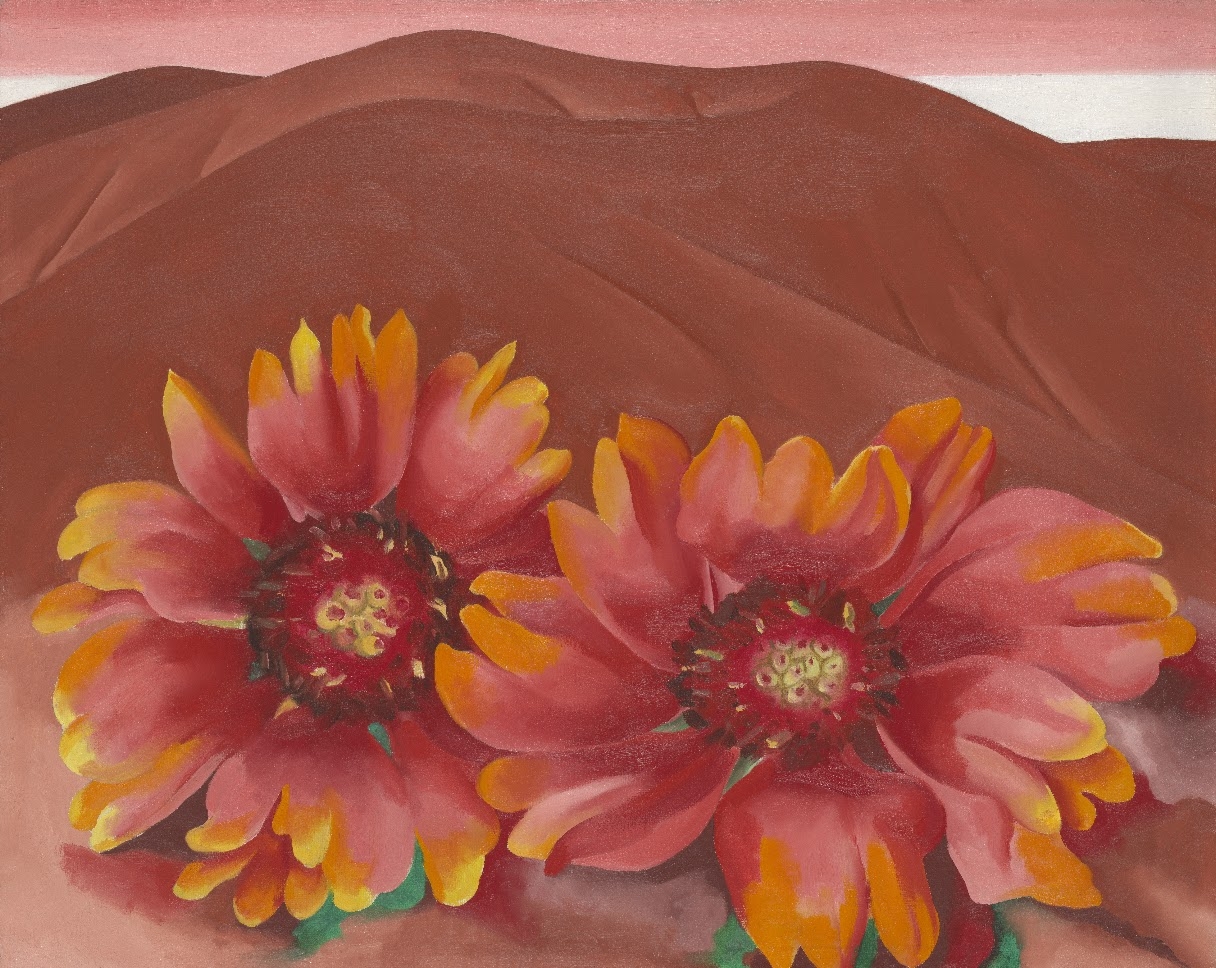
Her landscapes are sparse but never dull, with many verging on abstraction. "It Was Yellow and Pink III" (1960), based on views from an airplane, reduces a river to a yellow line winding across pink. "Red Hills with Flowers" (1937) sets two oversized flowers against distant red hills.
The show's logistical limitations, then, let O'Keeffe stand on her own, much as the desert once did. What remains is the story as O'Keeffe would have told it: that of a woman who traveled wherever she pleased and painted what caught her eye.
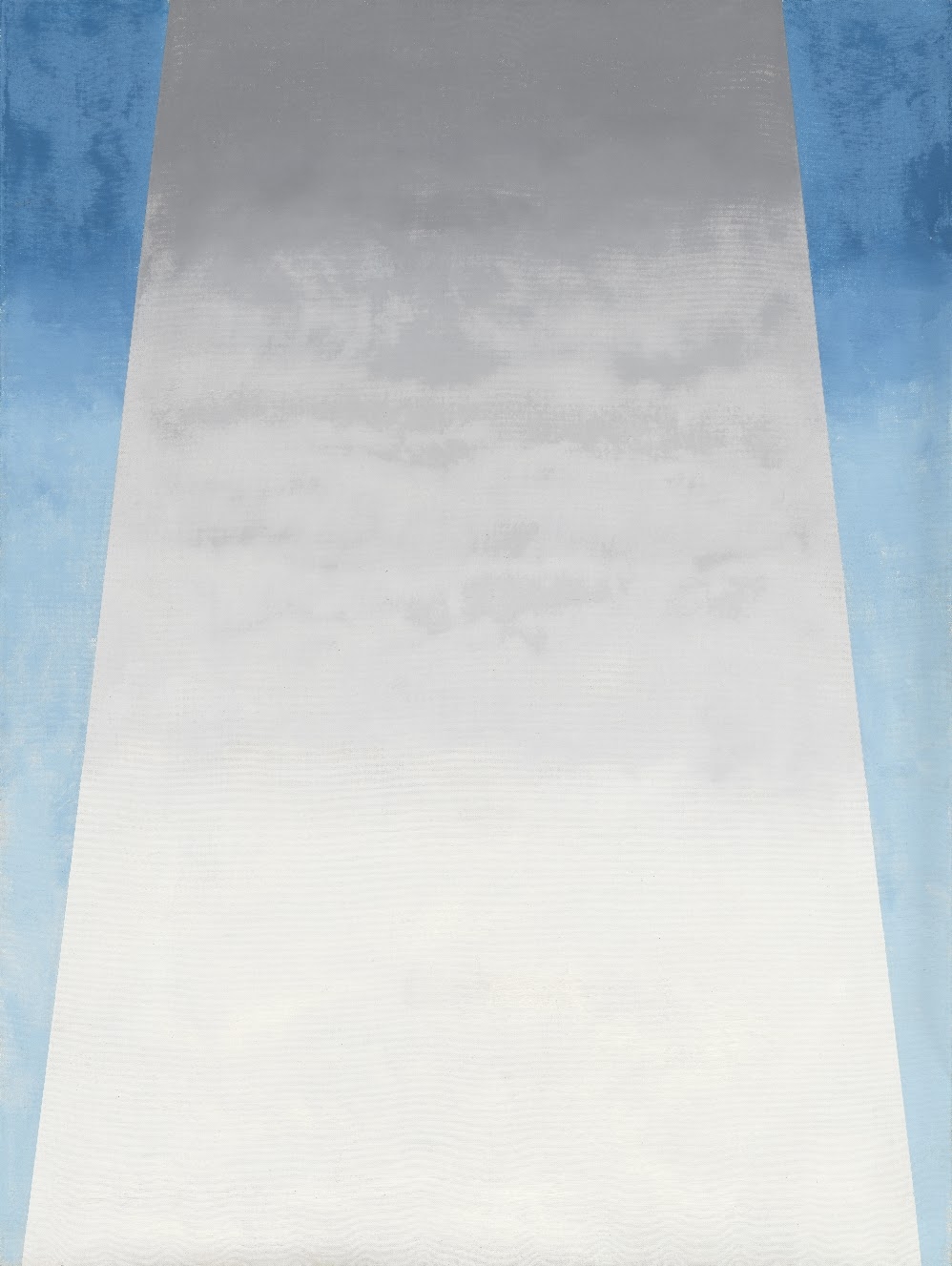
"Ballet Skirt or Electric Light" was first shown in 1928 as "White Rose — Abstraction." O'Keeffe renamed it in 1943 to shake off the flower readings that she had long resisted.
"The White Place in Sun," painted the same year, shows pale cliffs rising into an empty blue sky.
"Georgia O'Keeffe and American Modernism" is at MMCA Gwacheon until March 21. It travels to the Museum of Contemporary Art Busan in April.
moonkihoon@heraldcorp.com