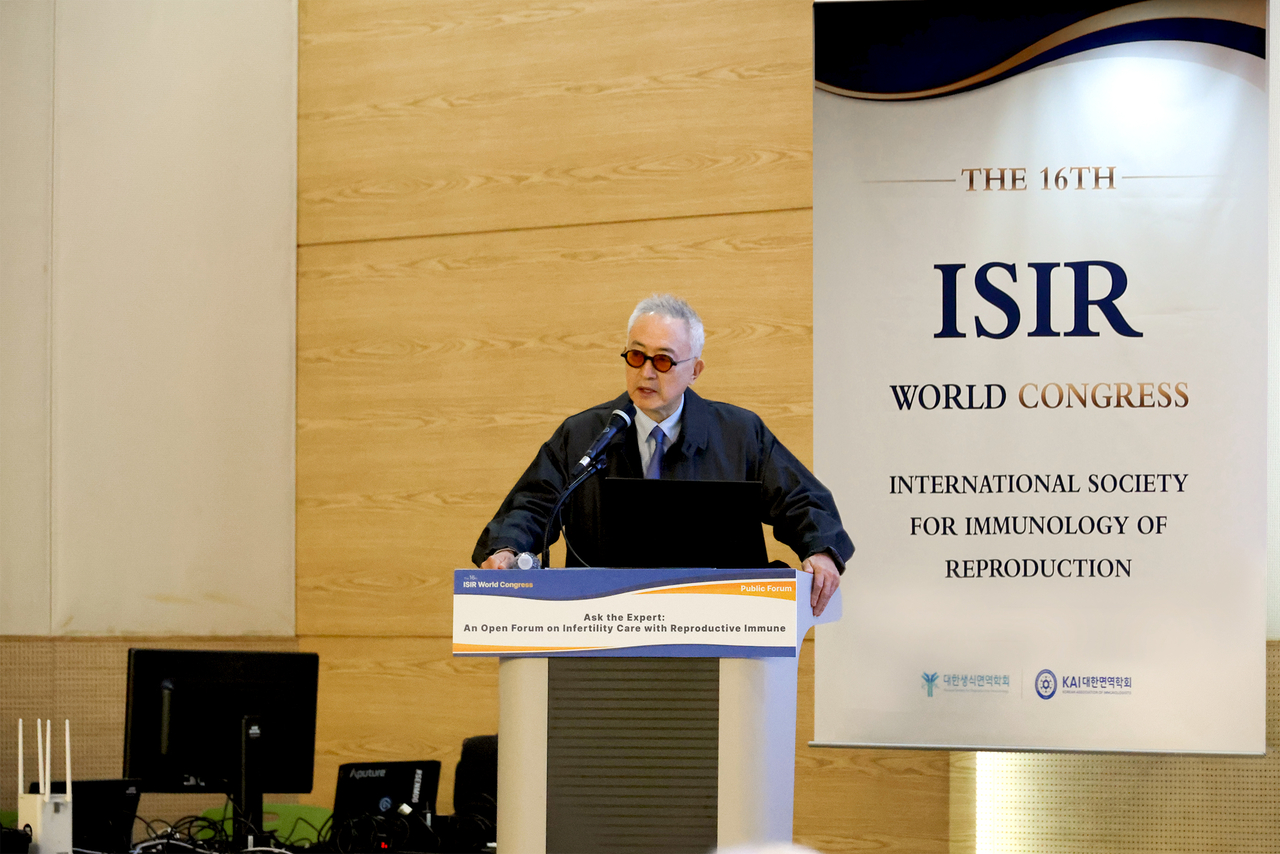
Dr. Cha Kwang-yul, chairman of CHA Global Research Institutes at CHA Medical Center and CHA Bio Group, has unveiled plans to advance cell-based treatments for hard-to-treat diseases and explore new approaches to healthy aging.
Cha outlined his vision during a keynote address at the 16th World Congress of the International Society for Immunology of Reproduction, held Nov. 5-8 at BEXCO in Busan, the group said Thursday.
Central to his strategy is the development of "K-Cells," cells selected or developed to meet the specific functional and quality requirements of different diseases and treatments.
Cha proposed identifying suitable cell donors through medical histories, three-generation family records and whole-genome sequencing, which analyzes a person's complete genetic makeup to identify variations associated with disease risks.
He also highlighted somatic cell nuclear transfer, a technique used to generate embryonic stem cells by transferring the nucleus of a body cell into an egg cell whose nucleus has been removed.
Another focus of Cha's research vision is ovarian aging and its potential implications for women's long-term health and longevity. He cited studies associating later menopause with longer lifespan, although the findings do not establish a causal relationship.
Separately, Bundang CHA Medical Center is conducting early-stage clinical research into umbilical cord-derived mesenchymal stem cells as a potential treatment for premature ovarian insufficiency, a condition in which ovarian function declines before age 40. The treatment remains experimental, with further studies needed to establish its safety and effectiveness.
To support the broader research initiative, CHA Bio Group plans to open its Cell Gene Bioplatform in early 2027, integrating cell banking, manufacturing and clinical development. The facility will use artificial intelligence to help match stem cells and immune cells with specific therapeutic needs.
More than 400 people attended Cha's keynote, which also prompted inquiries about potential international research collaborations, according to the group.
yejinlim@heraldcorp.com