Executive highlights lending, collateral use and liquidity as keys to wider institutional adoption
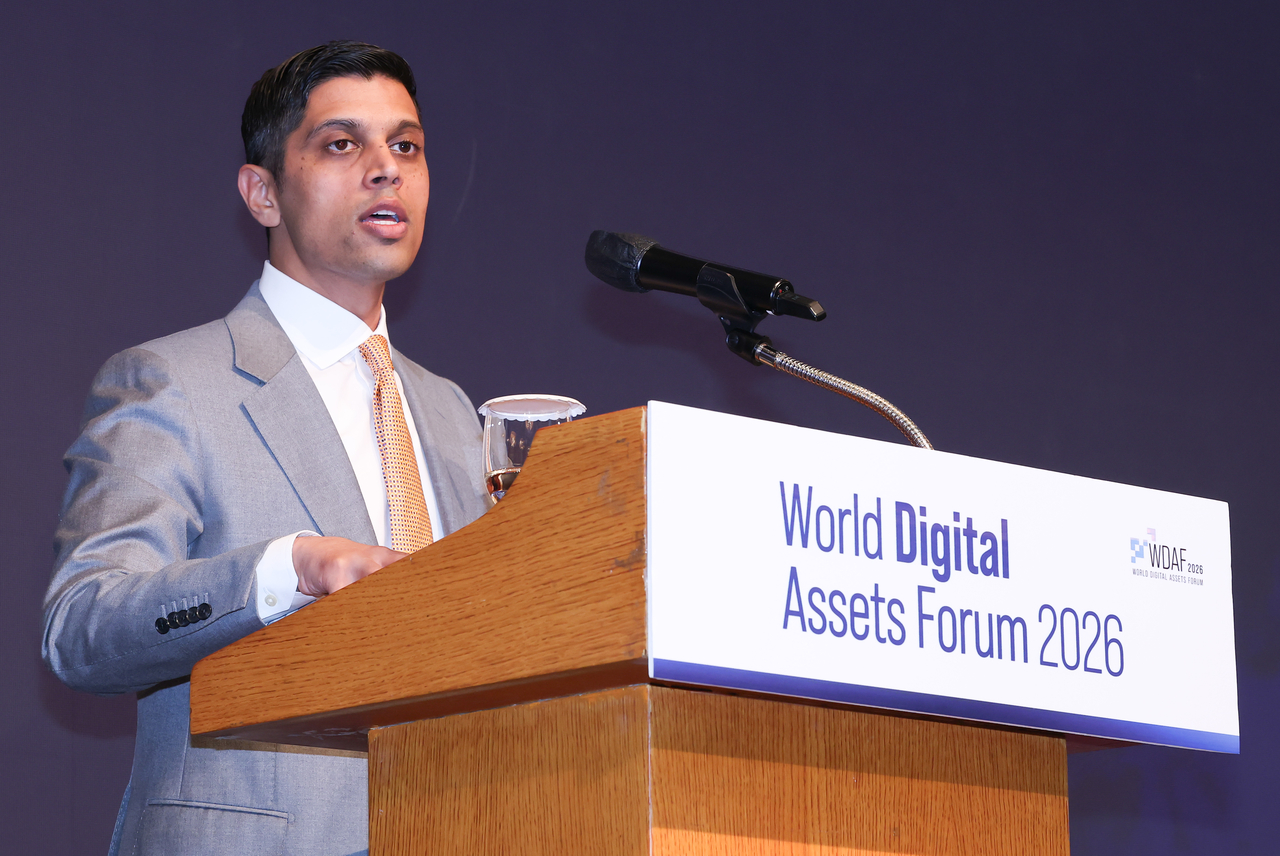
Tokenized assets must move beyond digital recordkeeping to become actively traded, used as collateral and deployed to generate returns if blockchain technology is to transform financial markets, an industry executive said Monday.
"The first phase was about getting assets onchain. What we're excited for is the next era where these assets that are sitting onchain become productive," said Sagar Shah, chief business officer of Evernorth, at the World Digital Assets Forum 2026 in Seoul.
Shah said the tokenization market, excluding stablecoins, has expanded from $14 billion two years ago to $400 billion, citing industry estimates. Projections by Ripple and Boston Consulting Group suggest it could reach $18.9 trillion by 2033.
Despite that growth, about 90 percent of tokenized assets remain primarily used for recordkeeping, with transactions still relying on traditional financial infrastructure, he said.
Banks, custodians and transfer agents maintain separate transaction records that must be reconciled before settlement, a process that can take days and tie up capital. Blockchain could streamline this by allowing institutions to share a single transaction record.
"When this happens, there's actually nothing to reconcile. The entry moves at the speed of a message," Shah said.
But recording assets on blockchain is only the first step. Shah argued that tokenized assets must also support faster settlement, lending and collateral use, allowing investors to put their holdings to productive use.
He identified three requirements for broader institutional adoption: controls, compliance and liquidity.
Financial institutions need mechanisms to verify ownership, restrict unauthorized transactions and recover assets when necessary. They must also meet customer verification requirements and ensure sufficient market liquidity for investors to trade.
Shah highlighted the XRP Ledger, or XRPL, as a network offering token issuance, asset recovery mechanisms and trading restricted to authorized participants.
Proposed upgrades could enable onchain lending, allowing tokenized assets to serve as collateral. Dollar-backed stablecoins could also facilitate settlement without the price volatility associated with cryptocurrencies.
Evernorth plans to deploy its holdings of more than 470 million XRP to support liquidity for tokenized real-world assets and businesses developing services on XRPL.
"The XRP Ledger already comes with the controls. The XRP Ledger also comes with the compliance. This is where we are excited to have Evernorth come in and provide that liquidity," Shah said.
He stressed that expanding the market would require cooperation across the industry.
"A lot of this growth is not going to happen from Evernorth itself. It's not going to happen through Ripple itself only. It comes through supporting the ecosystem," he said.
ch0221@heraldcorp.com