Digital asset security expert urges firms to develop adaptable infrastructure and avoid reliance on individual technology providers
The rapid advancement of quantum computing and artificial intelligence threatens to undermine cryptographic systems, a security threat industry urgently needs to prepare for, a digital asset custody expert said Monday.
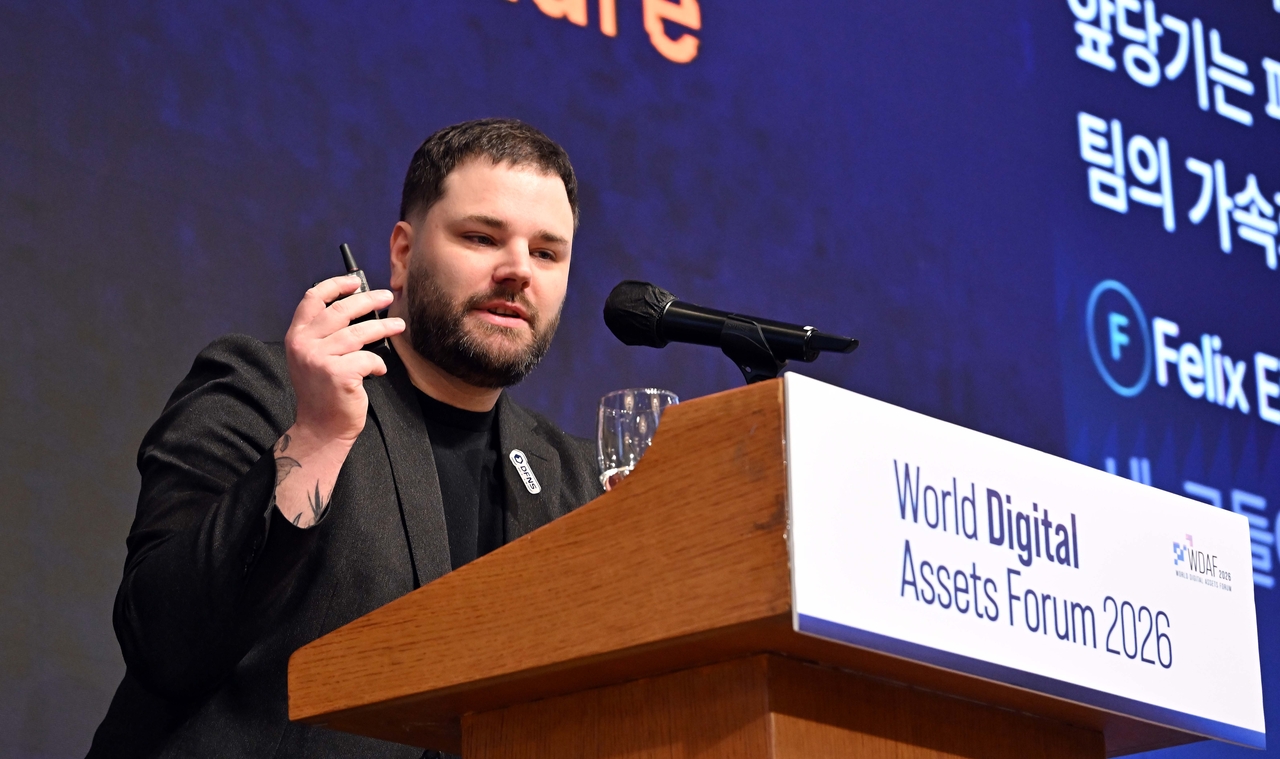
Felix Eigelshoven, managing director and the head of Asia-Pacific at DFNS, a digital asset banking platform, gave a speech under the title "The Quantum Threat to Digital Assets: Will What You Hold Today Still Be Safe in 10 Years?" at the World Digital Assets Forum held at The Grand Lotte Seoul.
According to Eigelshoven, the security threat extends well beyond blockchain, as financial institutions, telecommunications companies and other industries rely on cryptographic signatures to authenticate transactions and secure digital assets.
"We are seeing significant progress in quantum computing. Smaller companies have also made considerable advances in building quantum computers," Eigelshoven said.
"At the same time, we are seeing the emergence of AI agents and human-AI teams. They are increasingly being used to explore and identify weaknesses, as well as develop attacks. This is accelerating the timeline we have been discussing."
Eigelshoven said the industry should begin preparing by building more agile infrastructure and protocols, reassessing trust models to avoid reliance on a single point of approval, and adopting modular technology architectures that allow individual components to be replaced as security requirements evolve.
He also cautioned against becoming overly dependent on specific technology providers, arguing the need for flexibility in changing hardware, storage systems and infrastructure without having to rebuild entire operations
"Whether you are building a blockchain, an infrastructure platform or an organization, you need to design it with flexibility in mind," he said.
To achieve this, Eigelshoven advocated building an additional "middle layer," or middle logic, into the architecture, which would allow organizations to retain control over their own policies and operations while changing the underlying technology as needed.
"The important point is that you should consider building an additional middle layer, or middle logic, within your architecture," he said.
"This layer should contain your own logic and policies. Around it, you can determine which blockchain, technology stack and infrastructure you need."
silverstar@heraldcorp.com