
Seoul has fewer public trash bins than it did in 1995, despite efforts to install more
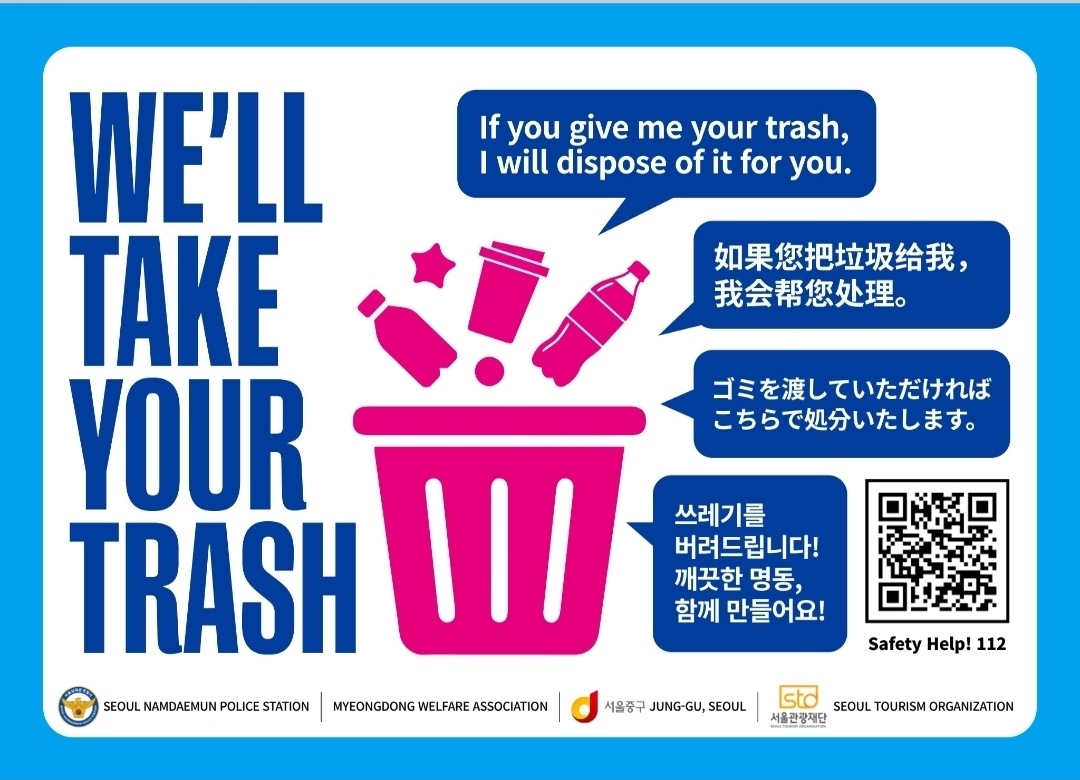
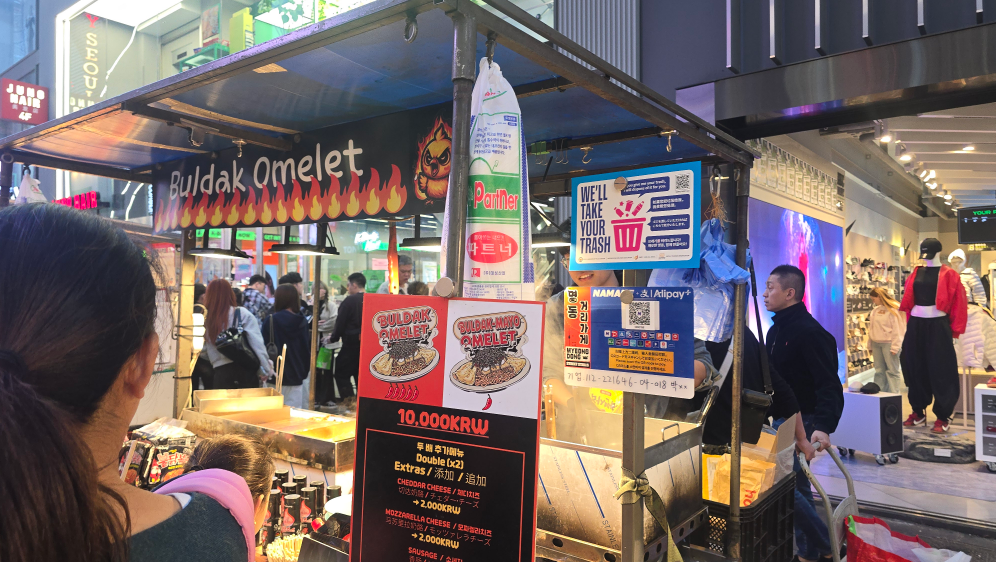
In Seoul’s Myeong-dong shopping district, visitors looking for somewhere to toss a coffee cup or snack wrapper can hand it to a street vendor, even if they didn't buy anything at the stall.
Vendors participating in a local cleanup campaign have agreed to accept trash from food and drinks bought elsewhere. The Seoul Metropolitan Government has distributed signs in English, Japanese and Chinese to help visitors identify participating stalls, and the Seoul Tourism Organization is promoting the campaign.
“Vendors and Namdaemun Police Station have struggled with illegal dumping, and this initiative is an effort to address the problem through cooperation among those directly affected,” a Seoul Tourism Organization official said.
A clean square, with no bin in sight
In nearby Gwanghwamun Square, tourists and local residents sat at outdoor tables on Wednesday morning, enjoying snacks and coffee in the cool breeze under a clear autumn sky. In the 40,300-square-meter square, there was no public trash bin in sight.
“I think it is impressive that there is nowhere to throw away trash in such a large area, but the streets are still clean,” said Letitia, a Spanish visitor to Seoul, holding a disposable coffee cup. “Maybe there is one in the subway station?”
Seoul tourism officials say visitors have long complained about the difficulty of finding public bins. The city has been trying to add more since 2023, but proposed locations can draw objections from nearby residents and merchants.
Officials have also cited concerns about how the bins would look in public spaces.
"Consultations with district governments are necessary to increase the number of street bins, but complaints from nearby merchants and residents are not easy to resolve when new bins are installed,” a Seoul city official said.
A second city official said the metropolitan government was in talks with district governments about adding more bins.
Why Seoul has fewer bins than in 1995
Seoul had 7,607 public street bins in 1995, when South Korea introduced a system that charged households according to how much waste they discarded.
The number fell by more than half after the policy took effect as authorities sought to discourage people from using street bins to dispose of household waste.
Seoul had 7,142 public street bins as of September, according to Seoul Open Data Plaza, still below its 1995 count of 7,607.
Paris, which covers about one-sixth the area of Seoul, reported around 24,000 street bins that same month.
More than 13 million international visitors came to Seoul between January and September. The city aims to attract 30 million a year by 2030.
Jeong Chul, a tourism professor at Hanyang University, told local media that Seoul had been slower than other established tourist destinations to develop facilities for visitors. He said the city needed more public trash bins as international arrivals increased.
The city plans to extend Myeong-dong’s campaign to other tourist areas and traditional markets.
forestjs@heraldcorp.com