
Two customers detail sudden display malfunctions, service delays and Apple's lack of explanation
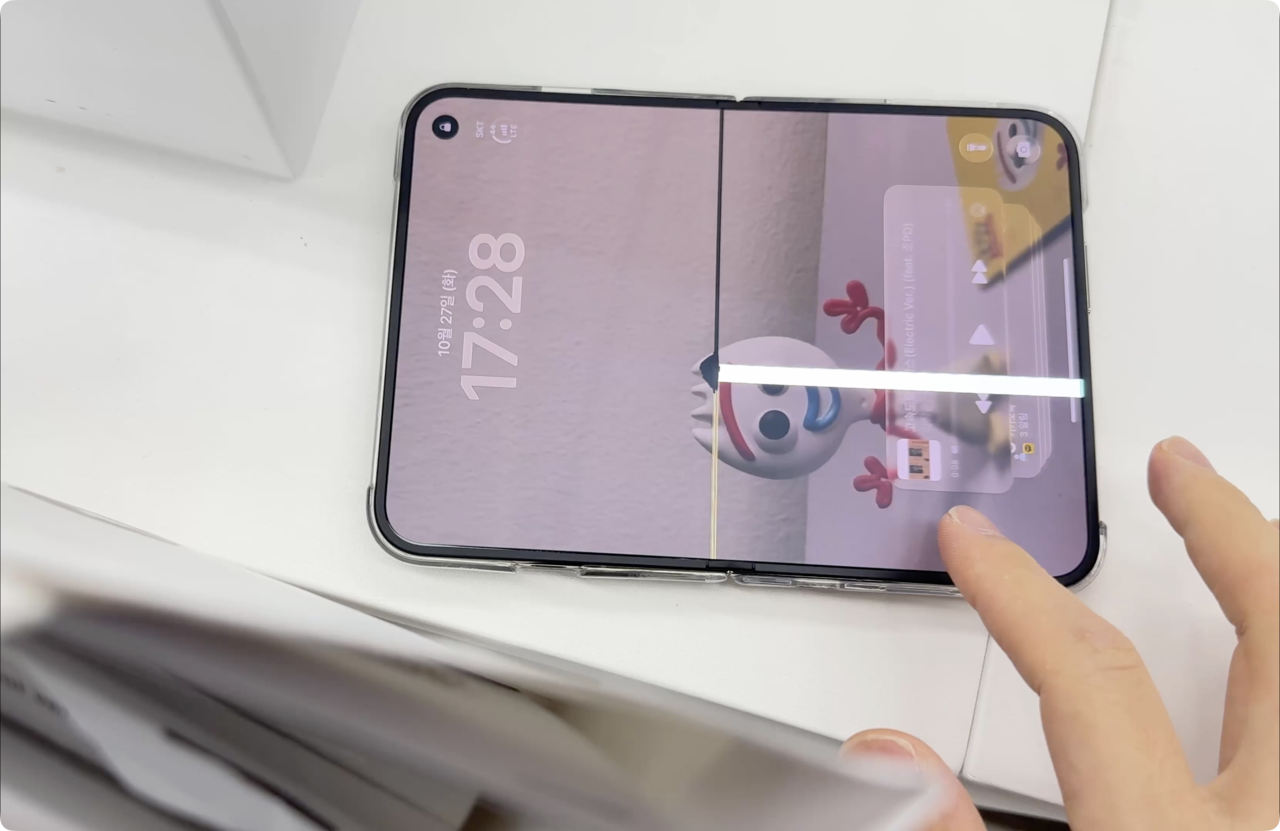
Apple’s first foldable iPhone is facing fresh durability concerns after two South Korean customers reported that their devices’ inner screens cracked while being unfolded, just days after purchase.
Both customers received free replacements, but only after delays at Apple-authorized service centers. Neither was given an explanation for the failures, according to interviews and service records obtained by The Korea Herald.
Since the Duo's Oct. 23 launch, buyers in several countries have reported hearing popping sounds or feeling resistance around the hinge before bright lines appeared across their inner displays.
The problem, dubbed "crackgate" online, has raised questions about the durability of Apple's 3.29 million won ($2,450) device, particularly as some failures occurred within hours or days of purchase.
Apple reportedly allocated about 30,000 units to South Korea for the initial launch, though the number of affected devices remains unknown.
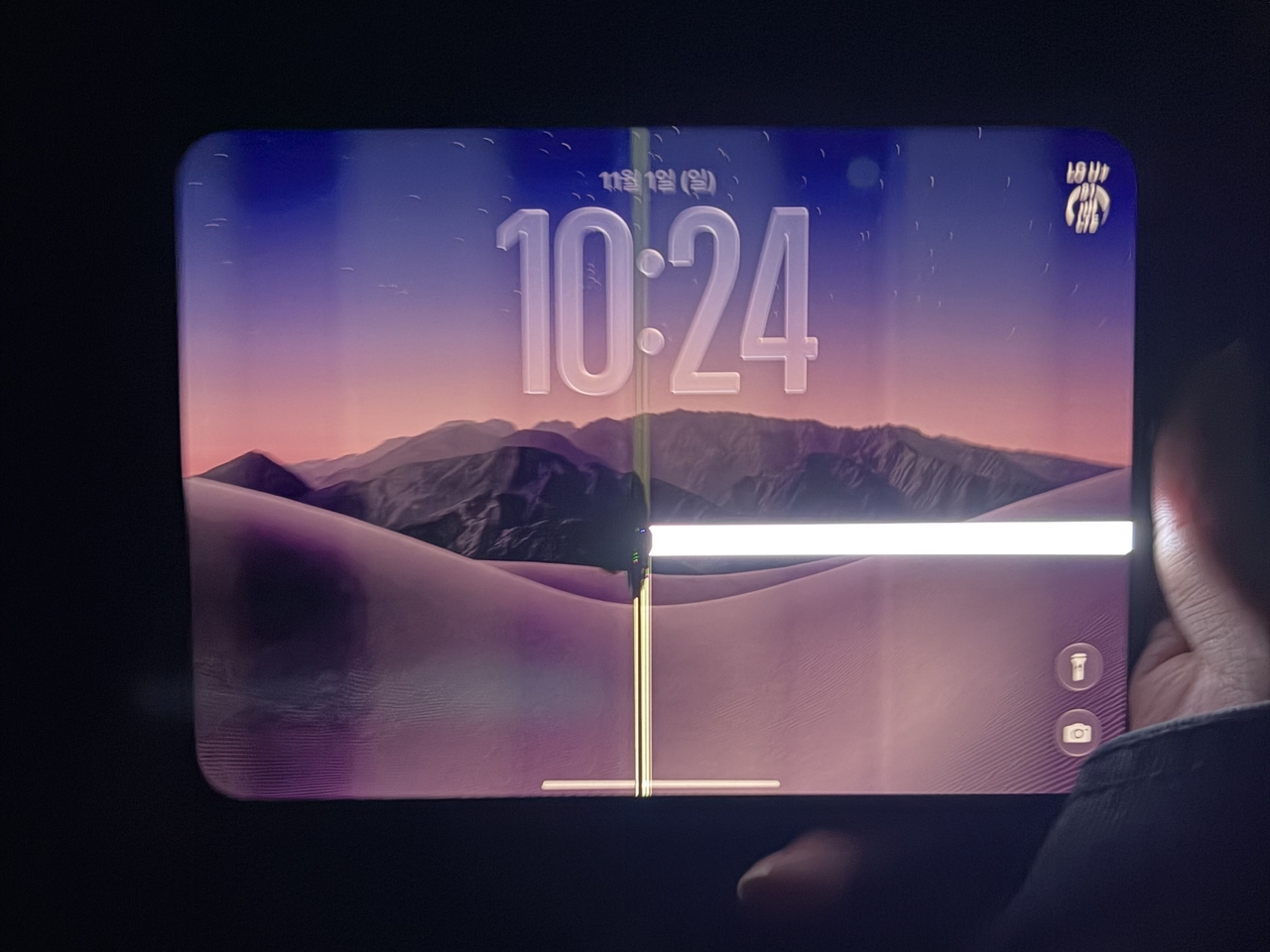
Lee Jeong-ho, a 30-year-old manufacturing worker in Incheon, received his Duo on Oct. 29. Three days later, he unfolded it to watch a video, heard something catch and crack, and found bright lines spreading across the inner screen.
"There was nothing wrong with it until that moment," Lee said.
Lee visited an Apple-authorized TUVA service center in Incheon on Nov. 2, where staff initially expected to replace his phone that day because a replacement unit was already in stock. But the exchange required Apple's approval.
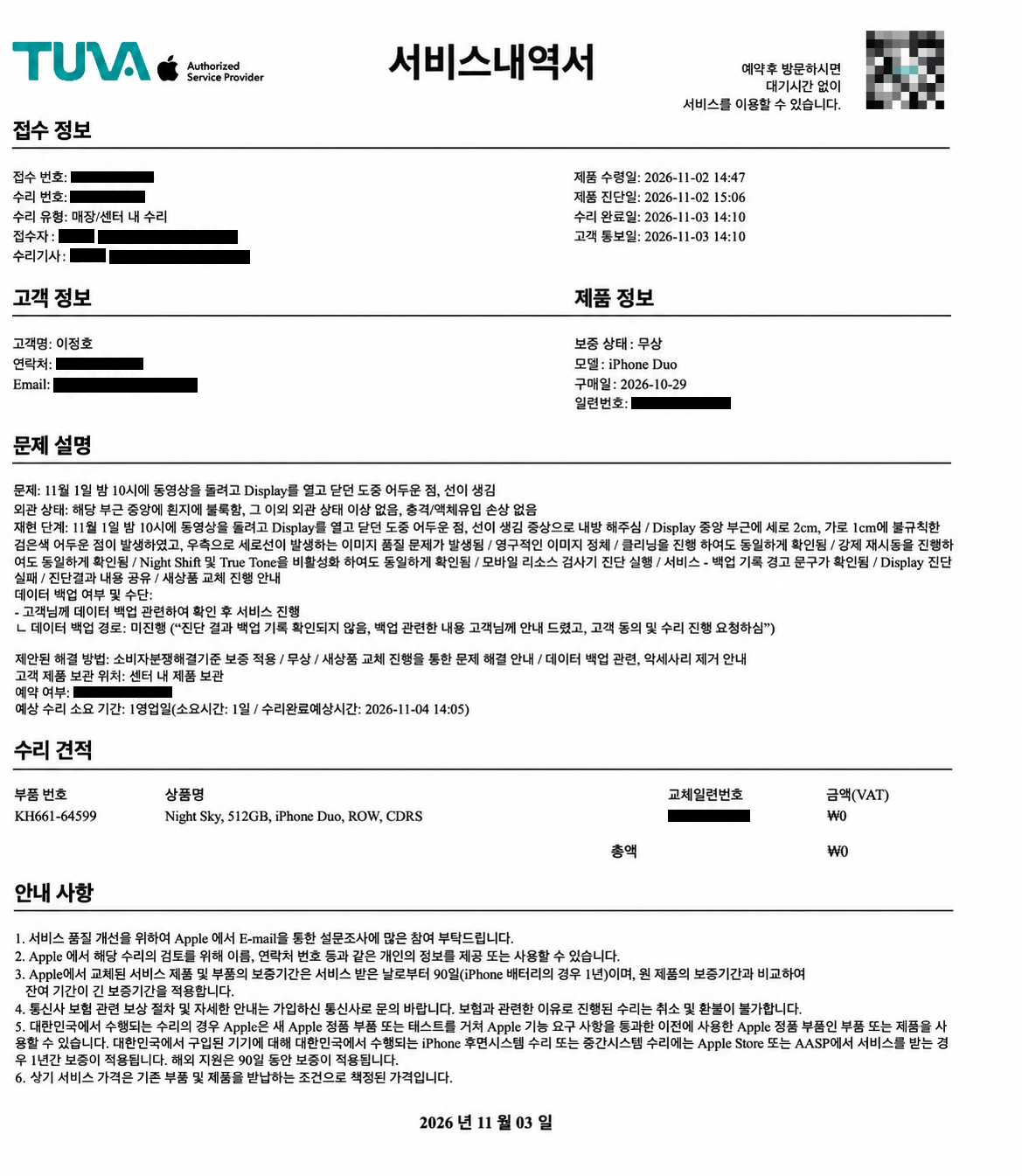
"The replacement was right there in front of me. Even the staff thought I could get it that day," he said. "But Apple's response took about five hours."
The approval arrived later that evening, so Lee had to return the following day to collect his replacement. A service record reviewed by The Korea Herald documented the screen damage and authorized a free replacement, but offered no explanation of what caused the failure.
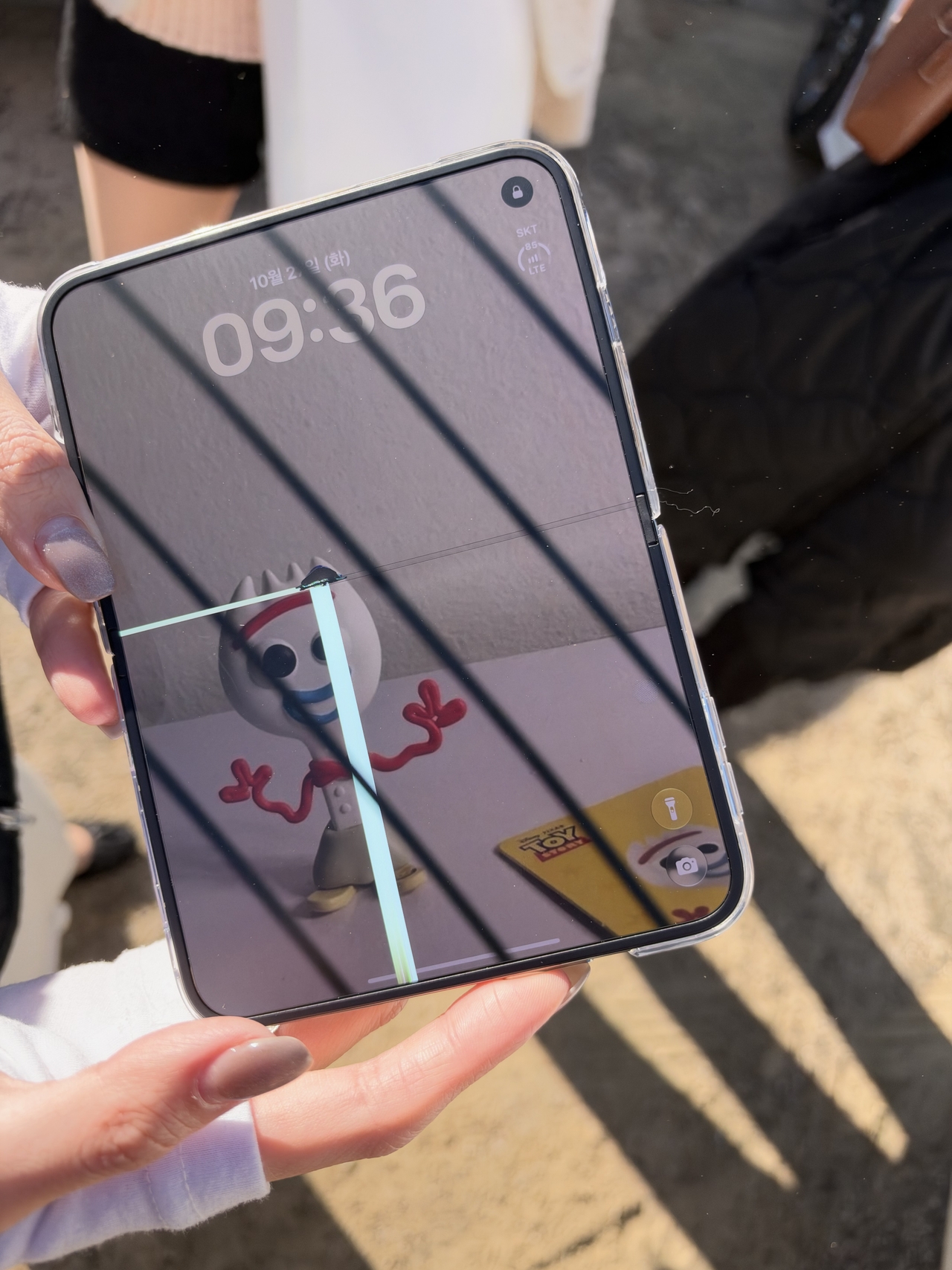
Another iPhone Duo failed on Oct. 27 in Cheonan, South Chungcheong Province, when a woman in her 30s unfolded it outdoors and heard a sharp pop. The screen appeared to bulge near the hinge, according to her husband, a Samsung Display employee in his 30s who provided photographs and video of the damage.
"We went to the service center after reading that Apple had acknowledged the problem and would offer replacements," said her husband, identified only by his surname, Jeong. "But the staff told us they hadn't received any official instructions."
Jeong returned the next day after being unable to reach the center directly by phone, only to receive the same explanation. His wife finally received a new phone on Oct. 29, two days after their first visit. The couple also had to replace their protective case and screen protector at their own expense.
Neither household received an explanation of the failure's cause.
Apple was contacted for comment but provided no explanation for the replacement delays or the instructions given to its authorized service centers.
What caused the failures?
Apple acknowledged on Oct. 26 that an issue was affecting the inner displays of a "small number" of Duo units and directed customers to AppleCare for replacements. The company has not disclosed a numerical failure rate or identified the cause.
Repair specialist iFixit, which examined the phone using CT scans and a 3D hinge model, suggested that a central support component might fail to retract properly, putting pressure on the flexible display.
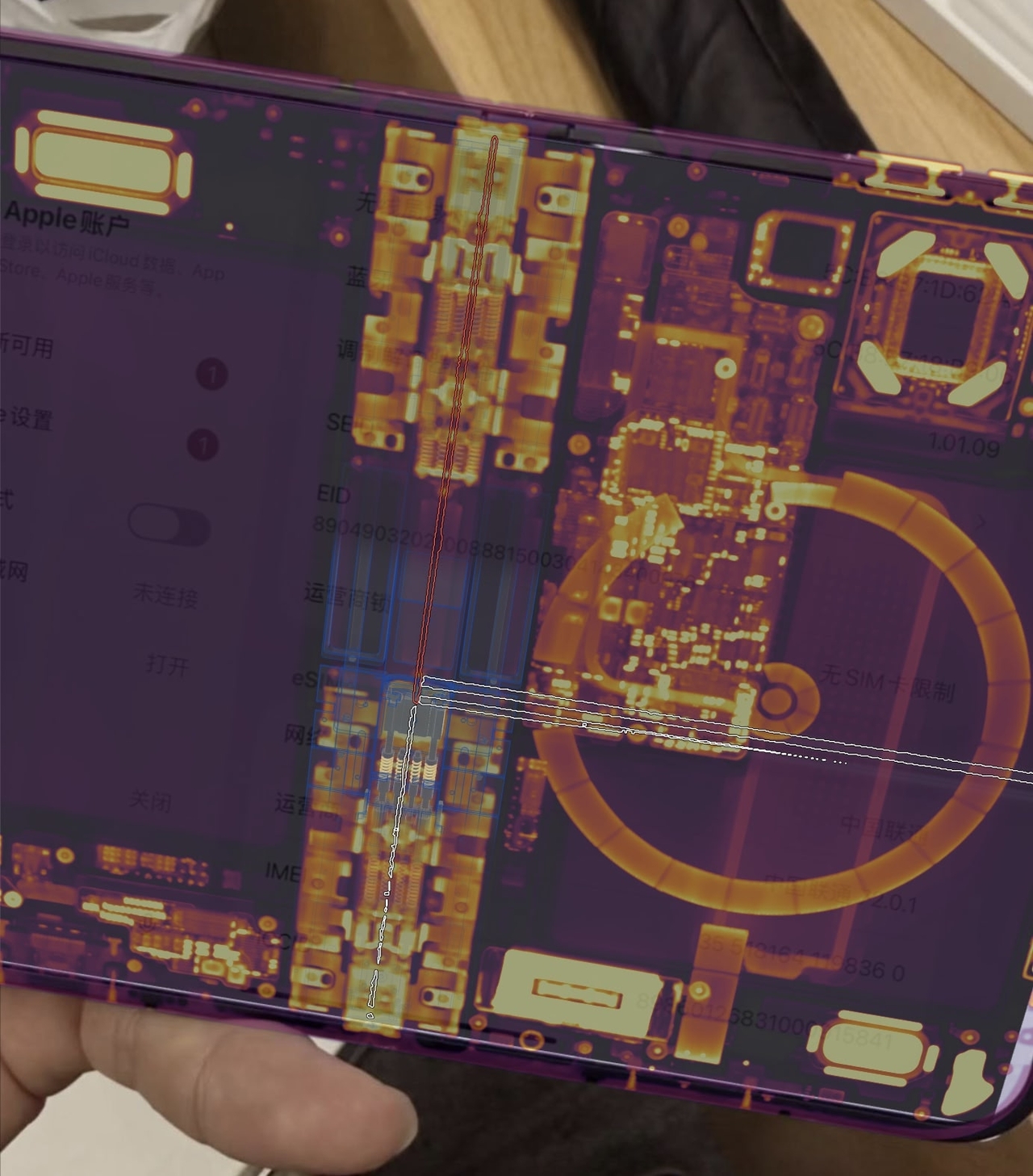
Jung Yong-cheol, a principal researcher at the Korea Institute of Industrial Technology specializing in foldable-display reliability, said concentrated pressure could damage the panel immediately or accelerate deterioration with repeated folding.
"If it's a design problem, you'd expect failures to appear more broadly," Jung told The Korea Herald. "But if they're concentrated in a particular production batch, the cause could be a faulty component or an assembly problem. Even then, those defects should have been caught during inspection."
Determining the actual cause would require examining multiple failed devices and comparing their internal structures, he added.
Lee, who has used Apple products for 13 years, wanted Apple to take further action if the failures persisted.
"I can't rule out the same problem happening again with the replacement," he said. "If it keeps happening, I hope Apple improves the hardware and even recalls the affected phones."
mjh@heraldcorp.com