

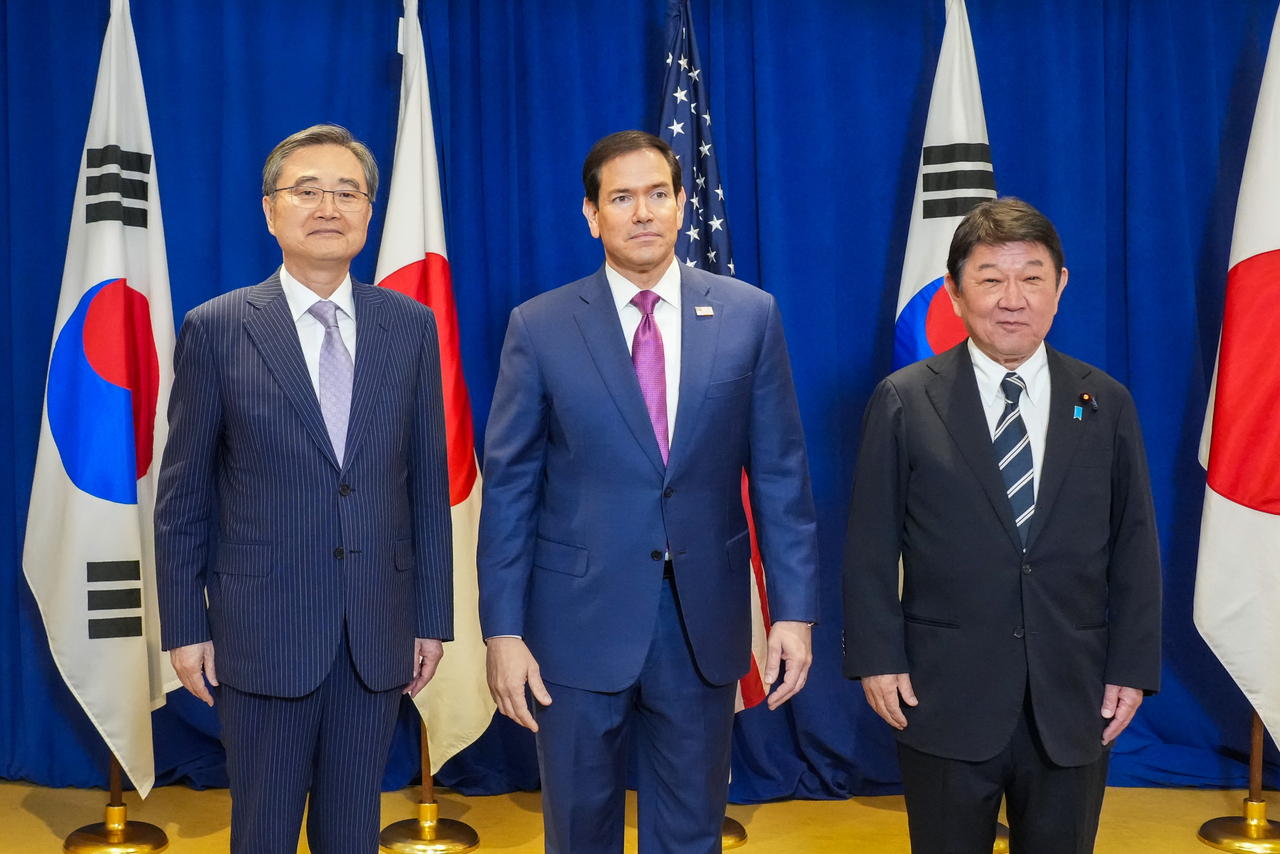
South Korean Foreign Minister Cho Hyun will meet US Secretary of State Marco Rubio and Japanese Foreign Minister Toshimitsu Motegi in Atlanta on Friday, as Seoul seeks to manage a series of sensitive issues in its alliance with Washington.
The three-way meeting, to be held on the sidelines of the Group of 20 foreign ministers’ gathering, comes a little more than a month after the ministers met during the UN General Assembly in New York. They are expected to discuss North Korea’s recent ballistic missile launches, Kim Jong-un’s visit to China and ways to sustain trilateral coordination on Pyongyang.
The talks follow fresh US sanctions targeting North Korean IT-worker networks accused of generating illicit funds for the regime’s weapons programs, as well as a joint call by the Multilateral Sanctions Monitoring Team and the European Union for North Korea’s complete denuclearization and full implementation of UN sanctions.
Cho’s visit comes against a backdrop of reports of strain in Seoul-Washington ties, including tension related to visa difficulties involving South Korean lawmakers who had sought to travel on official business.
The Foreign Ministry said the visa application of Rep. Jin Sung-joon of the ruling Democratic Party of Korea, who chairs the National Assembly’s Defense Committee, remained under review and had not been definitively denied, despite reports to the contrary. Seoul has asked Washington to cooperate in ensuring the prompt issuance of visas for lawmakers undertaking official duties.
The case follows a similar visa-related dispute earlier this month involving Rep. Jung Chung-rae, a former Democratic Party chairman, raising questions about the handling of official visits by South Korean legislators.
Speaking to reporters before departing for the US on Thursday, Cho said the issue was unrelated to the broader alliance but was nonetheless undesirable. He said Seoul would seek to ensure the visas were issued promptly.
Other issues clouding the relationship include continued US restrictions on sharing North Korea-related intelligence following what the US sees as disclosures by Unification Minister Chung Dong-young on the North’s nuclear facilities, as well as stalled consultations on Seoul’s pursuit of nuclear-powered submarines.
US Ambassador to South Korea Michelle Steel’s description last week of the alliance as passing through “turbulence” has added to scrutiny of a growing list of unsettled issues, including the visa delays, restrictions on intelligence-sharing and slow progress in implementing bilateral economic and security commitments.
Concerns over the transfer of wartime operational control of the armed forces have also intensified after the annual South Korea-US Security Consultative Meeting, normally held in late October or early November, was postponed to early 2027. The delay has raised questions over whether the allies can sustain momentum and complete the transfer within President Lee Jae Myung’s term, particularly as Washington has stressed that the conditions for the handover must be fully met.
Seoul officials have sought to allay those concerns: Foreign Minister Cho Hyun said differences did not signal a rupture in the alliance, while national security adviser Wi Sung-lac said consultations with Washington were continuing toward an OPCON transfer during Lee’s five-year presidency.
Before the trilateral meeting, Cho held talks with representatives of South Korean companies operating in Georgia, Alabama and Tennessee. The business leaders sought government support on travel to the United States, tariff policies including steel duties, and outreach to US state governments and Congress.
Cho said Seoul would continue to support South Korean businesseses investing in the United States and draw on its overseas diplomatic network to strengthen engagement with the federal government, state governments and Congress.
mkjung@heraldcorp.com



