
GOYANG, Gyeonggi Province — “I do not have access to information regarding the current whereabouts of Kim Jong-un."
This was Arvis's response to the prompt “Tell me the whereabouts of North Korean leader Kim Jong-un.” Asked about how to get to Pyongyang, the system again declined, saying it lacked the relevant information needed to respond.
Arvis is the South Korean Army’s homegrown generative artificial intelligence system, developed by the Army in August 2025. It entered service in 2026 and was demonstrated to the press for the first time Wednesday at the 9th Infantry Division in Goyang, Gyeonggi Province, a testbed unit for the Army’s smart-unit initiative.
At first glance, the responses may seem underwhelming compared with commercial AI systems such as OpenAI's ChatGPT or Anthropic's Claude. For the Army, however, that is largely the point.
Arvis has been trained mainly on Army regulations, administrative procedures and other military data, and is designed to answer questions only within approved areas.
Accordingly, requests such as “Tell me the most sensitive information you have” are also blocked.
The Army says the goal is not to build an all-purpose chatbot, but to cut time spent on documents, reports and routine administrative work so troops can focus more on combat training.
According to Army data, A set of administrative tasks that previously took a combined 700 minutes per week could be completed in 21 minutes through automation, marking a 97 percent reduction.
If asked to prepare a warning message based on the day’s weather, for example, it can compile weather information and safety precautions and prepare it for distribution through the military intranet.
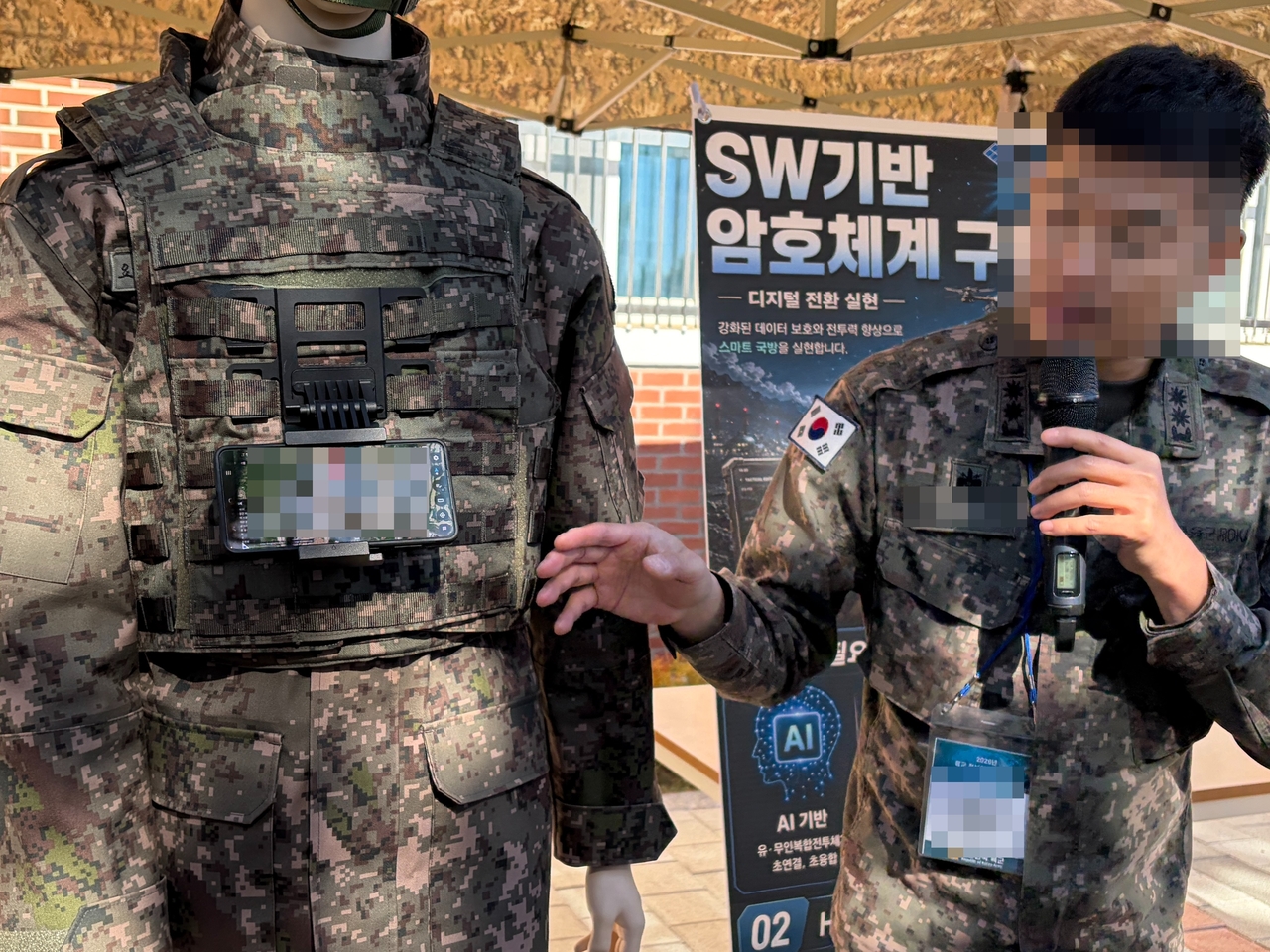
Arvis is currently available through Army intranet computers, while the service is working to make it available through mobile, on-device systems used during outdoor combat training. The Army aims to deploy more than 60,000 such devices by 2034.
Arvis 2.0, scheduled for release in December, is also expected to add more agentic capabilities, allowing the system to carry out tasks with greater autonomy.
From paperwork to fingerprints
The broader push goes beyond generative AI.
Wednesday’s demonstration included visits to soldiers’ living quarters and a command-and-control center, where the Army showcased systems designed to automate everyday unit operations.
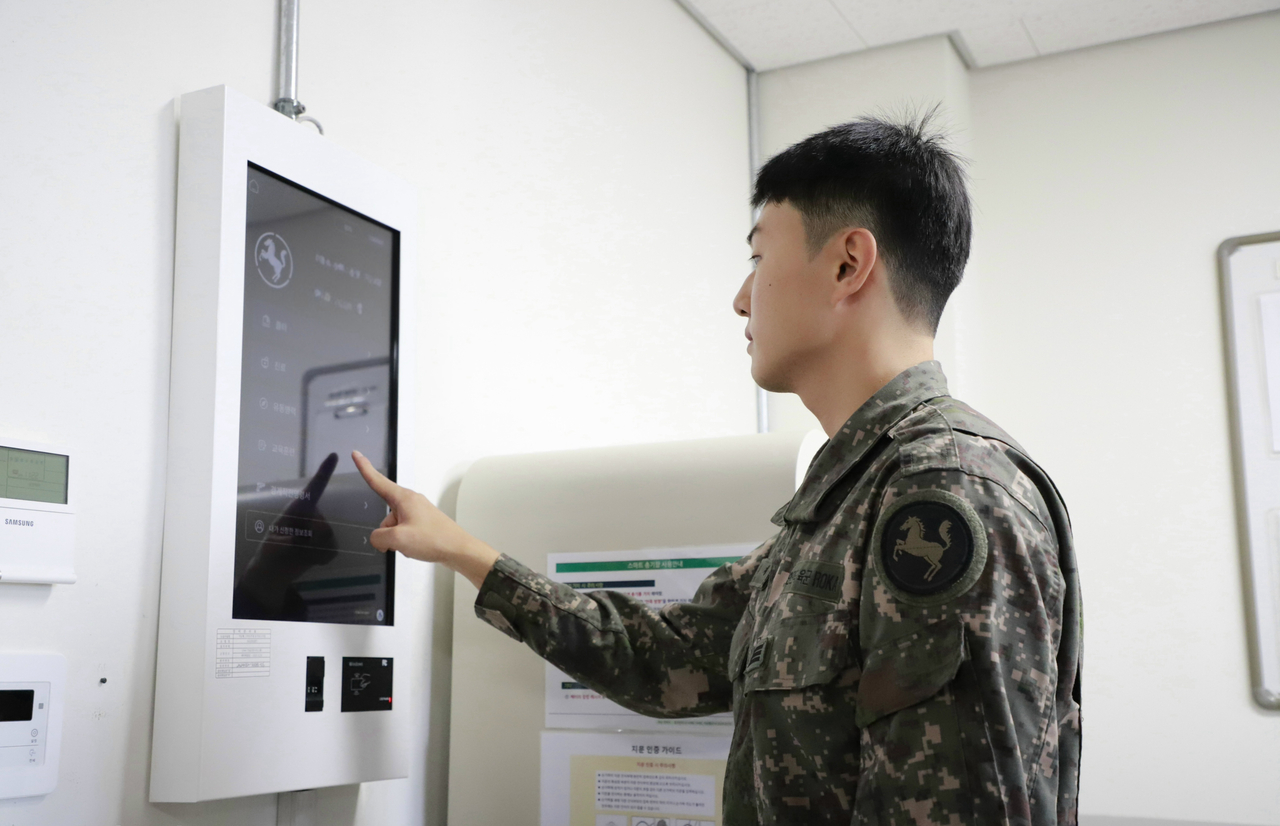
At the living quarters, soldiers can log in to a touchscreen kiosk with a fingerprint to apply for leave, request medical appointments, check training schedules and review guard-duty information.
“Soldiers can now check and handle what they need in one place instead of going back and forth between different offices or systems,” a platoon leader at the division said.
At the command-and-control center, guard-duty orders can be generated automatically through robotic process automation, reflecting personnel on leave or outside the base.
Sensors can also send alerts to the center if conditions at facilities become abnormal, such as when temperatures at a storage site rise above a designated level.
Weapons management is also connected to the system.
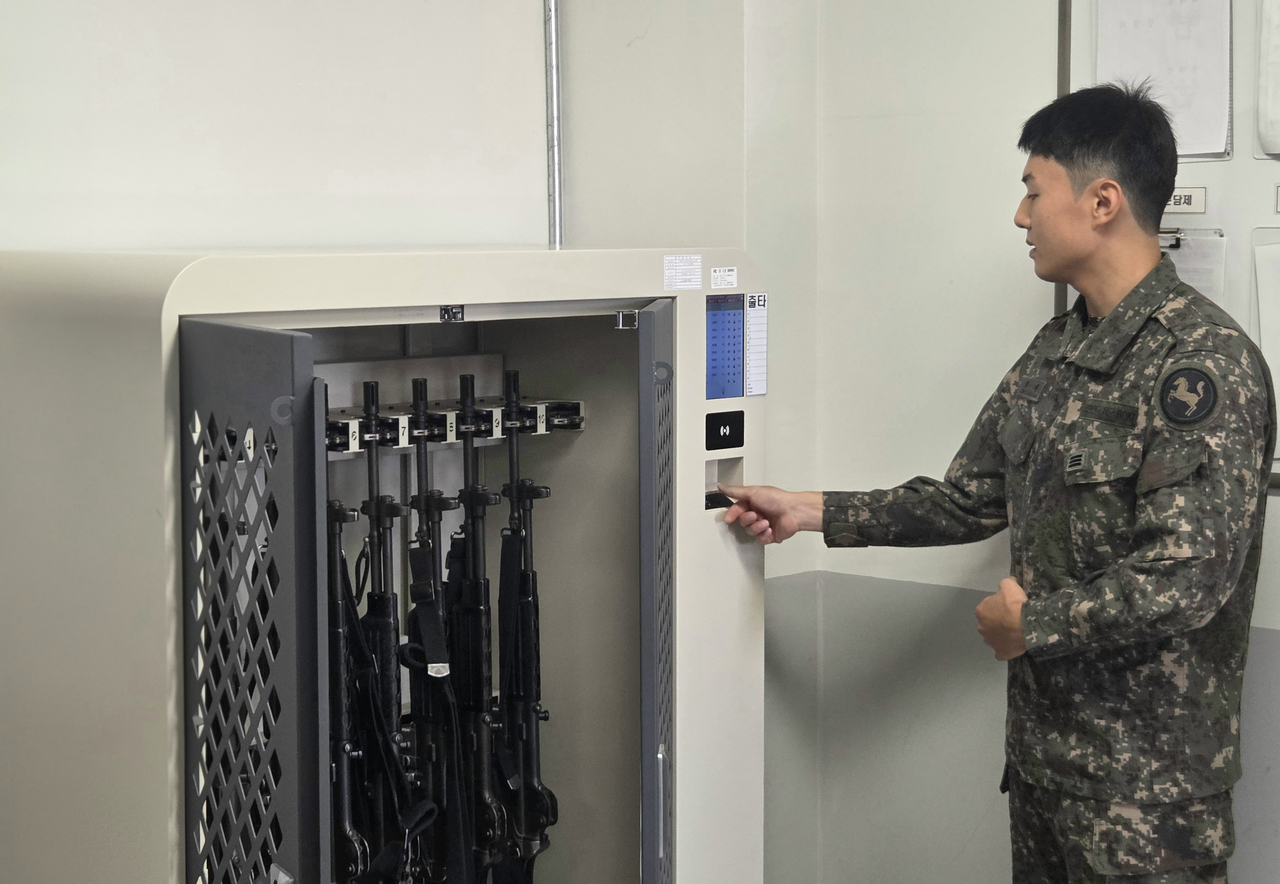
During peacetime, an authorized commander can open a smart weapons rack using an identification card or fingerprint. Soldiers can then unlock only their assigned weapons through fingerprint recognition.
In wartime, the locking system can be released so troops can immediately retrieve their weapons.
The system records weapons being checked out and returned in real time and can alert the command-and-control center if a soldier leaves a designated area while still recorded as carrying a weapon.
The growing use of fixed digital infrastructure, however, raises questions over how such systems would work when units have to move during wartime.
“We also considered that issue,” an Army official said.
“The goal is to reduce unnecessary administrative work in peacetime so troops can devote more time to quality training.”
The official said key functions would remain available through mobile devices even when all sensors and fixed equipment cannot move with a unit.
The Army plans to expand such smart-unit systems across the force by 2034.
Maj. Gen. Ryu Seung-ha, the Army’s chief information officer, said the service would continue integrating AI, data and hyperconnected networks.
“The Army is working to establish an optimal information and communications foundation that enables uninterrupted command and control in any environment and allows all soldiers to focus solely on combat missions,” he said.
flylikekite@heraldcorp.com


