

By Eleni Stefania Kalapoda
On Oct. 22, at a ceremony in Eindhoven in the Netherlands during Dutch Design Week, Korea left the FRAME Awards 2026 with two of its most coveted titles.
Mongtan Aewol, a restaurant on Jeju Island’s western shore designed by the Seoul studio Beodd, was named restaurant of the year with a score of 9.38, the highest for any spatial winner this year. Burdifilek’s Cosmetics Floor at Hyundai Jungdong in Bucheon, Gyeonggi Province, was named multibrand store of the year. Beside them on the shortlist stood a perfume house in Seongsu-dong and an exhibition imagining the future of Seoul; a remarkable showing for a single country in a program that drew more than 1,000 submissions from around the world.
I served on the FRAME Awards 2026 grand jury; what strikes me less is what the four projects share on paper, for they could hardly differ more in purpose than the conviction that unites them: an interior is not a container for products or meals, but an encounter worth crossing a city, or a sea, to have.
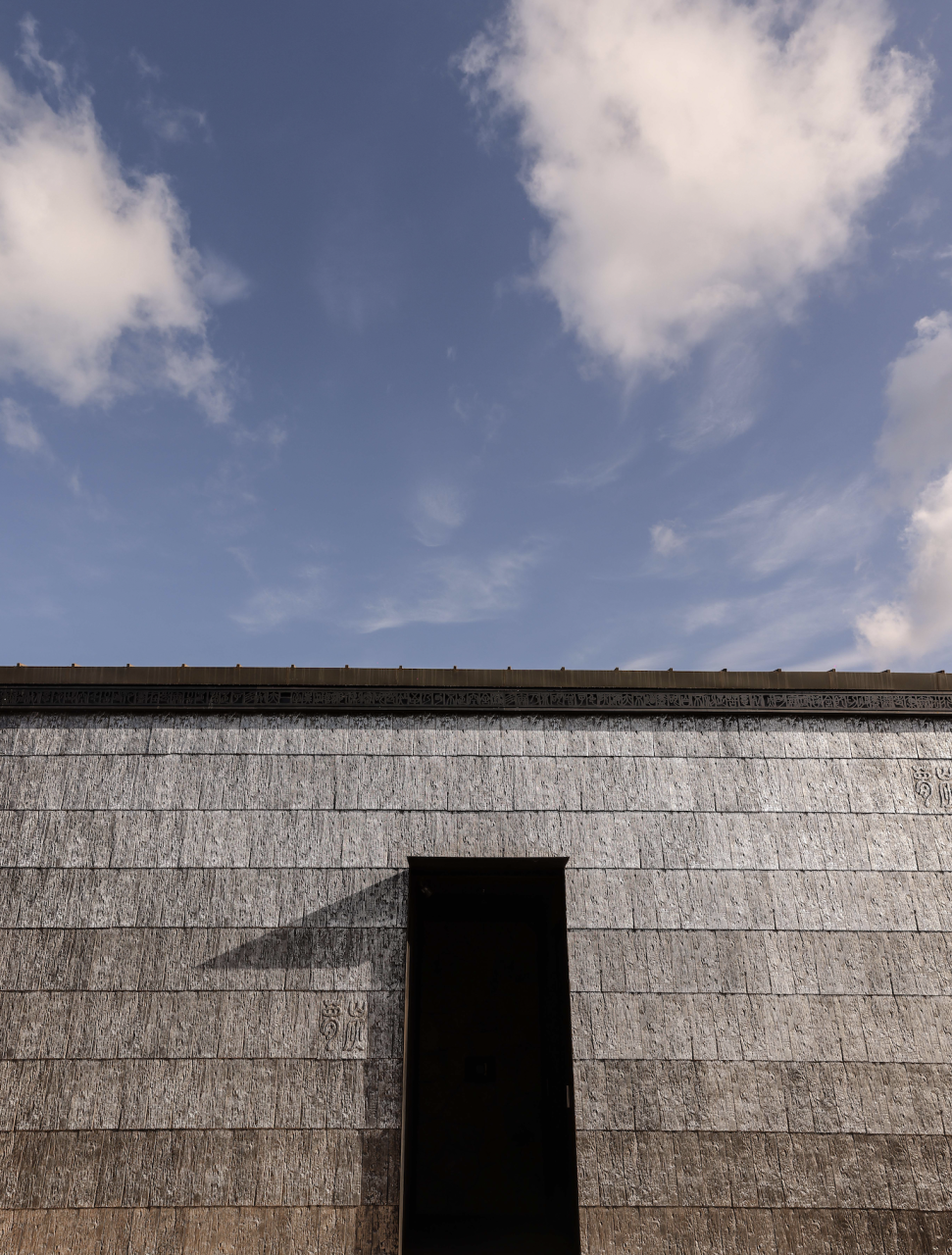
Nowhere is that conviction more vivid than on Jeju Island.
Mongtan, celebrated in Seoul for beef ribs smoked over burning straw, finds a home in Aewol, choreographed around fire. Guests pass through a narrow, darkened threshold before the room opens into a lofty hall suffused with a red glow, its heart an open grill of charred timber. The walls are dressed in hand-painted "hanji" — traditional mulberry paper — sealed beneath layers of lacquer, and the columns marry hanji with forged metal. A paper long associated with windows, doors and lanterns becomes the principal surface of a contemporary dining room.
Craft is treated not as heritage behind glass, but as a living language. The jury felt it too: “The dramatic play of light and shadow draws you into a sense of tradition while immersing you in the theatre of cooking and eating,” wrote juror Vaishali Mangalvedhekar.
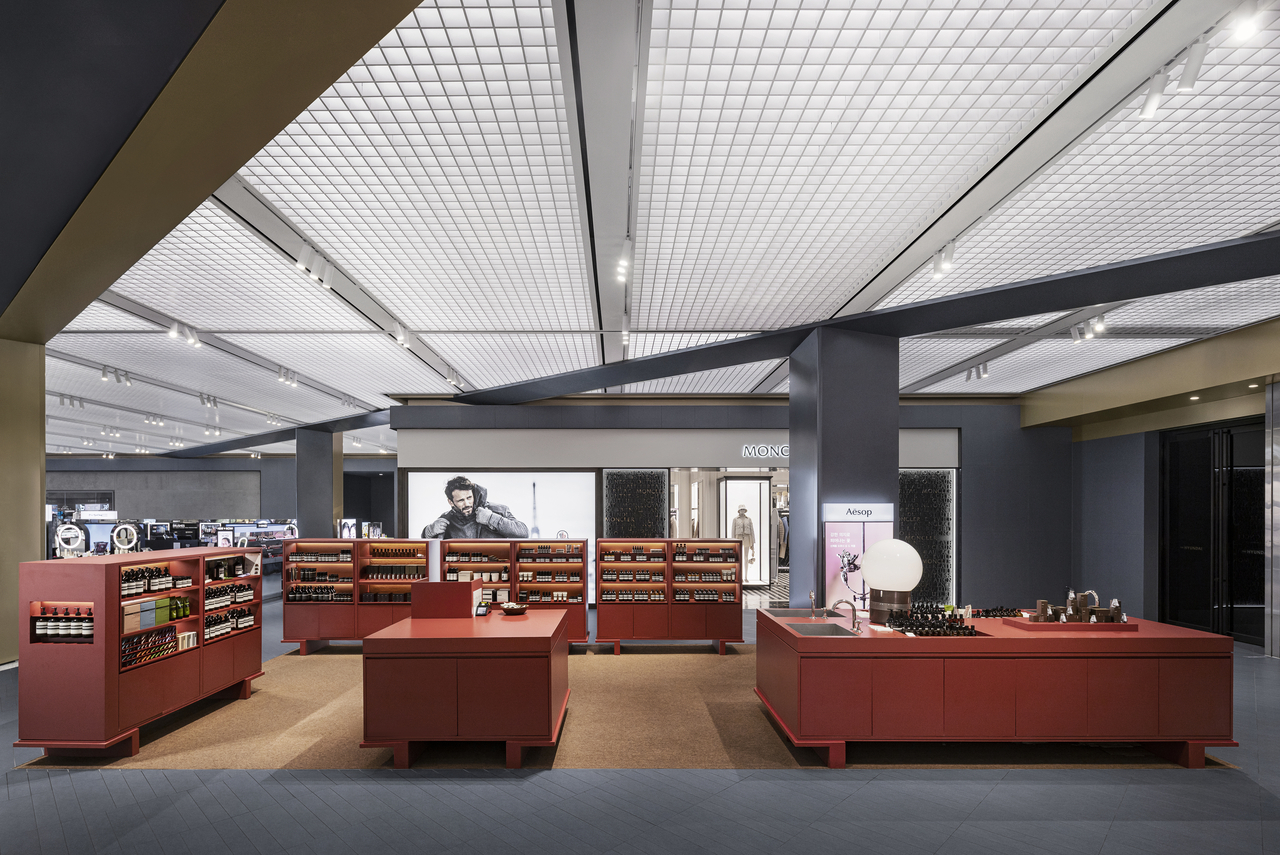
At Hyundai Jungdong, Burdifilek faced a subtler challenge: more than 3,900 square meters of beauty hall, among the largest in Korea, shared by brands that each arrive with a fiercely guarded identity.
The answer is at once disciplined and poetic. The existing concrete columns are wrapped in faceted, origami-esque steel, warm gold on one face and deep gray-blue on the other, so that the floor quietly transforms as visitors move through it. A restrained, matte palette lets each brand’s colors sing, while a consistent signage system gives every tenant equal standing.
Juror Richard Bennett praised its ability to hold “a strong overall personality whilst letting the brands bring their best game.” This is design as hospitality: as so much shopping has migrated to screens, the department store floor is reimagined as a civic room, a place to linger rather than merely transact.
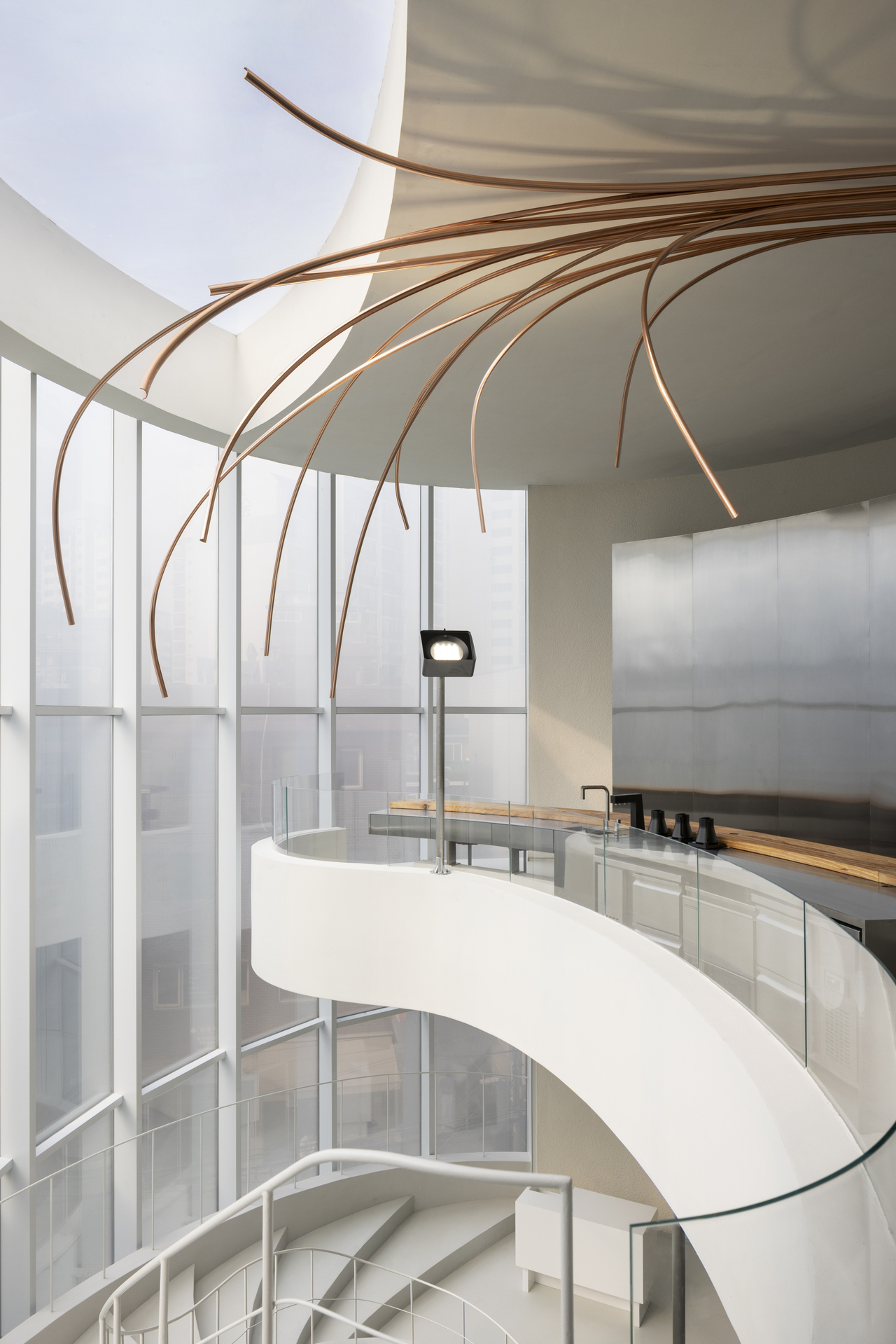
In Seongsu-dong, where former factories now shelter studios, cafes and flagship stores, Sophie Hicks Architects has given the Korean fragrance house 025S a building that borrows its logic from perfumery itself, in which the most memorable scents hold the raw and the refined in balance.
At street level, the palette is deliberately austere: concrete, rubber and asphalt. Above, misted glass dissolves the city into soft impressions, and a sculpture by Korean artist Choi Goen arcs over the staircase like a spray of fragrance caught in midair. One does not simply visit the store; one moves through it as through a story, from shadow into reverie.
Kerb Associates’ Future Seoul Exhibition works at the largest scale of all: the city itself. When locals can see how their streets, transport and public spaces might evolve, the future ceases to be something that happens to them and becomes something they can question, debate and help shape.
Together, these projects reveal three convictions: a devotion to experience through scent, light, fire or ideas; a reverence for craft, from lacquered hanji to folded steel; and, most distinctively Korean, a refusal to separate commerce from culture. Here, a restaurant or a beauty hall may carry the ambition of a museum.
That is precisely what juries look for. The most compelling entries are rarely the ones that photograph best; they are the ones in which space, material and use flow from a single, coherent set of decisions. In an age of screens and deliveries, Korea’s designers are answering the question confronting cities everywhere — why gather in a physical place at all — with quiet persuasion: Make the place worth the journey.
From Seongsu to Jeju Island, that answer is already taking shape, and the world has begun to recognize it.
Eleni Stefania Kalapoda is an architect, urban designer and the founder of Embedded Climates Design Group in New York. She can be reached at lkalapoda@gmail.com. Views expressed in this article are her own. — Ed.
khnews@heraldcorp.com


