

From a hanok library on a lotus pond to a former military post on a Seoul mountain trail, dig into that novel you've been meaning to read at these unique spots
Autumn is the season for reading. Something about the cooler air, clear skies and longer evenings makes it an easy time to settle in with a book.
Across the country, a handful of unique reading spaces offer a little more than the usual library or cafe might. These three pair books with a lotus pond view, an entire city built around publishing or a mountain trail looking over Seoul.
Yeonhwajeong Library, Jeonju
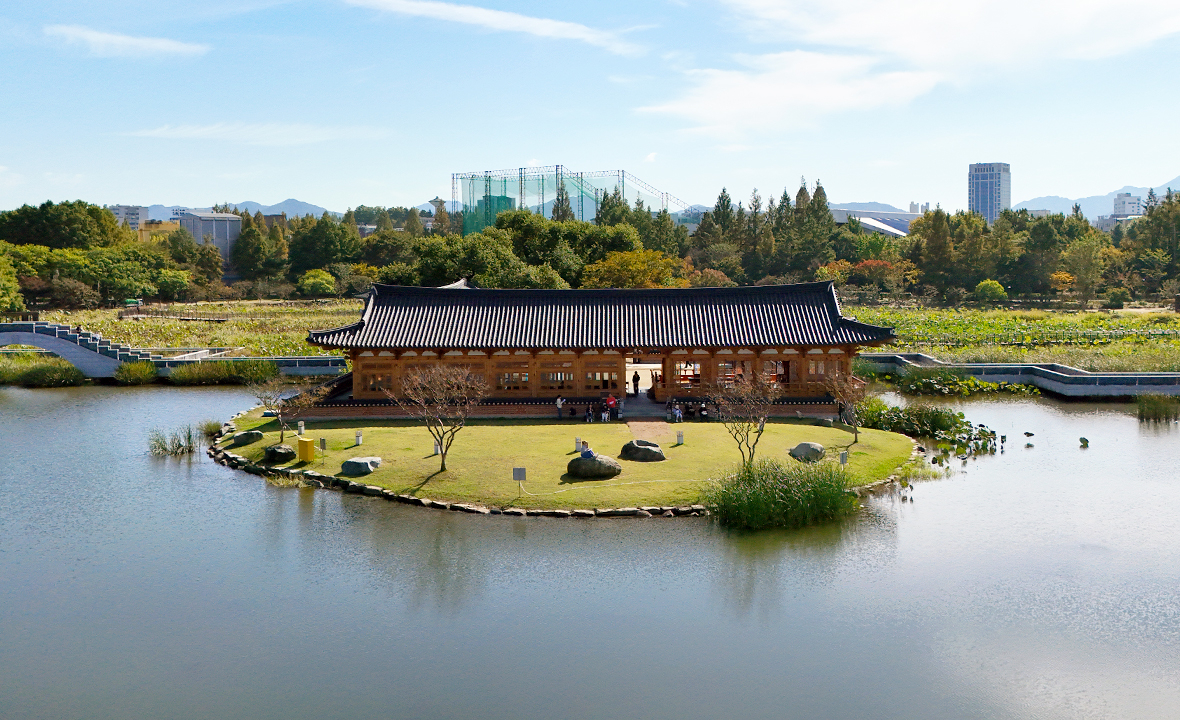
In the middle of the pond at Deokjin Park in Jeonju, sits a single-story hanok that doubles as a public library.
Yeonhwajeong Library opened in June 2022 and is run by the Jeonju City Library. The building is named after Yeonhwajeong, a pavilion that was once the signature structure of Deokjin Park. The park was developed as a pleasure ground during the Japanese colonial period, when boats were launched on its pond for leisure outings. The pavilion was later rebuilt and reopened as a library.
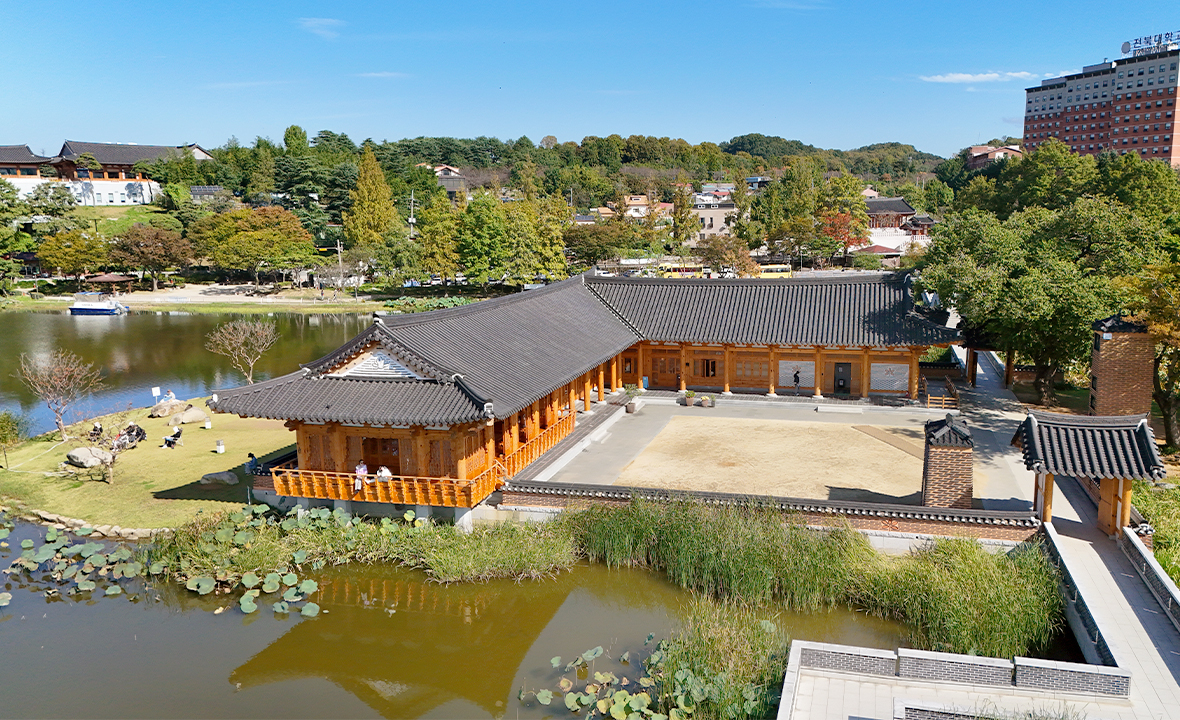
The new building is laid out in an L-shape. One wing, Yeonhwadang, houses the library itself. The other, Yeonhwaru, is an open pavilion that serves as a cultural space and resting area where visitors can talk quietly.
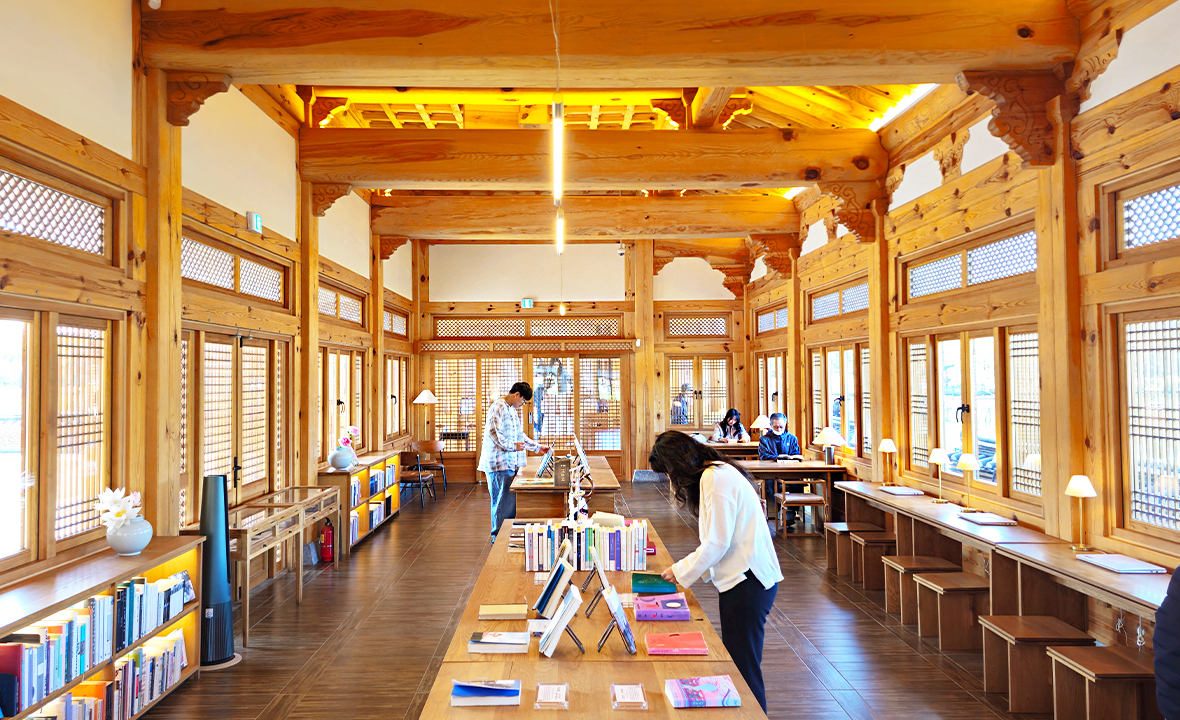
The collection is arranged under the theme of “dot, line, plane and empty space,” with an emphasis on books about Korean aesthetics and Jeonju’s identity. Through the windows, the pond and the trees around it fill the view.
The walk from the park entrance to the library passes several photo spots set against the water. The library draws a mix of visitors: travelers who come specifically to see a hanok library, locals on a stroll, families with children, and readers who linger to take in the pond.
The pond is at its fullest in July and August, when lotus leaves and blossoms cover the surface.
From September through May, the library is open from 10 a.m. to 7 p.m.
Forest of Wisdom, Paju
Paju, Gyeonggi Province, is hard to describe without mentioning books.
Paju Book City in Paju is a publishing community and the country’s only industrial complex dedicated to publishing culture. It is also an ecological complex, with a reed-lined stream running through it that provides habitat for several endangered species and migratory birds. The idea that books should coexist with nature and respect life is central to the complex’s philosophy.
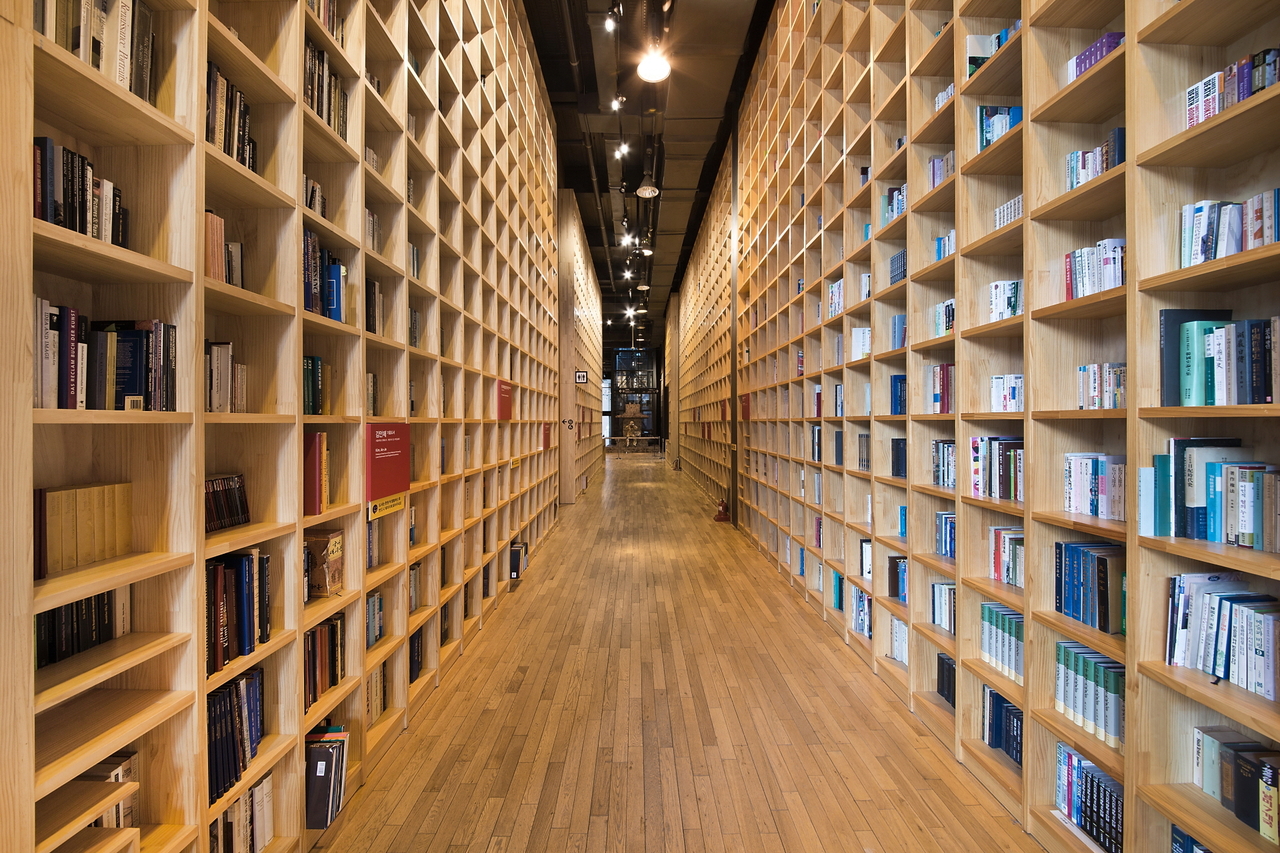
At the heart of Book City is the Forest of Wisdom, a shared library on the ground floor of the Asia Publication Culture and Information Center. It collects, preserves and manages books of value and keeps them open for anyone to read.
The Paju Book City Culture Foundation created the space in 2014 with support from the Ministry of Culture, Sports and Tourism. It is now run on the foundation’s own funds as a multipurpose cultural venue.
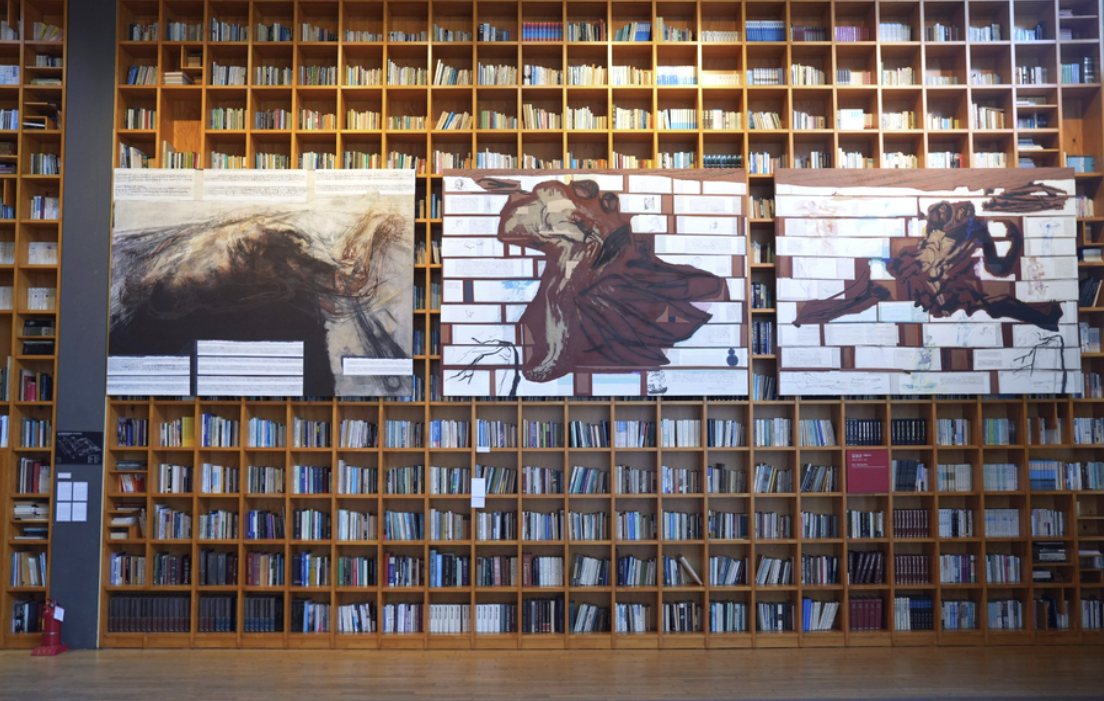
The most striking feature is the scale. Bookshelves more than 8 meters tall line the hall, creating a backdrop that has drawn numerous film and TV productions. Recent dramas shot there include Netflix’s “The Art of Sarah” and “You and Everything Else” and tvN’s “Our Unwritten Seoul.”
Visitors can pull any book from the shelves and read it on-site. Books cannot be borrowed.
The building houses several cafes, inviting spots to linger over a cup of coffee and a good book. Booksori, a small bookstore, sells books on the ground floor, and a secondhand bookshop called Bomulseom, meaning “treasure island,” is on the second floor.
Weekends bring large crowds, and the hall can get busy. Those seeking a quieter visit are better off coming on a weekday. The lively atmosphere, however, also means there is little pressure to stay silent, making it an easy outing for families with children.
The Forest of Wisdom is open from 10 a.m. to 8 p.m.
Inwangsan Shelter, Seoul
For decades, much of Inwangsan and Bugaksan in central Seoul was off-limits to the public.
In 1968, about 30 military guard posts and security facilities were installed across the two mountains, and civilian access was restricted. The number of posts was gradually reduced, and most of the remaining facilities were removed when Inwangsan fully reopened in 2018.
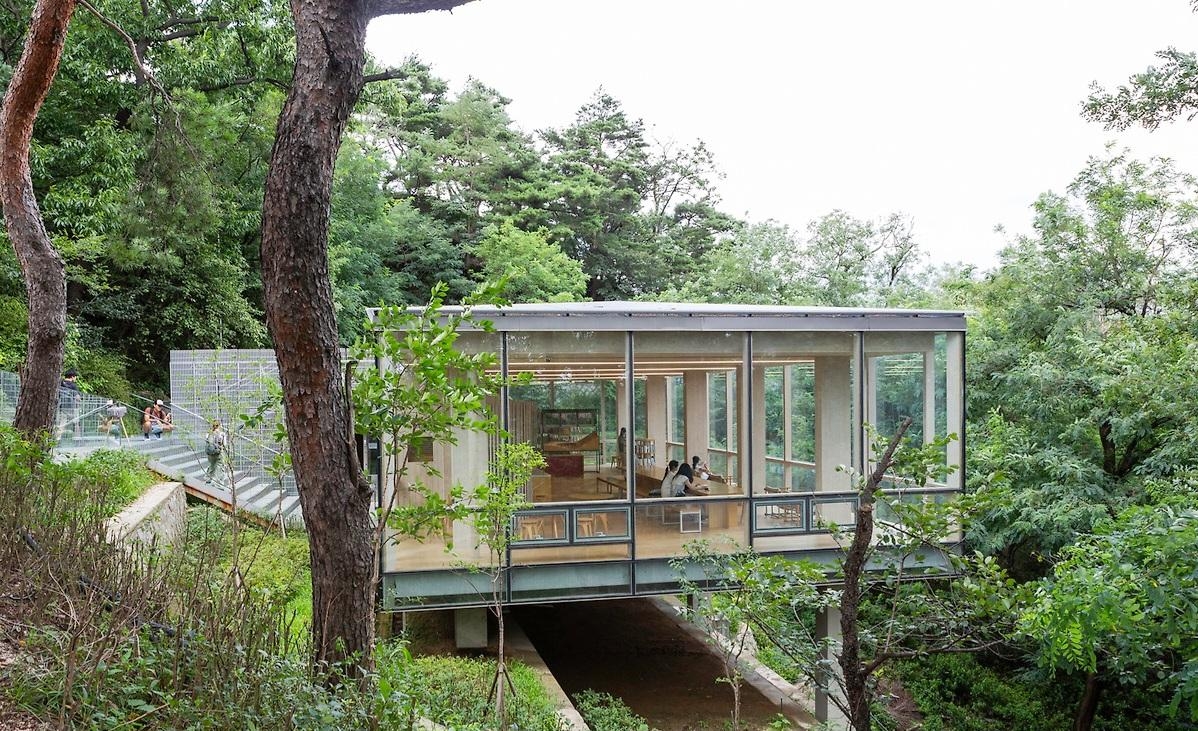
The Inwangsan Shelter in the Woods stands on the site of one of those posts, a former barracks for soldiers. The reinforced concrete upper structure was demolished, and a new timber building was put up in its place to preserve the history of the site. Once a symbol of division and control, the building now stands for openness.
The rest area has gained a following through word of mouth as a place to rest or read after a hike. Floor-to-ceiling windows look out over the mountain’s forests.
Inwangsan is one of the most accessible mountains in the city and a common recommendation for beginner hikers. Its peak sits at 338.2 meters, and the summit can be reached in about an hour.
By subway, the trip begins at Seodaemun Station on Line 5. From there, the Jongno No. 5 village bus runs to the Korea Social Science Library, where the trail starts.
The path begins right at the bus stop, following a section of the Seoul City Wall. The wall was built to mark the boundary of Hanseong, the Joseon-era capital, and to defend it from outside attack.
The early stretch is flat and easy, before giving way to some stairs. The way the city wall blends with the surrounding landscape is one of the mountain’s signature views. From the top, the ridgelines of Bukhansan stretch across the horizon. In fall, the trail is lined with leaves beginning to turn red.
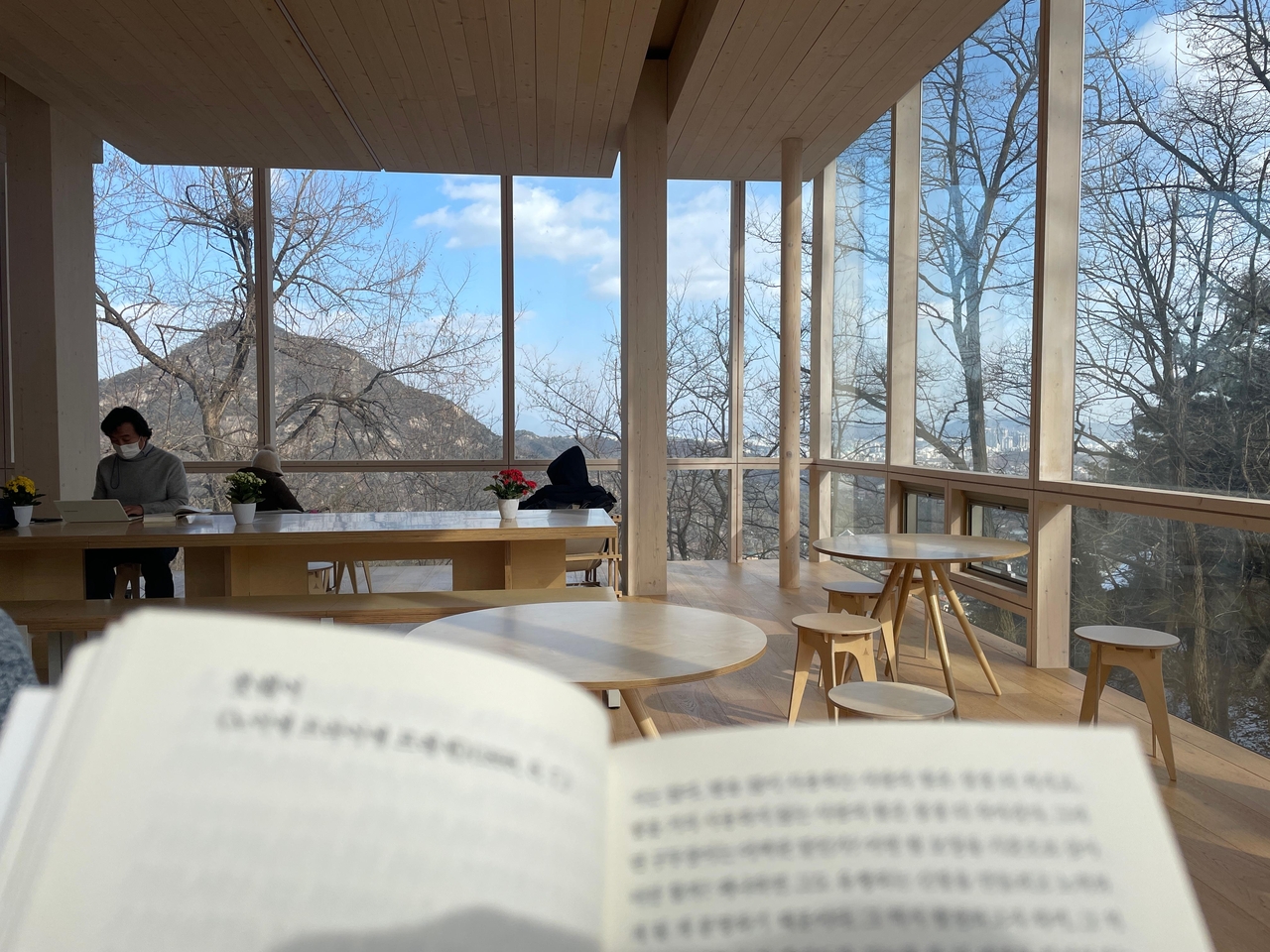
On the descent toward Changuimun Gate, the shelter makes a natural stop to cool down after the climb.
Hikers who would rather not carry a book can read from the collection on hand. The atmosphere is as quiet as a library. The most sought-after seat is a single-person couch directly in front of the main window.
The rest area is open from 10 a.m. to 5 p.m. and closed on Mondays. Beyond the fall foliage season, it is also worth a visit in winter, when snow covers the mountain.
yoohong@heraldcorp.com