

Persistent memory chip supply constraints through 2028 fuel outlook
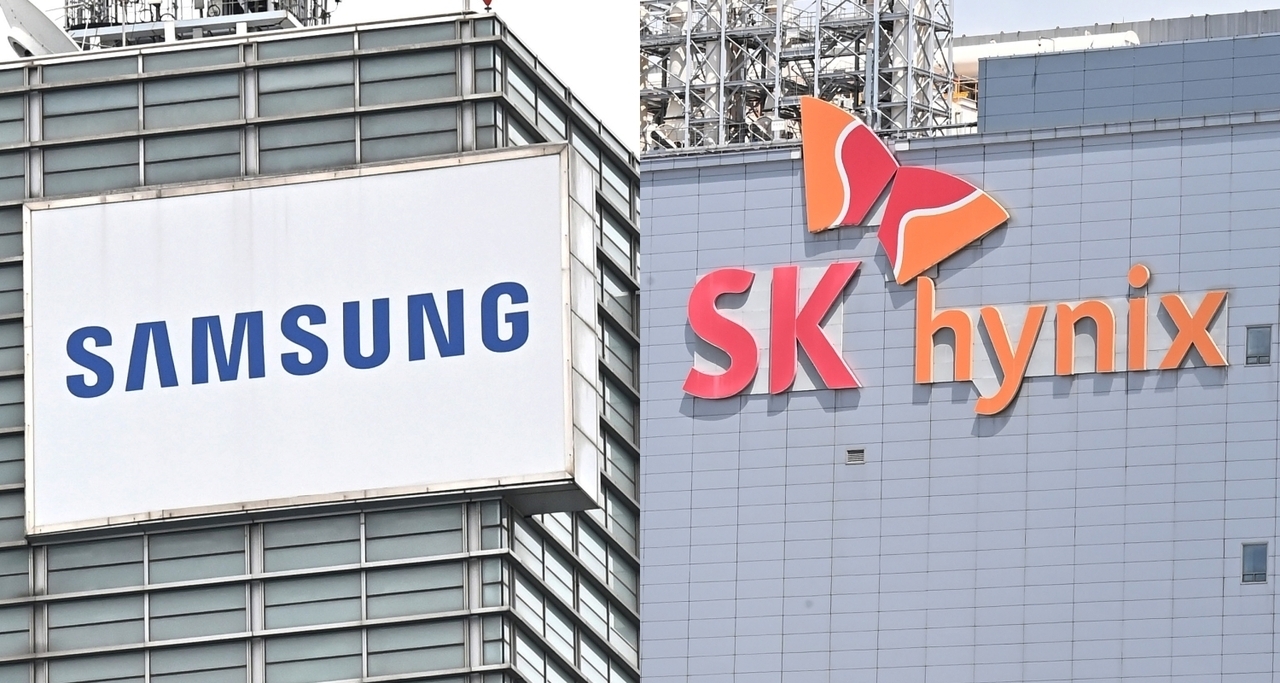
Despite wild Kospi swings, brokerages are doubling down on Korean chip stocks, betting the AI-driven memory boom has much further to run.
The benchmark index has seesawed in recent sessions, with chip heavyweights Samsung Electronics and SK hynix at the center of the turbulence as investors reassess the outlook for AI demand.
On Thursday, the Kospi plunged 7.57 percent, triggering a 20-minute marketwide trading halt. But sentiment swung back Wednesday, when Samsung and SK hynix each surged more than 7 percent intraday, helping trigger a five-minute buy-side sidecar.
Yet analysts remain largely unfazed by the volatility.
In a report Monday, Nomura maintained its bullish outlook for memory chips, forecasting supply bottlenecks through at least 2028 and naming Samsung and SK hynix as its top picks.
The brokerage reiterated its "buy" ratings and price targets of 670,000 won ($505) for Samsung and 4.7 million won for SK hynix — more than triple their respective Wednesday trading levels of around 220,000 won and 1.28 million won.
Nomura also dismissed market concerns over reports that China's largest DRAM maker, ChangXin Memory Technologies, plans to introduce next-generation server memory by year-end, calling the reaction "excessive."
"The market is underestimating both the breadth of AI demand and the earnings that such strong demand can generate across the value chain," the report said.
"Our investment thesis rests on continued data center deployment and associated memory requirements."
JPMorgan struck a similarly optimistic tone earlier this month, maintaining its "overweight" ratings on Korean and Taiwanese equities. The US investment bank expects AI-related stocks to continue driving Asian market gains next year, extending this year's rally.
Korean brokerages share that confidence, arguing that sustained AI demand is making the memory industry less vulnerable to traditional boom-and-bust cycles.
"The nature of memory demand in the AI era is different from what it was in the past," said Han Dong-hee, an analyst at SK Securities.
"Memory demand was previously driven by mature industries such as PCs and mobile devices, making it cyclical in nature. But with AI emerging as a new source of demand, the industry's sensitivity to economic cycles has weakened significantly."
Han pointed to what he described as unusually low valuations. Samsung and SK hynix are trading at 12-month forward price-to-earnings ratios of around 3.5 times and 2.8 times, respectively, below levels seen during previous downturns.
He viewed the recent sell-off as a buying opportunity rather than a sign of weakening fundamentals.
Mirae Asset Securities also maintained its "overweight" rating on the semiconductor sector, keeping its price targets unchanged at 400,000 won for Samsung and 3.1 million won for SK hynix.
"We continue to see extremely resilient AI demand, with no signs of a slowdown," said Kim Young-gun, an analyst at Mirae Asset Securities.
"Rather than taking an excessively pessimistic view, investors should place greater confidence in the optimistic outlook offered by leading players."
silverstar@heraldcorp.com