Experts see political signaling behind China's EUV claims as major technical hurdles keep commercial chipmaking years away
China is touting a breakthrough in one of the semiconductor industry's toughest technologies: extreme ultraviolet lithography. But how close is it really to challenging global chipmaking leaders?
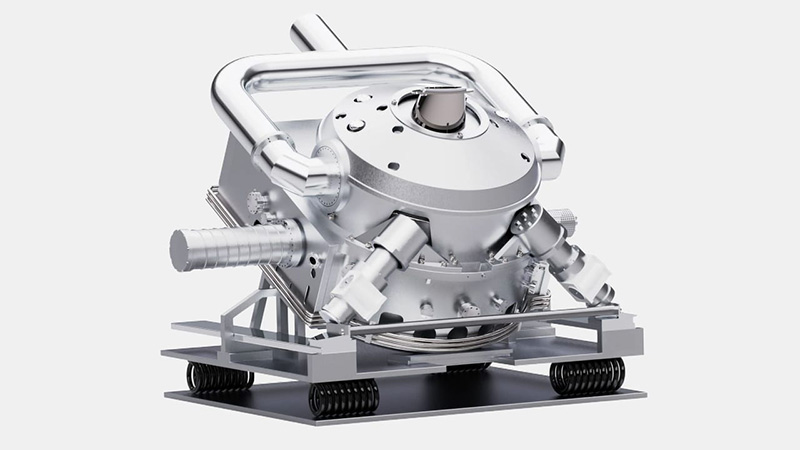
Chinese startup Langdao Silex recently unveiled a prototype EUV light source built with what it claims are 90 percent domestically made components, promising commercialization within three to five years.
Yet its reported performance falls far short of commercial requirements, and experts doubt China can develop a viable EUV lithography machine within the next decade.
So why is Beijing publicizing advances that may never reach the production line?
Experts point to a mix of geopolitical signaling, pressure to demonstrate returns on state investment and efforts to attract fresh funding.
The politics behind the prototypes
Ahn Jin-ho, a professor of materials science and engineering at Hanyang University specializing in EUV technology, said China's prototype announcements could be aimed partly at pressuring the US and its allies to ease export restrictions on advanced chipmaking equipment.
"It looks like China is saying, 'No matter how hard the US tries to block us, we can develop the technology ourselves, so the restrictions should be lifted,'" Ahn said.
Domestic pressure is another factor, according to Kim Hyung-joon, an emeritus professor of materials science and engineering at Seoul National University.
State-backed research projects face pressure to demonstrate results, he said. Publicizing prototypes can attract funding and raise China's technological profile, even when the equipment remains far from commercial use.
But announcements do not necessarily translate into manufacturing breakthroughs.
"China created a buzz a few years ago when it claimed it had developed an ArF lithography machine," Ahn said. "But years have passed, and I have yet to hear of it being used in mass production."
Ahn pointed to South Korean equipment maker Esol, which develops EUV sources for inspection systems.
“If we presented Esol’s achievement in the same way, we could say that a Korean company developed an EUV light source using a (distinct) method ... and successfully printed a pattern,” Ahn said.
“That may be technically true, but it has little significance for commercial chip production."
How close is China, really?
Shanghai-based Langdao Silex has developed an EUV light source, a critical component of a lithography system, but not a complete chipmaking machine.
The startup claims its prototype generates more than 15 watts of EUV output using a 1,000-watt driving laser and can operate continuously for over 100 hours. About 90 percent of its components are reportedly made in China.
While generating EUV light is itself a technical achievement, the reported output remains a fraction of the roughly 500 watts required for commercial systems.
Ahn cautioned that even those figures have yet to be independently verified.
"We do not know where the output was measured, and many details remain unverified," he said.
He noted that even ASML, the Dutch company that dominates commercial EUV lithography, took years to raise its light-source output from about 85 watts to more than 100 watts.
More importantly, a functioning light source is only one part of an EUV lithography machine.
China is reportedly pursuing a broader state-backed effort involving Huawei, domestic equipment makers, research institutes and thousands of engineers.
Reuters reported last December that a team including former ASML engineers had completed an EUV machine prototype at a high-security laboratory in Shenzhen in early 2025.
The machine can generate EUV light but has yet to produce a working chip. Beijing is targeting 2028 for chip production, although people familiar with the project consider 2030 more realistic, according to the report.
Why catching ASML is so hard
The biggest challenge is not simply generating EUV light, but integrating it into a reliable, high-volume manufacturing system.
Commercial EUV machines use powerful lasers to strike microscopic tin droplets tens of thousands of times per second, producing more than 600 watts of EUV light.
Reaching that level took decades of development. ASML spent more than 20 years working with US-based Cymer and German laser maker TRUMPF to develop its light-source technology, eventually acquiring Cymer in 2013.
The optical system presents another formidable barrier.
Unlike conventional lithography, EUV cannot use ordinary lenses because most materials absorb the light. Instead, the system relies on extraordinarily precise mirrors operating in a vacuum.
These mirrors, supplied by Germany's Zeiss, feature up to 100 ultra-thin layers of silicon and molybdenum designed to reflect EUV light with exceptional precision.
"Even ASML could not build an EUV machine without Zeiss," Ahn said.
That dependence illustrates why replicating an entire EUV system requires far more than developing individual components.
ASML CEO Christophe Fouquet also played down China's reported advances during the company's third-quarter earnings call last week, noting that predictions of a Chinese rival have circulated for decades.
"We have been having this discussion about China having a tool to compete with us for the last 25 years," Fouquet said. "Every other year, we get news that this is coming."
"If you stick to the facts, this year is no different from a year ago or even five years ago," he added. "I do not think the progress has been very strong."
herim@heraldcorp.com