
Ban Ki-moon joins diplomats on tour of his hometown as young mayor seeks to put central Korean city on global map
CHUNGJU, North Chungcheong Province — One moment, foreign diplomats were looking out over Chungju from one of the world's tallest elevator test towers. Hours later, they were clapping along to samulnori at a Buddhist temple, sipping locally distilled soju and eventually getting on their feet to dance to jazz.
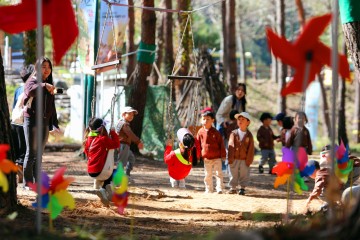
By the following morning, many had traded diplomatic attire for colorful hanbok.
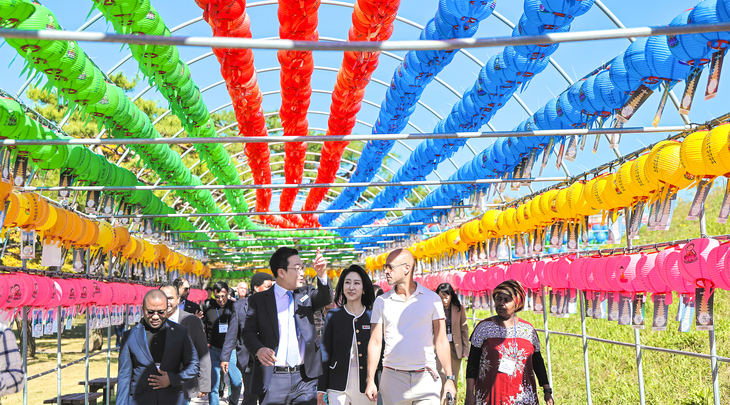
A total of 24 participants, including former United Nations Secretary-General Ban Ki-moon, 18 members of the diplomatic community and local officials, took part in Chungju Global Partnership Day on Oct. 6-7.
The two-day familiarization tour, co-organized by the Chungju Cultural Tourism Foundation and The Korea Herald, brought together ambassadors, diplomats and their families for a firsthand look at the city's industry, culture and local attractions.
For the central South Korean city of about 205,000 people, however, the two-day whirlwind was about more than sightseeing. The city sought to present a new face to the world as a place that brings together advanced industry, traditional culture, local food and tourism, as its young mayor pushes to raise Chungju's international profile.
Helping to make that pitch was Chungju's most internationally recognized native: Ban Ki-moon, the eighth secretary-general of the United Nations.
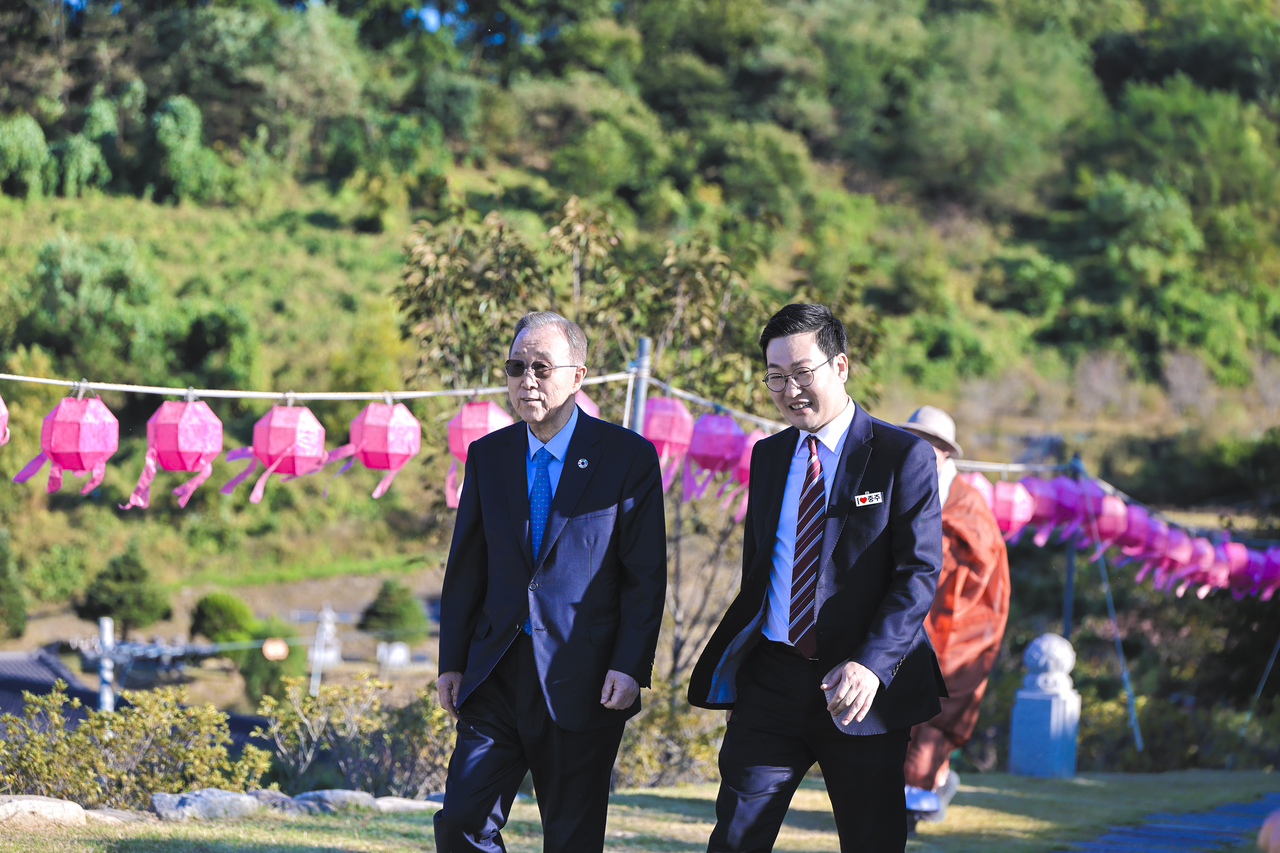
The gathering came as Chungju prepares for its Visit Chungju Year event in 2027 and seeks to attract more overseas visitors and international attention. Mayor Lee Dong-seok, elected in June at age 40, has made building a younger, more outward-looking Chungju a central theme of his administration.
At a welcoming ceremony at Chungju City Hall, Lee wasted little time drawing attention to his age.
"I'm the youngest mayor in the whole country. I'm sure that's a reason you're visiting," he joked, before welcoming the diplomats to a city he described as rich in history, culture and natural beauty, with growing opportunities for international exchange.
"I hope this visit will strengthen the friendship and cooperation between Chungju and your respective countries," Lee said.
Then came his sales pitch: "Once you spend the night in Chungju, you might want to stay here forever."
Industrial ambitions
A major focus of the tour was Chungju as an industrial hub, showcasing world class facilities in the city.
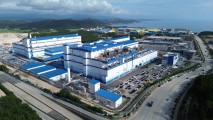
At Hyundai Elevator's Chungju Smart Campus, the delegation walked through a showroom and automated production facility before heading up the company's Asan Tower, a 250-meter R&D and elevator-testing facility completed in May 2025.
The facility, one of the world's three tallest elevator test towers, can test as many as 19 elevators simultaneously, ranging from a double-deck elevator traveling at 600 meters per minute and a panoramic model reaching 420 meters per minute to an ultra-high-speed elevator capable of traveling at 1,260 meters per minute, or roughly 21 meters per second. The tower also houses a research and development center with 160 researchers.
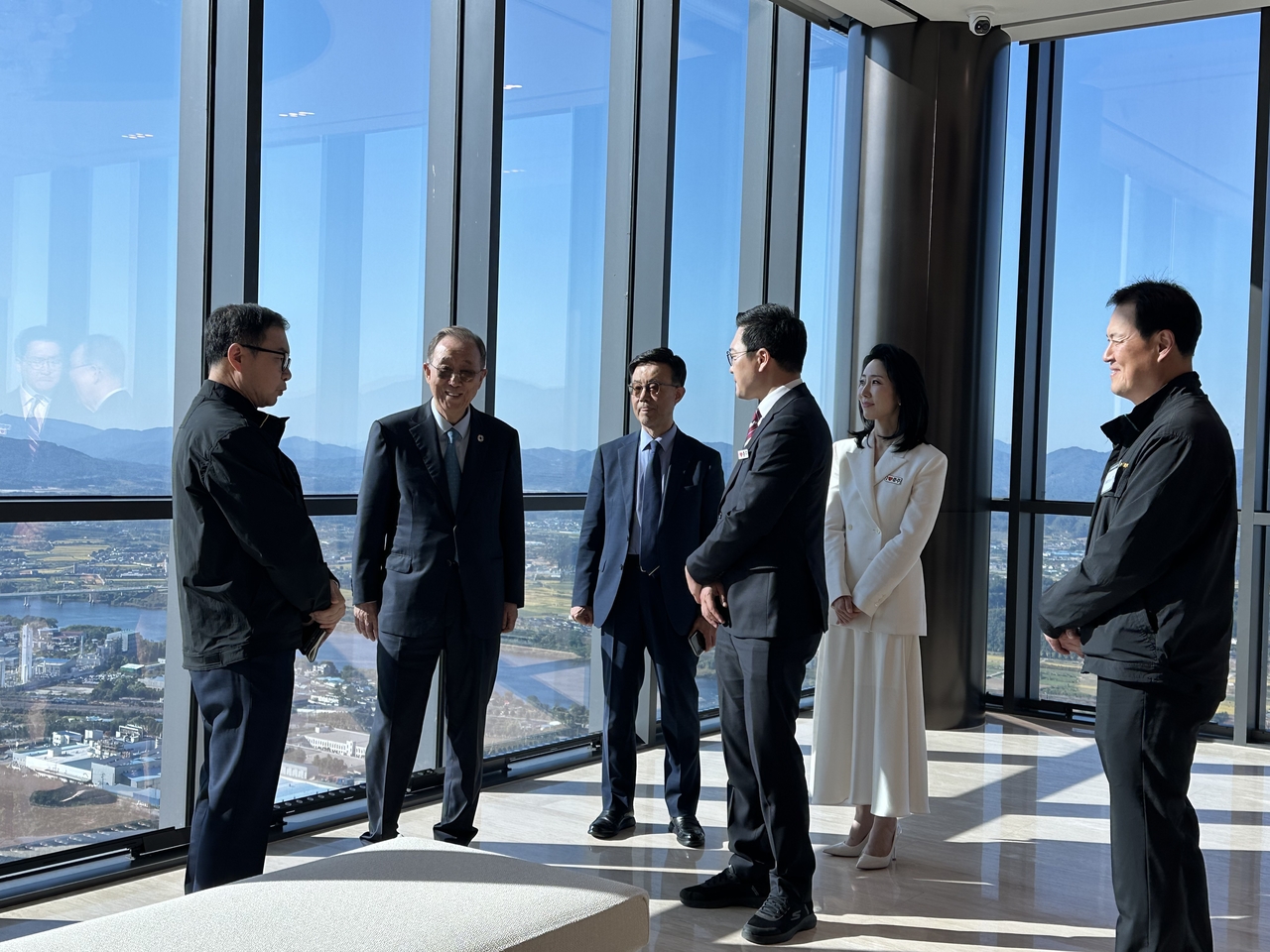
On the 75th floor of the tower, the diplomats stepped out onto an observation area, where sunlight poured through floor-to-ceiling windows overlooking Chungju's mountains, lakes and sprawling industrial landscape below.
For Ban, the visit offered a chance to see how a Korean manufacturer based in his hometown was reaching markets far beyond it.
"Visiting Hyundai Elevator has once again impressed upon me just how much Korean companies have contributed not only to the development of the Republic of Korea but also to progress around the world," Ban told The Korea Herald, using South Korea's official name.
"I was particularly moved to see Hyundai Elevator operating such a major facility here in Chungju, my hometown, exporting its products across the globe and helping demonstrate Korea's capabilities internationally."
"I hope the company's management and employees will continue working together as one and achieve even greater growth and prosperity in the years ahead," he said.
From smart factories to a mountain temple
The tour also provided a glimpse of Chungju's rich culture — both traditional and modern.
From the industrial complex, the tour moved to Beopjeongsa, a Buddhist temple nestled in Chungju, where Buddhist nuns greeted the guests with tea and traditional Korean refreshments.
Over cups of freshly brewed tea, guests sampled gangjeong, a crisp traditional confection, before the temple community handed out prayer beads and food prepared on site.
Then came the music.
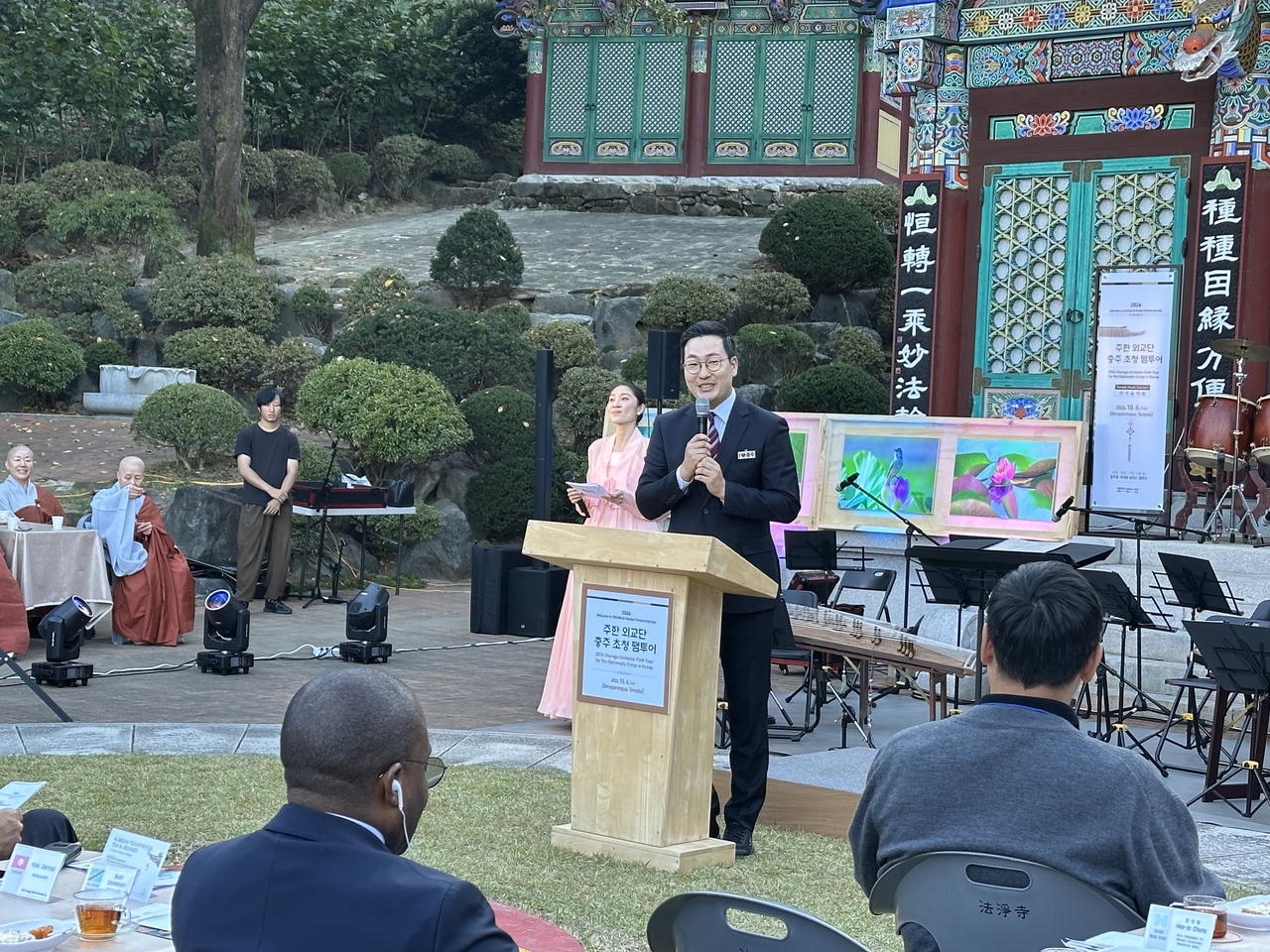
The courtyard filled with the sounds of Korean traditional instruments as the Chungju Municipal Ureuk Gugak Orchestra and members of the temple community performed gugak orchestral music, pansori (narrative singing), Korean dance, and samulnori, a genre of Korean traditional percussion music.
During the percussion performance, the diplomatic protocol loosened visibly: Ban and guests clapped along to the pounding rhythms.
Dinner was equally local and decidedly different from the banquet fare that often accompanies diplomatic events. The temple community served a spread of Korean Buddhist cuisine, including seasoned vegetables, tofu and grilled deodeok root.
The stop was meant to showcase another side of a city better known domestically for its lakes, apples and central location. Chungju has been designated a Korean City of Culture for 2025-27, with projects aimed at turning traditional music and other cultural assets into contemporary tourism content.
If the temple showcased old Chungju, the evening's final stop tried something less conventional.
At local distiller Danong Bio's visitor center, glasses of Chungju-made spirits were lined up alongside bite-sized fusion dishes — gamtae seaweed rice bites, Chungju apple and cream cheese canapes, mini yuja yakgwa and mugwort rice cakes.
Guests sampled Gamuchi Soju 25, a distilled rice soju made with Chungju-grown rice, alongside Soorok Signature Blend Chapter 2, part of the producer's premium aged-spirit line.
The city's attempt to mix tradition with something younger continued onstage.
Performers fused taekkyeon, the traditional Korean martial art closely associated with Chungju, with B-boying. A six-member jazz group followed, playing standards including "Sing, Sing, Sing," "Quizas, Quizas, Quizas" and "What a Wonderful World."
Young mayor's global bet
For Chungju Mayor Lee, the diplomatic visit was a test run for something bigger.
Chungju is preparing to designate 2027 as Visit Chungju Year as it tries to turn more visitors into overnight travelers and raise its profile outside Korea. Lee has previously said the city needs to move beyond simply increasing visitor numbers and encourage travelers to stay and experience its nature, history, culture and food.
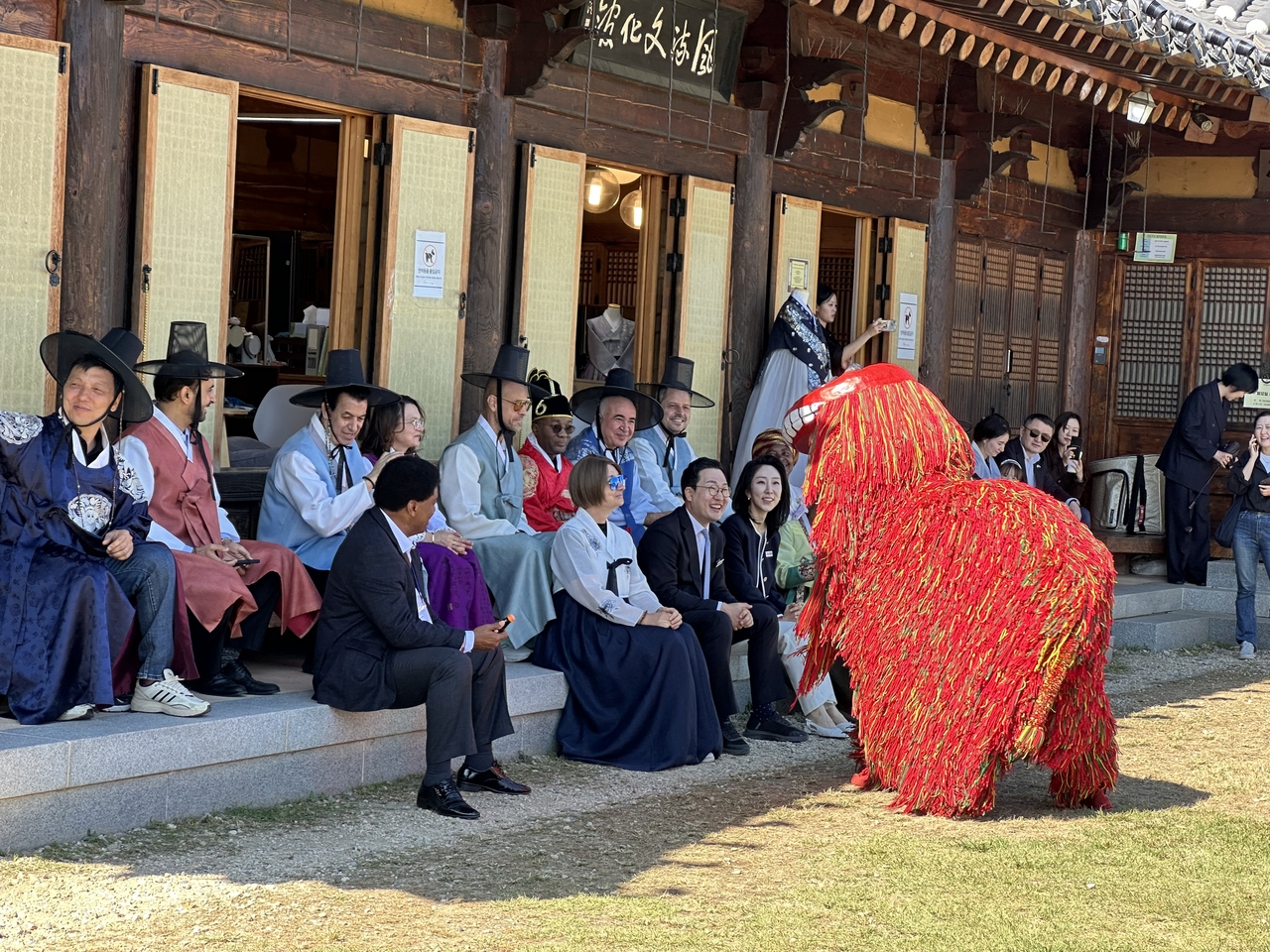
The mayor also wants Chungju's industrial story to be part of that international identity. The city is already home to companies including Hyundai Elevator and Hyundai Mobis, while Lee has been courting investment in artificial intelligence, robotics and other future industries.
"We invited ambassadors and other representatives from various countries to Chungju to introduce them to our city, particularly as we prepare for next year's Visit Chungju Year," Lee told The Korea Herald at the end of the program.
"Through their visit, we hope to showcase the many charms of Chungju — our people, culture and businesses — and lay the groundwork for Chungju to make an even greater leap onto the global stage," he said.
"We will continue inviting representatives from countries around the world and introducing them to everything Chungju has to offer," he said.
For two days, that meant guiding diplomats through a smart factory and a Buddhist temple, pouring them Chungju soju, dressing them in hanbok and getting some of them onto the dance floor.
The tour ended on a considerably simpler note: bowls of makguksu, or buckwheat noodles, served with chicken for lunch.
For a city trying to become more global without losing what makes it local, that may have been precisely the point.
mkjung@heraldcorp.com