
Chey Tae-won vows swift construction, says surging demand could require parallel development of both chip clusters
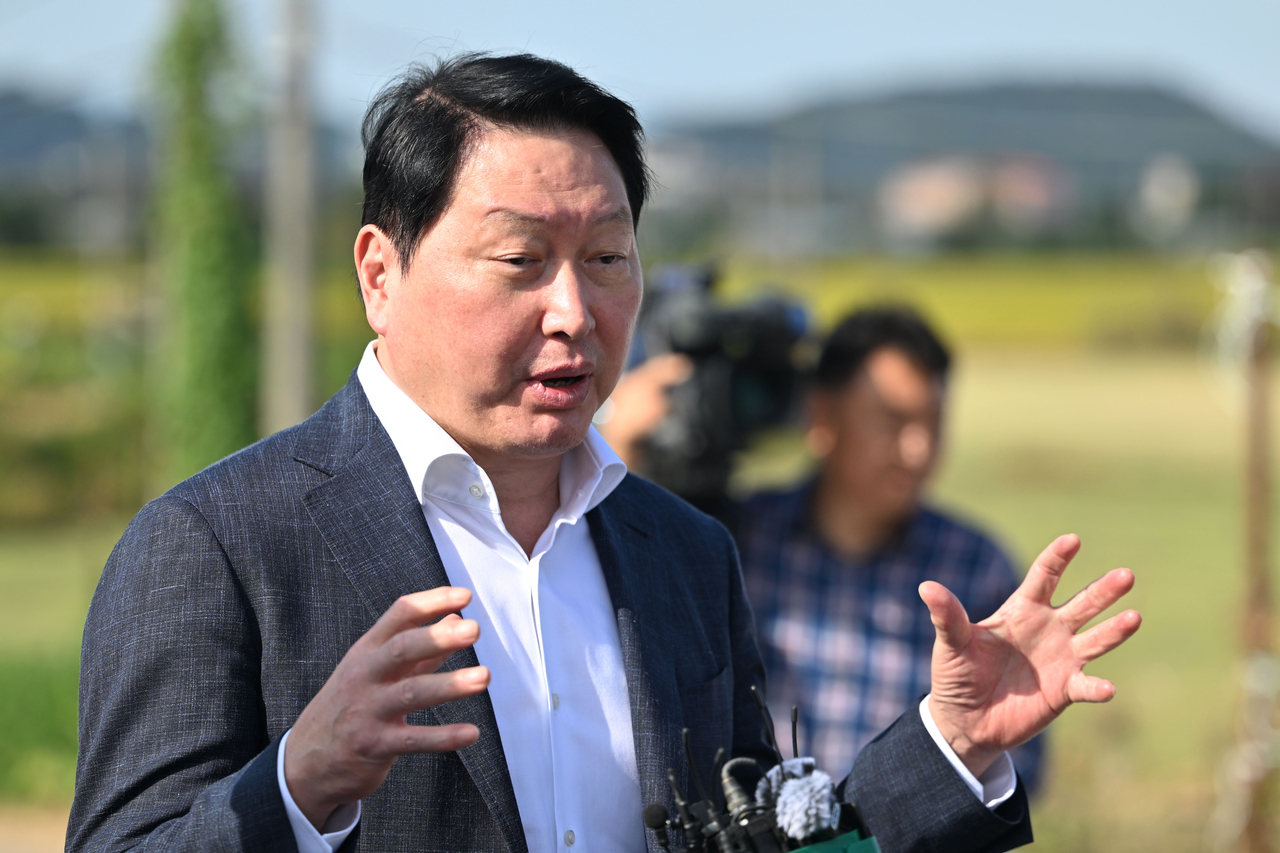
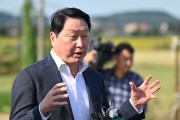
SK Group Chairman Chey Tae-won said Friday the group may build semiconductor plants in Gwangju alongside its Yongin chip cluster to keep pace with surging demand.
"Once the conditions are right, we'll build as much as we can, as fast as we can," Chey said during his first visit to the planned semiconductor cluster site at the Gwangju military air base in Jeonnam-Gwangju.
Chey said semiconductor demand was rising so quickly that production capacity needed to expand faster to keep up. While the group has yet to determine when construction could begin, he said it would move ahead as soon as possible.
"We expect semiconductor demand to continue growing at a considerable pace," he said. "We will need more sites and more fabs, and we may reach a point where we have to build them in parallel with the Yongin semiconductor cluster."
The scale of the Gwangju project could also increase. Chey said the group was initially planning facilities roughly two-thirds the size of those in Yongin, with room for further expansion depending on land availability and chip demand.
The pace of construction will depend partly on the government's ability to secure electricity and industrial water supplies, both essential to semiconductor manufacturing.
Chey said the group was assessing how quickly construction could proceed and how its schedule could be coordinated with central and local government plans for infrastructure development. A more detailed timetable could be announced once those assessments are complete, he added.
"Even if power and water supplies are delayed, we're willing to start construction first if we can get the timing right," he said.
The visit was Chey's first to the Gwangju site since the government formally unveiled its semiconductor megaproject for the Honam region.
Chey was accompanied by SK hynix CEO Kwak Noh-jung and other company executives. Jeonnam-Gwangju Mayor Min Hyung-bae and local government officials overseeing semiconductor industry support also joined the visit.
From an Air Force control tower overlooking the military air base, Chey surveyed the proposed site and discussed infrastructure development and corporate support measures with Min.
He also inspected an ammunition depot site designated for relocation. The depot site and surrounding flight safety zones, covering about 2.08 million square meters, are considered suitable for early development and fab construction because work in those areas would have relatively little impact on military operations.
Executives from SK hynix and SK Ecoplant, the group affiliate responsible for fab construction, had previously visited the military air base seven or eight times to assess the site.
Working-level talks between SK Group and the Jeonnam-Gwangju local government have also been progressing, covering land availability, power and water supplies, and other requirements for construction and operations.
The local government has been preparing infrastructure for the industrial complex, as well as housing and transportation facilities to support future operations.
The planned Honam semiconductor cluster will span about 8.26 million square meters around the Gwangju military air base in Gwangsan, Jeonnam-Gwangju.
SK hynix and Samsung Electronics have pledged a combined 800 trillion won ($596.4 billion) to develop the site into a second major semiconductor manufacturing hub outside the Seoul metropolitan area, with initial mass production targeted for June 2030.
yeeun@heraldcorp.com