
Actor-turned-director discusses "Flesh Impact," a Korean carmaker-commissioned short marking Monroe's centenary
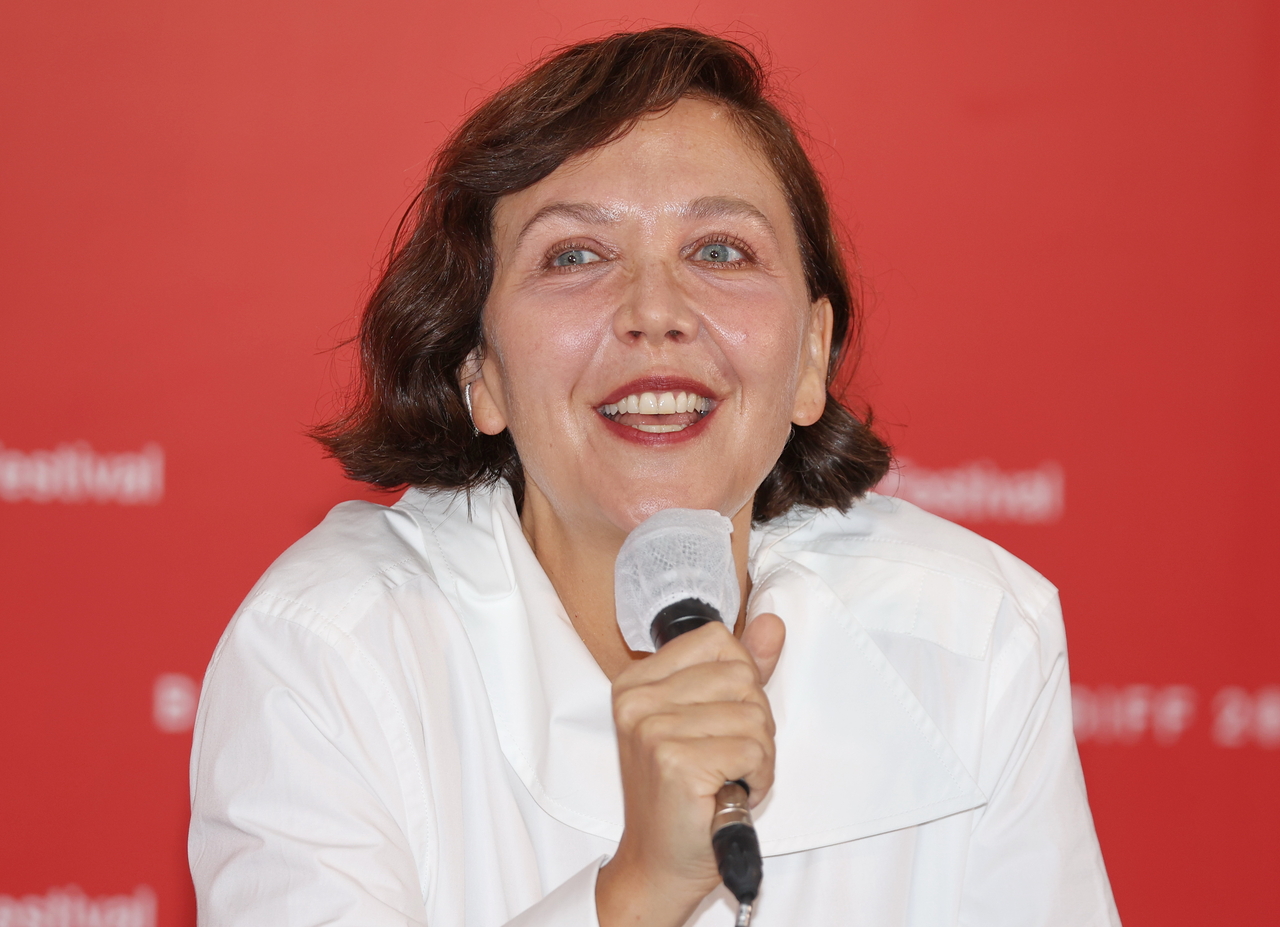
BUSAN — A Korean carmaker commissioning a short film about Marilyn Monroe for her 100th birthday feels somewhat out of left field.
That, in a nutshell, is "Flesh Impact," a short film made for Hyundai Motor Group's luxury marque Genesis — a key sponsor of the Busan International Film Festival.
Writing and directing the project is Maggie Gyllenhaal, the Oscar-nominated actor who has been building a career behind the camera since her 2021 directorial debut, "The Lost Daughter."
Having made her first trip to Korea for the festival, Gyllenhaal spoke to reporters Wednesday at the Busan Cinema Center.
"I don't think that when Genesis came to me and asked for a film about Marilyn Monroe to celebrate what would have been her 100th birthday, they imagined she would actually be 100 years old in the movie," Gyllenhaal said. "I thought, okay, I have this idea. You're never going to go for it, but I'll pitch it. And they said, okay, let's see what happens with this idea."
The 17-minute short stars Oscar winner Ellen Burstyn as Monroe at 100 and Dakota Johnson as the star in her prime. It premiered at the Venice Film Festival and is set to screen in BIFF's Special Screenings section along with "Bus Stop" (1956), one of Monroe's signature starring roles.
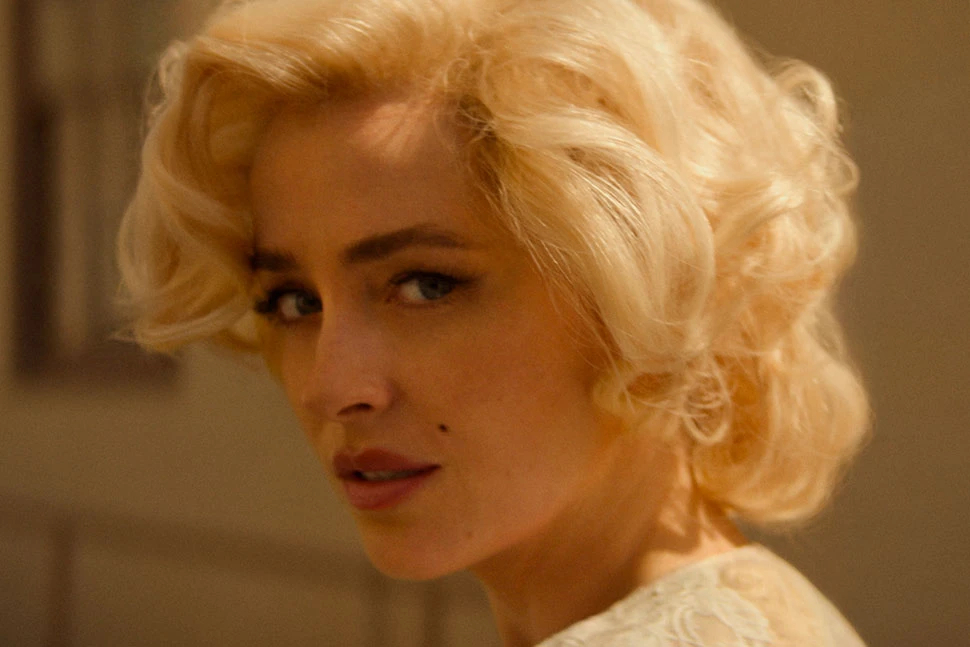
Gyllenhaal went with Johnson despite the actor's limited resemblance to Monroe. For her, the question was who Monroe was on the inside.
"If you just take a second and think what Marilyn Monroe's face actually looks like — even me, and we've been studying her for a year — it's very hard to put a finger on," she said. "More than that, I realized what she looks like is much less important than what's happening inside her heart and her mind."
As it happens, Monroe had her own connection to Korea. In February 1954, months after the Korean War ended in a truce, the actor took a break from her honeymoon in Japan to perform for American troops stationed here. The story wasn't lost on Gyllenhaal.
"I believe she said something like it was one of the most wonderful days of her entire life, the day that she spent here," Gyllenhaal said. "According to what I read, she was having a kind of sad, disappointing honeymoon. She was feeling lonely, and she was invited over here."
The filmmaker has been a vocal advocate for women in film. At Venice, she spoke out about a competition lineup that included only one film by a woman. The subject came up again in Busan, where women directed four of the 14 films in competition.
"When women are given an opportunity to express themselves freely, they make different work," Gyllenhaal said. "They write different kinds of books; they make different films. I think that's true because we have a very different experience of being alive in the world."
"Most of the movies we see growing up were made by men, and some of them are fabulous movies that totally changed my life," she added. "But they often require a little bit of translation. That ability to translate is a huge gift. And I would argue that it's a gift a lot of people haven't had to learn."
moonkihoon@heraldcorp.com