
After 46 days of use, Oura Ring 5 impressed on sleep and recovery, but less so on price and workouts
After a near-sleepless night on Aug. 25, I opened the Oura app to find a sleep score of 36 — a blunt number for a night I already knew had gone badly.
I had slept for 2 hours and 7 minutes, with 69 percent sleep efficiency and just 17 minutes of REM sleep. The numbers told me little I did not already feel, but they made the problem harder to brush aside.
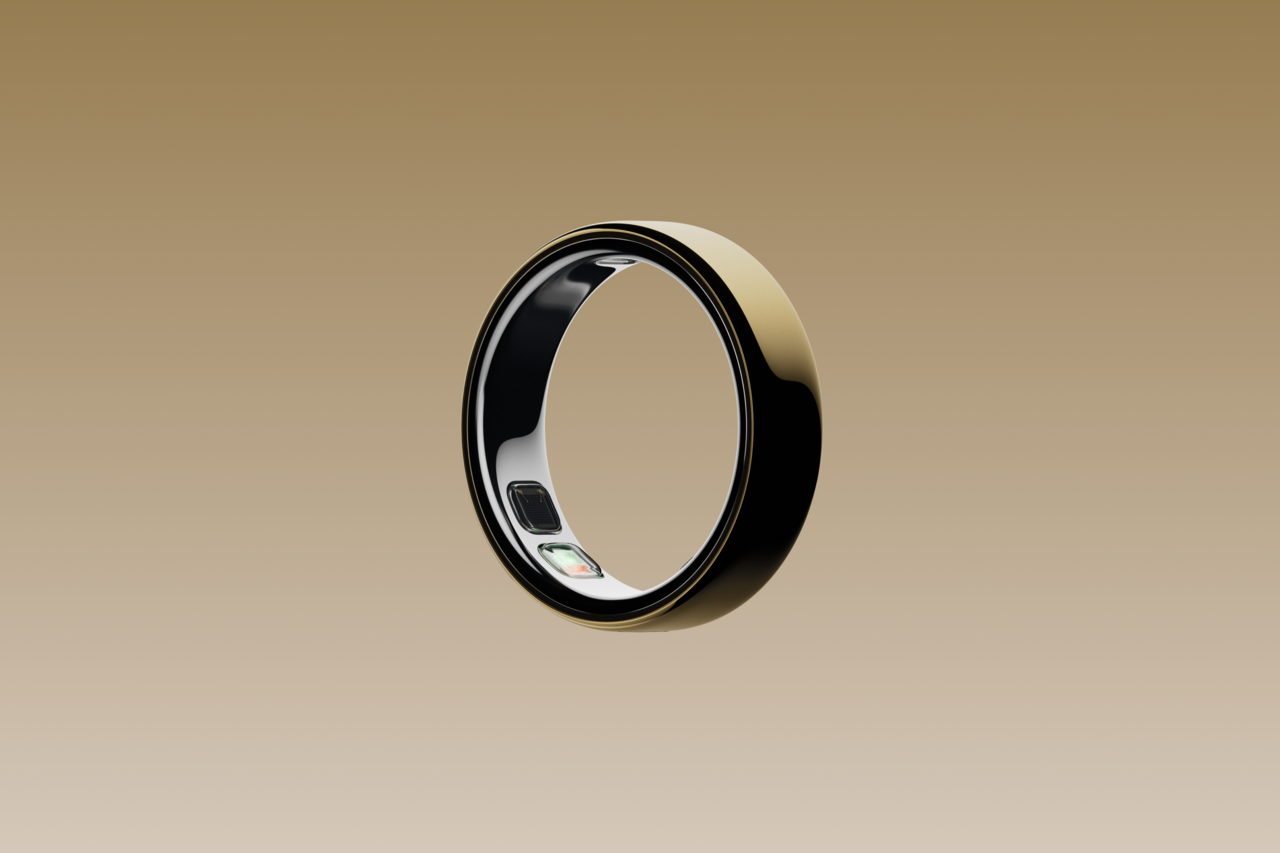
I wore the gold Oura Ring 5 from Aug. 18 through Friday, a total of 46 days, rarely removing it. It stayed on during commutes, long hours at my laptop, showers, workouts and sleep.
The brand has drawn attention through celebrity wearers including BTS’ V and Blackpink’s Lisa, but what stood out most was simpler: I kept wearing it.
I already own a Samsung Electronics Galaxy Fit 3 smart band that tracks sleep, but I rarely wear it to bed. The Oura Ring 5 largely solved that problem. After a few days, it felt closer to a regular ring than an electronic device, and I could sleep with it on without the pressure I felt with a watch.
The Ring 5 is 6.09 millimeters wide and about 2.28 mm thick, versus 7 mm and 2.6 mm for Samsung Electronics’ Galaxy Ring. A full charge lasted about eight days.
Those small advantages filled the biggest gap left by my smartwatch: overnight data.
Sleep quickly became the part of the app I checked most. Oura combines sleep stages, efficiency, resting heart rate and heart rate variability into a daily score. Its Sleep Debt feature estimates how much sleep a user has missed relative to individual needs.
I already knew I was not sleeping enough. Watching that shortage accumulate was different. There were nights when I went to bed earlier partly because I did not want the number to climb again.
The longer I wore the ring, the more useful its baseline became. On Sept. 10, an unusually hectic workday, the app logged 4 hours and 45 minutes in a “stressed” state and no time in “restored.” I treated it as a comparison with my usual pattern, not a medical judgment.
Oura vs. Samsung
For Korean buyers, an obvious comparison would be Samsung’s Galaxy Ring.
Women’s health is one area where Oura goes further. Using overnight temperature trends and logged cycle information, it can track periods, cycle phases, fertile windows and ovulation, while its wider suite extends to pregnancy and perimenopause-related features.
The Galaxy Ring also supports menstrual cycle and ovulation predictions using overnight skin temperature data. The difference is not whether cycle tracking exists, but how far each platform takes it.
Samsung, however, has a clear advantage in Korea: Samsung Health.
For Galaxy phone or Galaxy Watch users, Ring data flows into Samsung Health alongside existing sleep, heart rate and activity records, with no separate subscription fee for Galaxy Ring health data.
Oura works with both iPhones and Android phones, giving it broader compatibility, but the choice may come down to which health ecosystem a user already lives in.
Price strengthens Samsung’s case. The Galaxy Ring lists at 499,400 won ($368.15) in Korea. The Oura Ring 5 starts at 630,000 won and rises to 780,000 won for premium finishes.
Oura then charges 9,400 won a month or 110,000 won a year for deeper analysis and personalized insights. The cheapest model therefore costs about 740,000 won in the first year. That remains the Ring 5’s biggest drawback.
As Oura’s software is one of its best features, users must keep paying for it. Some longer-term reports are also available only in English, an awkward limitation for Korean consumers.
Where the ring falls short
Oura says the Ring 5 tracks more than 50 health metrics, but by the end of the test I kept returning to just a few: sleep, readiness and stress.
The same simplicity that works at night becomes a limitation during exercise. There is no display, so during a run I could not glance down to check heart rate, pace or distance. Oura can log workouts, but it does not replace the immediate feedback of a smartwatch.
That became the clearest divide in daily use: At night, I wanted to use the ring. During a workout, I wanted my watch.
If you already wear a smartwatch comfortably around the clock, including in bed, it is harder to justify another expensive wearable with overlapping functions. My case was different: I had sleep tracking on my watch, but rarely used it because I disliked wearing it overnight.
Oura filled that gap. After 46 days, I stopped thinking of the Ring 5 as a smaller smartwatch. A watch is something I actively use; the Oura Ring works best when I forget it is there.
I would not call it a wearable everyone needs, especially at this price. But one habit stuck.
By Friday, I was waking up with a new first question: “What was my sleep score?”
yeeun@heraldcorp.com