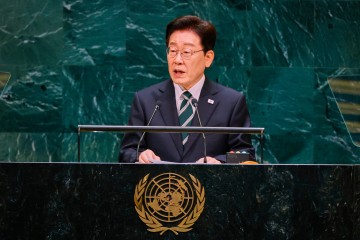
South Korean President Lee Jae Myung on Tuesday reaffirmed his envisioned role as a "pacemaker" in establishing peace on the Korean Peninsula, pledging efforts to help swiftly resume dialogue between the United States and North Korea.
The South Korean president made the pledge in his address to the 81st United Nations General Assembly in New York, as US President Donald Trump seeks to revive his diplomacy with North Korean leader Kim Jong-un, while inter-Korean relations remain at a standstill.
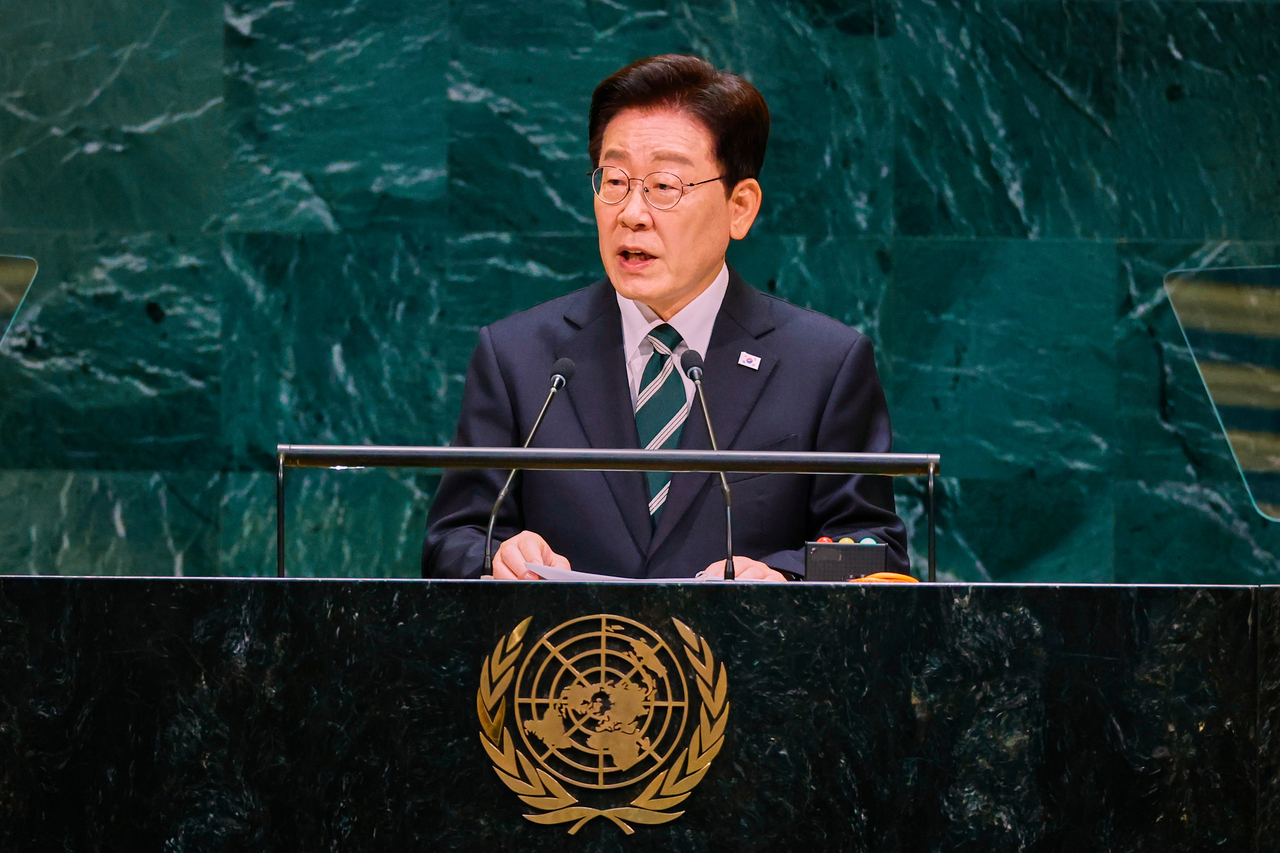
"I hope the long-suspended dialogue between North Korea and the US can resume without delay," Lee said.
"We will lay the groundwork for this (US-North Korea dialogue) to develop into a dialogue between the related parties to end the war on the Korean Peninsula and transition into a peace regime."
The two Koreas remain technically at war since the 1950-53 Korean War ended with an armistice, not a peace treaty.
"Fortunately, President Trump's resolve has recently created a hard-won opportunity for change," Lee said, referring to Trump's repeated expressions of interest in dialogue with the North Korean leader.
Lee said he is confident that such dialogue can provide a framework for normalizing relations among relevant parties and promoting stability and cooperation in Northeast Asia.
As South Korea pursues such efforts, it will also seek the denuclearization of North Korea through a phased approach, beginning with a halt and then reductions in the country's nuclear and missile capabilities, and eventually working toward a Korean Peninsula free from nuclear weapons, he said.
"As a direct party to peace on the Korean Peninsula, and as a pacemaker, my government will exert every effort to open and sustain the path toward dialogue," Lee said, also asking for a responsible and constructive role from the UN and its Security Council.
Reiterating his commitment to seeking "peaceful coexistence" with North Korea, the South Korean president said his administration will push for inclusive, stable and responsible coexistence, which he said will respect the North's system, build inter-Korean trust and promote stability and cooperation in Northeast Asia.
"We will continue to respect the North on the international stage and seek cooperation wherever possible. We hope that opportunities will emerge for us to work together in the international community, in areas such as public health, disaster response and the climate crisis," he said.
Stressing global unity to address common challenges facing humanity, Lee set out three visions under what he described as a "K-Initiative" to contribute to resolving issues stemming from the emergence of artificial intelligence and the conflict in the Strait of Hormuz.
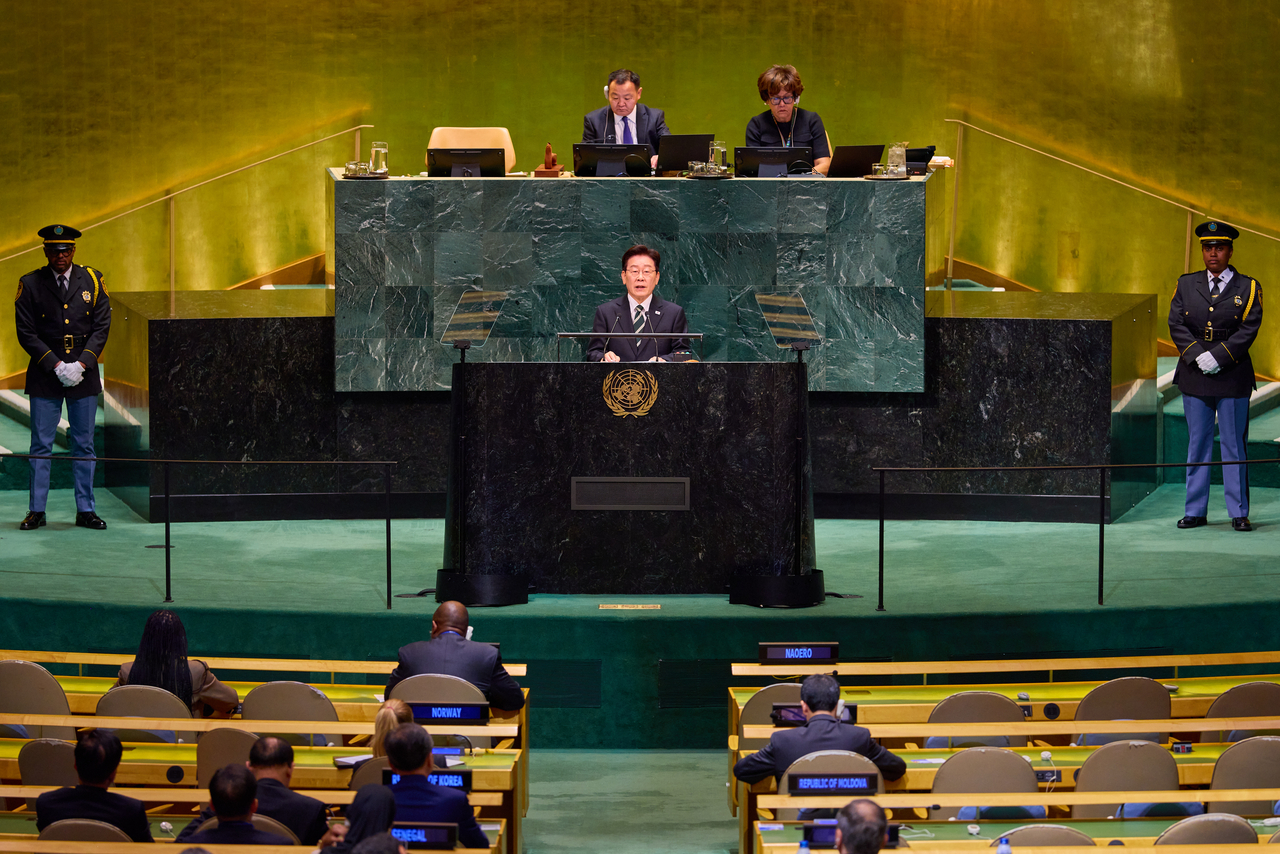
Lee stressed that while the AI revolution drives new prosperity, it may also deepen inequality and imbalance unless proper responses are taken, including addressing low youth employment.
"We will take the lead in shaping AI into a tool for solving the shared challenges we face, such as the climate crisis, public health, food insecurity and refugee issues," the president said, also pledging efforts to ensure all countries and individuals have access to the benefits of AI development.
Under the initiative, Lee also proposed building a "Partnership of Constructive Contributors" aimed at promoting cooperation on energy supply chains amid a supply chain crisis stemming from the conflict in the Strait of Hormuz.
The conflict "has underscored the stark reality that the weaponization of key energy and logistics supply routes can send severe shockwaves to the lives of ordinary people around the world," he said.
"Attacks on merchant vessels and threats to the lives and safety of crew members cannot be justified under any circumstances," the president added.
Additionally, the president pledged to transform his country's industrial structure under the "Korea Green Transformation" strategy to turn carbon neutrality into new growth engines and create more jobs.
Lee also called for efforts to reform the United Nations, saying, "We must reduce duplication across organizations and programs, accelerate decision-making, and direct limited resources where they are needed the most," and voicing support for the "UN 80 Initiative."
The initiative, launched by UN Secretary-General Antonio Guterres last year, calls for a system-wide reform plan
"We also support the reform of the UN Security Council, so that it operates in a more effective, democratic and accountable manner," Lee added. (Yonhap)