Government targets rollout by March 2027, with hospital-only prescribing and dispensing during initial two-year period
South Korea aims to introduce medication abortion for pregnancies of up to nine weeks by the end of March 2027, beginning with a two-year period in which doctors would prescribe and dispense the drugs at major hospitals, the government said Wednesday.
If the necessary safeguards are subsequently established, the system would switch to doctors issuing prescriptions and independent pharmacies dispensing the medication.
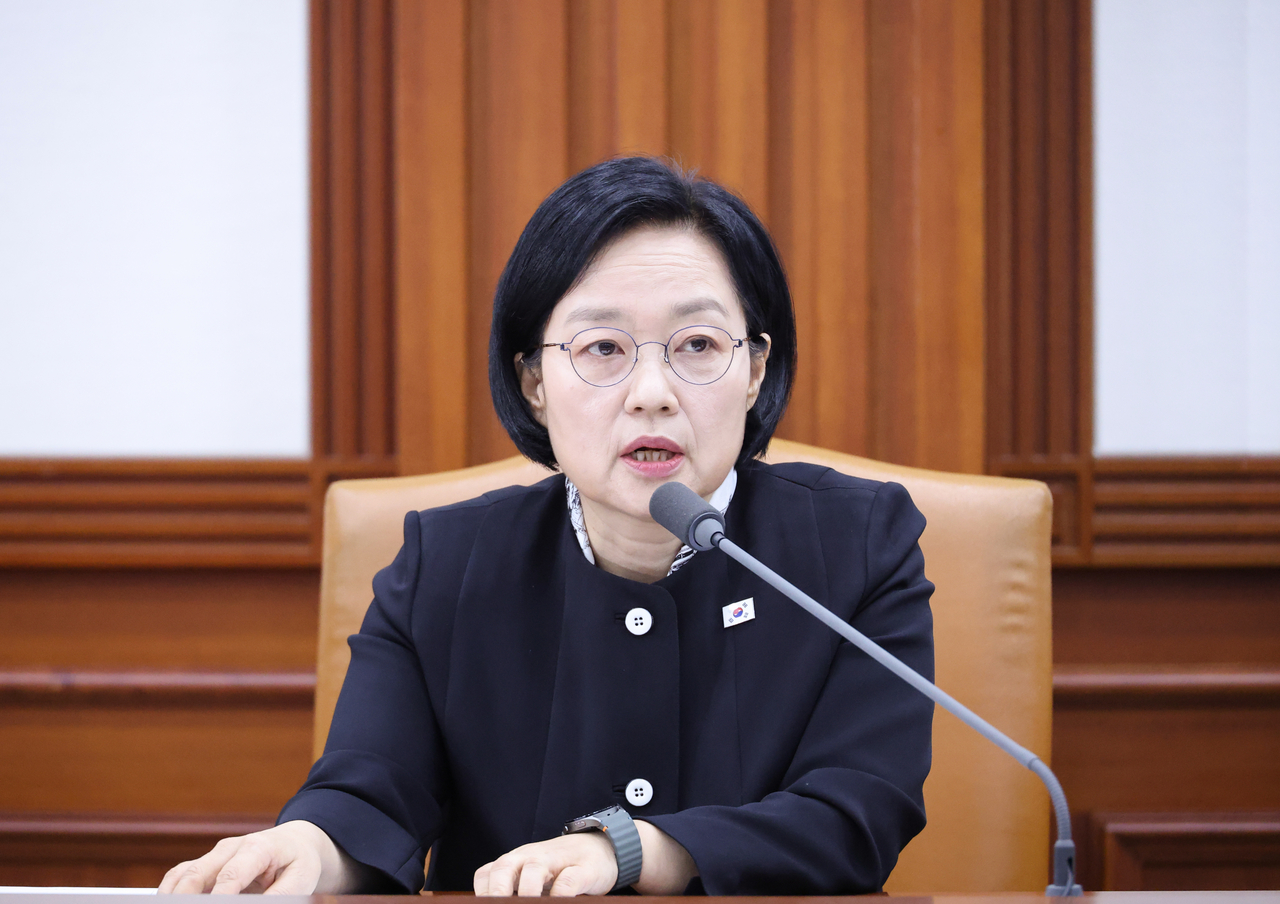
Prime Minister Han Seong-sook announced the phased plan at a government policy coordination meeting, saying the prolonged absence of a regulated system had exposed some women to illegally distributed drugs and other potentially dangerous methods.
“Allowing this institutional vacuum to continue effectively amounts to neglecting public health and safety,” Han said. “It is crucial that we come up with a safe and practical solution.”
The plan seeks to address a legal and regulatory vacuum that has persisted since Korea’s criminalization of abortion lost effect in 2021.
The Constitutional Court ruled in 2019 that the country’s abortion ban was incompatible with the Constitution and ordered the National Assembly to revise the law by the end of 2020. Lawmakers have failed to pass replacement legislation.
The medication will not become available immediately, as it must first receive regulatory approval.
Hyundai Pharm applied in December 2024 for approval to import Mifegymiso, and the application remains under review by the Ministry of Food and Drug Safety.
Shin Joon-soo, director-general of the ministry’s Pharmaceutical Safety Bureau, said a substantial portion of the review had been completed, with several procedures remaining, including an assessment of the drug’s risk management plan.
“Following a thorough review, we will work with the company so that the medication can be introduced within the first quarter of next year once it has completed preparations involving imports and personnel,” Shin said at a joint government briefing.
The product under review is Mifegymiso, a combination pack containing mifepristone and misoprostol, which are taken sequentially to terminate an early pregnancy.
Mifepristone blocks the action of progesterone, a hormone needed to sustain pregnancy. Misoprostol, taken afterward, causes the uterus to contract and expel the pregnancy.
President Lee Jae Myung brought renewed attention to the issue in July when he called for women to be able to obtain medication abortion under medical supervision.
Under the government plan, medication-based abortion would be designated as a temporary exception to Korea’s mandatory separation of prescribing and dispensing. Doctors would therefore be permitted to perform both roles during the initial two-year period.
The government also plans to support the medical community in developing clinical guidelines and establish systems for monitoring adverse reactions and managing the medication.
Han said the government would pursue revisions to the Criminal Act and the Maternal and Child Health Act to address the broader legislative vacuum.
“These measures are not intended to encourage abortion, but to protect public health,” she said.
Gender Equality Minister Won Min-kyong said the policy would enable women to terminate pregnancies safely within the formal health care system while easing the financial burden on those facing difficult social and economic circumstances.
minsikyoon@heraldcorp.com