South Korea is preparing to provide essential medical equipment to a hospital in Pyongyang if North Korea agrees to accept the assistance, the Unification Ministry said Monday.
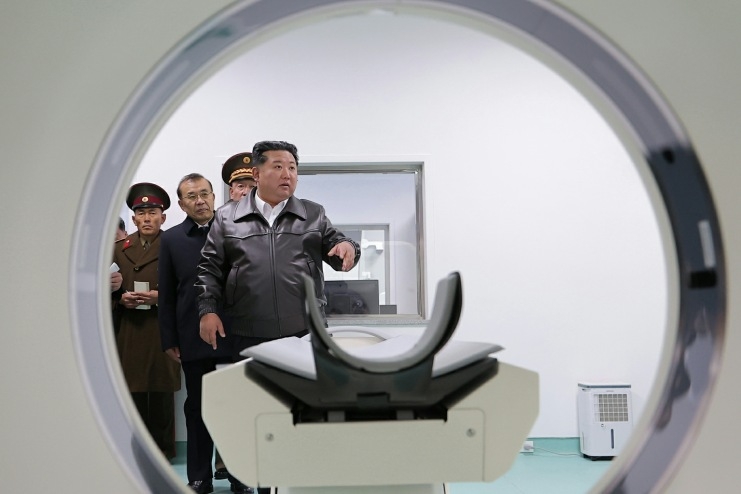
"We received a sanctions exemption from the UN Security Council in May for 166 types of essential medical equipment for diagnosis, surgery and treatment for Kangdong County Hospital in Pyongyang," Unification Ministry spokesperson Yoon Min-ho told a regular press briefing in Seoul.
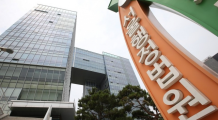
Kangdong County Hospital opened in November 2025 as part of North Korean leader Kim Jong-un's Regional Development 20×10 Policy aimed at modernizing factories, hospitals and other public facilities in regional areas.
"We are making preparations so that the relevant project can begin immediately if there is a positive response from the North," Yoon said.
The ministry did not disclose a detailed list of the equipment, but said it would cover essential devices used for diagnosis, surgery and treatment. The scale of the assistance could change depending on circumstances.
The project would be financed through the Inter-Korean Cooperation Fund, which the government uses to fund projects promoting exchanges and cooperation between South and North Korea, said the ministry.
The initiative has drawn criticism from the main opposition People Power Party, which has questioned whether the assistance is appropriate while North Korea continues to launch missiles and maintain a hostile posture toward South Korea.
North Korea fired multiple short-range ballistic missiles toward the East Sea on Saturday, a day after South Korea, the United States and Japan concluded their five-day Freedom Edge exercise. Pyongyang said Monday that the launches were part of a joint firepower strike drill involving long-range artillery and missile units.
Asked about criticism of the timing, Yoon said Seoul distinguishes humanitarian cooperation from political and security developments.
"When it comes to humanitarian projects, we have a principle of pursuing them consistently regardless of the political and military situation," he said.
The proposed medical assistance comes as funding for some of Seoul's programs related to North Korean denuclearization and human rights is set to decline under the government's 2027 budget proposal.
According to Foreign Ministry budget documents submitted to the National Assembly, funding for a program designed to strengthen international cooperation toward North Korea's denuclearization is proposed at 735 million won ($547,000) for 2027, down 20 percent from 919 million won this year.
The program covers consultations with the international community on the North Korean nuclear issue, preparations for potential denuclearization measures, and efforts to disrupt illicit financing for Pyongyang's nuclear and missile programs.
Within the program, funding for consultations on the North Korean nuclear issue is set to fall 14.5 percent, while allocations for promoting and verifying denuclearization and strengthening international cooperation against North Korea's illicit financing activities would each decline 35.8 percent.
Another Foreign Ministry program covering efforts to establish a peace framework on the Korean Peninsula and promote unification diplomacy is proposed at 459 million won next year, down 20 percent from 574 million won in 2026.
That program includes efforts to build international understanding of developments on the Korean Peninsula and Seoul's North Korea policy, as well as raise awareness of North Korean human rights and humanitarian issues.
Funding for an overseas cooperation program that includes the protection and transportation of North Korean defectors to South Korea is also set to decrease 20.9 percent, from 1.496 billion won this year to 1.183 billion won in 2027.
mkjung@heraldcorp.com