Shareholder support gives Choi Yun-birm’s management edge over Young Poong-MBK alliance

The nearly two-year management control battle between Korea Zinc and the Young Poong-MBK Partners alliance has unfolded as a costly war of attrition marked by repeated legal and shareholder challenges.
At Wednesday’s extraordinary general meeting, however, Korea Zinc management under Chair Choi Yun-birm gained a clear tactical advantage, securing broad shareholder support in a pivotal vote for an independent audit committee seat.
Baek In-kyoo, the Korea Zinc board-backed nominee, received support from 81.8 percent of voting rights represented at the meeting. Park Yu-kyung, nominated by Young Poong and MBK, won 27.9 percent.
The result was significant not only for its margin but also for the breadth of support behind Baek.
The audit committee election was subject to Korea’s “3 percent rule,” which limits the voting power of major shareholders and related parties. The cap sharply reduced the influence of the rival blocs and increased the weight of minority shareholders and institutional investors.
Foreign shareholders and overseas institutions gave Baek a 98.3 percent approval rate, while 79.1 percent of participating retail investors backed him. Excluding the National Pension Service, which supported both candidates, domestic institutional investors gave Baek 86.9 percent approval.
The outcome was broadly in line with recommendations from proxy advisers. Eight of nine major domestic and international advisory firms, including ISS, Glass Lewis and Sustinvest, recommended Baek.
The advisers cited Baek’s 28-year career at Deloitte and his qualifications as a certified public accountant in both Korea and the US. ISS pointed to Korea Zinc’s financial resilience under the current management, while Sustinvest said Baek could contribute to long-term value creation and oversight of the company’s global expansion.
Industry sources said the vote also reflected support for Korea Zinc’s operating performance and growth strategy.
Despite the prolonged control dispute and volatile share price, Korea Zinc posted record first-half earnings this year and extended its streak of quarterly profits to 106 consecutive quarters.
Management has also promoted two major growth initiatives: Project Crucible and Troika Drive.
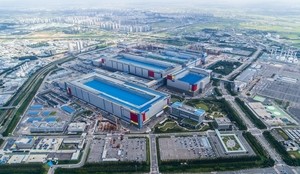
Project Crucible is Korea Zinc’s planned $7.4 billion integrated smelting complex in the US. Designed to process critical metals including copper, nickel and zinc, the project aims to establish the company as an alternative supplier as the US seeks to reduce its dependence on China-centered mineral supply chains.
Troika Drive is Korea Zinc’s longer-term diversification strategy targeting renewable energy and green hydrogen, rechargeable-battery materials and resource recycling. The initiative seeks to build new revenue sources as the global energy transition reshapes demand for metals and materials.
“Young Poong and MBK have repeatedly challenged Korea Zinc over corporate governance, but shareholders also evaluate a company on its performance and long-term strategy,” an industry source said. “Management’s governance improvements and expanded shareholder returns appear to have contributed to the strong support it received.”

hyejin2@heraldcorp.com