KAIST researchers turn polyphenol discoveries into everyday products while becoming face of global brand they built

The scientists behind Grabity, the hair-loss shampoo brand that has gained traction in South Korea and overseas with its polyphenol-based technology, have stepped out of their labs and into an unusual second job: modeling for their own products.
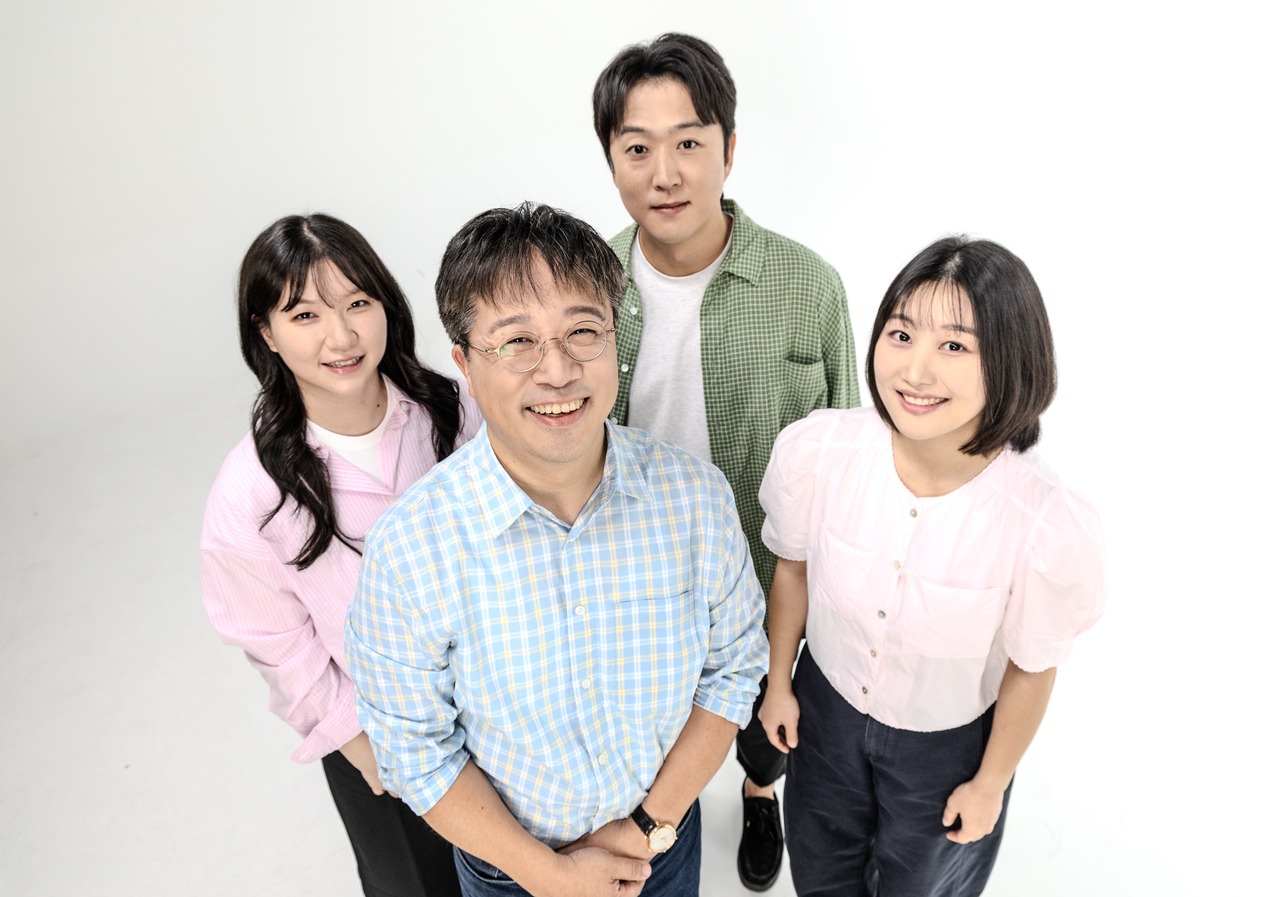
On buses and product packaging, researchers Yang Han-yeol, Kim Eun-u and Ju Helen pose alongside Lee Hae-shin, a KAIST distinguished professor of chemistry and the founder of Polyphenol Factory, the startup behind Grabity.
"We are not professional models, so we get a lot of help," said Yang, a senior researcher in the lab who has been closely involved in developing the polyphenol technology that underpins Grabity.
"It can feel burdensome to stand at the forefront of a brand while I'm still building my academic career, but it's also a new experience, and one I'm proud of."
Founded in 2023 as a faculty-led startup at KAIST, one of Korea's leading science and technology universities, Polyphenol Factory has crossed a difficult threshold for research-driven startups by turning published science into products that generate meaningful sales.
With just about 30 employees — a third of them scientists — the company is now trying to scale that success without losing its science-first identity, from how products are developed to how they are marketed. The Korea Herald sat down with the four scientists-turned-spokespeople to explore how their unconventional approach to academic research is translating into everyday products and fueling ambitions to build a global brand.
Faces behind the formula

At Polyphenol Factory, putting researchers in front of the camera is more than a way to avoid costly celebrity endorsement. It reflects a brand built around science.
Hiring a celebrity can easily cost more than 1 billion won ($743,000), Chief Marketing Officer Yi Mi-jin said, with those costs ultimately feeding into product prices. The company would rather channel that money into R&D and product development
"When you hire a celebrity, you are essentially paying for that person's image and the feeling associated with it," Yi said. "We still haven't found a muse who can represent us better than our own scientists."
That philosophy runs through Grabity and the company's broader ambition to deliver real innovation in everyday life, backed by science.
The shampoo, whose hair-loss reduction efficacy has been clinically demonstrated, posted 30 billion won in sales in 2025, in just over a year after its April 2024 launch, while cumulative production surpassed 2.7 million bottles by the end of July.
Polyphenol Factory is now expanding in the US and Japan through channels including Amazon, Qoo10 and Rakuten, while pushing into Europe through retailers such as France's Printemps and building a presence in Singapore and Taiwan.
Keeping scientists at the center of the brand also reflects a broader ambition: to make science-based entrepreneurship a more visible path in Korea, where top academic talent is still often drawn to professions such as medicine and law.
"We feel a responsibility to prove this can work," Lee said. "If we succeed, younger scientists may see startups as a real path for themselves."
Lee and his team are already drawing attention from students and professors seeking advice on commercializing their own technologies.
"3M built its global presence on chemistry and materials research, with products like adhesives and Scotch tape," Lee said. "There is no reason a company like that can't emerge from Korea."
Turning surprises into products
Polyphenol Factory's lab retains the rigor of academic research, but adds a twist, with everyday problems often finding their way into the research agenda and unexpected results given more room to develop into new ideas.
"We never begin with the conclusion already decided," said Ju, currently a visiting researcher at Polyphenol Factory. Formerly a KAIST researcher, Ju is now a Ph.D. student at the University of Michigan College of Pharmacy.
"If something unexpected comes up along the way, Lee encourages us to follow it."
Lee particularly dislikes calling an experiment a failure simply because it produces an unexpected outcome.
"If the result is different from what you expected, it is still a result," he said. "You look at what else can be developed from it."
That mindset has led to an eclectic pipeline of ideas around polyphenols, which are naturally occurring compounds with properties including adhesion and color change.
A quick-dry shampoo slated for launch in November grew out of unexpected feedback, and, in lab tests, cut drying time for below-shoulder-length hair from about seven minutes to 4 1/2 minutes.
Accessible ideas do not come at the expense of academic rigor. Led by Lee, who ranks as a researcher among the world's top 1 percent by citations, the team continues to pursue publishable research alongside commercialization.
Yang is studying a fire-resistant polyphenol adhesive. After wooden toys coated with the material resisted burning in tests, the research opened two very different possibilities: fire-resistant applications for household materials and a hair essence that could form a protective barrier against heat from straighteners and other styling tools.
The team is also exploring a coating that could protect hair enough to allow perming and dyeing at the same time.
Getting those ideas to market can take years. The quick-dry shampoo arrives more than two years after the idea first surfaced, while the company's latest polydeoxyribonucleotide regenerative shampoo followed years of work to develop and mass-produce its own material instead of buying it from suppliers.
For Kim, a KAIST Ph.D. candidate who helped develop the core haircare technology behind Grabity, the appeal lies in pursuing serious science whose relevance is immediately recognizable.
"Research on catalysts may mostly speak to people who study catalysts," Kim said. "But our research resonates more directly with people because it addresses problems they actually experience in daily life."
herim@heraldcorp.com