

Surging inference workloads drive demand for faster, higher-capacity SSDs
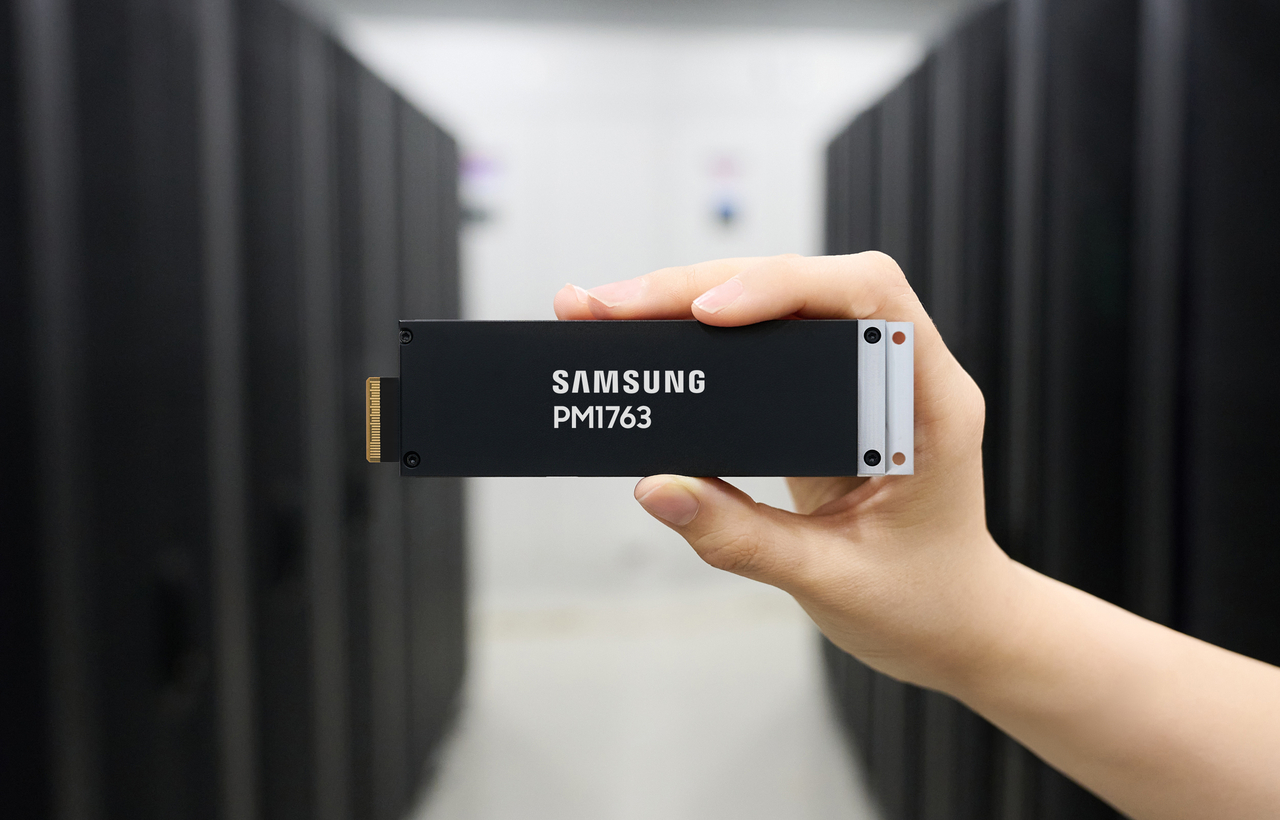
Rapid AI data center expansion is pushing Samsung Electronics and SK hynix to compete over high-capacity enterprise solid-state drives, as the AI infrastructure race moves toward storage solutions.
For much of the AI boom, investment has focused on computing power required to accelerate AI model training, particularly graphics processing units (GPUs) and high-bandwidth memory (HBM). But as large language models become more complex and AI inference services expand, the industry faces another challenge: how to efficiently store, retrieve and move the massive volumes of data generated by AI systems.
Enterprise SSDs are emerging as a key part of this shift as AI workloads push them closer to the computing process itself. Storage is increasingly becoming part of AI infrastructure, particularly in inference environments where data access speed and latency can directly affect performance.
According to market tracker TrendForce, combined revenue from the world’s top five eSSD suppliers reached $37.59 billion in the second quarter, up 103.6 percent from the previous quarter. The growth was driven by expanding AI infrastructure investment, rising demand from cloud service providers and increasing adoption of high-capacity storage products.
Samsung Electronics maintained its leadership in the eSSD market with a 35.1 percent share. The company benefited from increased shipments of quad-level cell-based products and PCIe 5.0 SSDs as global cloud providers upgraded their AI data center infrastructure.
“Demand for server SSDs is increasing rapidly across AI servers, general-purpose servers and dedicated storage servers for key-value cache as agentic AI continues to expand,” a Samsung Electronics official said.
The company expects server SSDs to account for more than 60 percent of its NAND flash revenue this year as AI-related demand continues to grow. Samsung is also expanding its high-capacity SSD portfolio, including QLC-based products, while preparing next-generation PCIe 6.0 solutions to meet future data center requirements.
TrendForce said Samsung has strengthened its position among server customers as major cloud service providers transition toward newer SSD interfaces, and benefits from its ability to supply both memory and storage solutions.
SK hynix and its subsidiary Solidigm ranked second with a 21.1 percent market share. The company is pursuing a dual strategy by expanding high-performance triple-level cell products while targeting the growing ultra-high-capacity QLC segment.
SK hynix said AI inference workloads are changing how storage devices are deployed, creating demand for SSDs that operate closer to processors and accelerators.
“New applications are emerging, including SSDs designed to store KV cache and storage devices directly connected to GPUs or located closer to processors,” an SK hynix official said.
The company added that AI workloads are becoming more diverse, requiring storage solutions optimized for different stages of data processing. As a result, SSDs are expected to play a broader role across AI computing environments rather than simply serving as storage.
The competition is also intensifying in the ultra-high-capacity SSD market. As AI data centers handle increasingly larger datasets, operators are looking for alternatives to traditional hard disk drives, which offer lower costs but slower performance.
QLC NAND technology is gaining attention because it allows manufacturers to increase storage density by storing four bits of data per memory cell. While TLC remains the dominant technology across the broader SSD market, QLC adoption is expanding in large-scale enterprise applications where capacity efficiency is becoming increasingly important.
“QLC is the most efficient technology for building ultra-high-capacity eSSDs,” an SK hynix official said. “To replace hard disk drives in large-scale storage markets, SSDs ultimately need to offer much higher capacities.”
Industry sources are increasingly highlighting SSDs exceeding 60 terabytes as a key category for future AI data centers. Samsung, SK hynix and other memory companies are now competing not only on memory performance but also on their ability to deliver higher-capacity storage solutions for the next stage of AI infrastructure growth.
yeeun@heraldcorp.com