
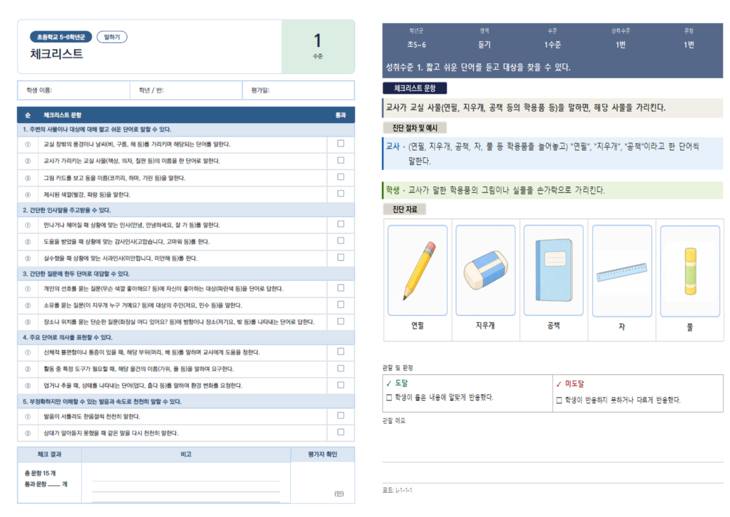
South Korea will introduce a new Korean-language assessment tool for migrant-background students in elementary, middle and high schools, as their numbers continue to rise across the country, the Education Ministry said Tuesday.
교육부는 전국적으로 이주배경 학생 수가 계속 늘어남에 따라 초·중·고교의 이주배경 학생을 대상으로 한 새로운 한국어능력 진단 도구를 도입할 예정이라고 화요일 밝혔다.
The teacher-administered test is designed to help schools quickly gauge students' Korean proficiency when they enroll and provide language instruction tailored to their individual needs.
교사가 직접 시행하는 이 검사는 학생이 입학할 때 한국어 숙달도를 신속하게 파악하고, 개인별 필요에 맞춘 언어 교육을 제공할 수 있도록 돕기 위해 마련됐다.
According to ministry data, the number of migrant-background students in Korean schools has more than quadrupled over the past 13 years, from 46,954 in 2012, or 0.7 percent of all students, to 202,208 in 2025, accounting for 4 percent of the total student population.
교육부 자료에 따르면 국내 학교의 이주배경 학생 수는 지난 13년간 4배 이상 증가해, 2012년 4만6,954명(전체 학생의 0.7%)에서 2025년 20만2,208명(전체 학생의 4%)으로 늘었다.
The ministry said the tool was developed in response to growing demand from schools for a more systematic way to assess the Korean-language skills of newly enrolled students, as children with limited proficiency are entering schools at increasingly varied grade levels.
교육부는 한국어 능력이 부족한 학생들이 갈수록 다양한 학년에 걸쳐 입학하고 있는 가운데, 신입생의 한국어 능력을 보다 체계적으로 평가해달라는 학교 현장의 요구가 늘어난 데 대응해 이 도구를 개발했다고 밝혔다.
Following consultations with 16 regional education offices, teachers and experts, the ministry established Korean proficiency standards for four grade groups: grades 1-2, grades 3-4, grades 5-6, and middle and high school students.
교육부는 16개 시도교육청과 교사, 전문가와의 협의를 거쳐 초등 1~2학년, 3~4학년, 5~6학년, 중·고등학생 등 네 개 학년군에 대한 한국어 숙달도 기준을 마련했다.
Students are assessed in four areas — listening, speaking, reading and writing — with each divided into four proficiency levels.
학생들은 듣기, 말하기, 읽기, 쓰기 네 영역에서 평가를 받으며, 각 영역은 4단계 숙달도로 나뉜다.
The results can also be entered into the Education Ministry's artificial intelligence-powered Korean-language learning platform, allowing schools to track students' proficiency in each area and determine what type of language instruction or other academic support they need.
평가 결과는 교육부의 인공지능 기반 한국어 학습 플랫폼에도 입력할 수 있어, 학교가 영역별 학생의 숙달도를 추적하고 어떤 언어 교육이나 학업 지원이 필요한지 파악할 수 있다.
The platform provides Korean-language assessments, individualized learning content based on assessment results and learning data, an interactive AI tutor, and a learning management system for classroom and independent study.
이 플랫폼은 한국어 평가, 평가 결과와 학습 데이터를 기반으로 한 개별 맞춤형 학습 콘텐츠, 인공지능 인터랙티브 튜터, 수업 및 자기주도 학습을 위한 학습관리시스템(LMS)을 제공한다.
The related educational materials currently include 1,950 lessons covering everyday and school Korean, grammar, vocabulary and language needed for subjects such as Korean and mathematics. The platform also uses speech and handwriting recognition technology for speaking and writing practice.
관련 교육 자료는 현재 일상 및 학교생활 한국어, 문법, 어휘, 국어·수학 등 교과 학습에 필요한 언어를 다루는 1,950개 수업으로 구성돼 있다. 이 플랫폼은 말하기와 쓰기 연습을 위해 음성 및 필기 인식 기술도 활용한다.
The ministry is developing a separate assessment that students will be able to take directly through the online system from the first half of 2027, giving schools multiple ways to evaluate Korean proficiency depending on students' circumstances.
교육부는 학생이 2027년 상반기부터 온라인 시스템을 통해 직접 응시할 수 있는 별도의 평가 도구도 개발 중이며, 이를 통해 학교가 학생 상황에 따라 다양한 방식으로 한국어 능력을 평가할 수 있도록 할 계획이다.
“With the newly developed diagnostic tool, schools will be able to identify migrant-background students' Korean proficiency in greater detail,” said Roh Jin-young, director general of student support at the Education Ministry.
노진영 교육부 학생지원국장은 “새로 개발된 진단 도구를 통해 학교가 이주배경 학생의 한국어 능력을 보다 세밀하게 파악할 수 있을 것”이라고 말했다.
“Teachers will be able to accurately determine what students can do on their own and where they need help, which we expect will help us provide them with instruction.”
“교사들은 학생이 스스로 할 수 있는 부분과 도움이 필요한 부분을 정확히 파악할 수 있게 되며, 이는 학생들에게 지도를 제공하는 데 도움이 될 것으로 기대한다”고 덧붙였다.
Tip Words
1. migrant-background: 이주배경의, 이주배경을 지닌
2. proficiency: 숙달도, 능숙도
3. administer: (시험 등을) 시행하다, 실시하다
4. quadruple: 네 배로 증가하다
5. in response to: ~에 대응해, ~에 부응해
6. systematic: 체계적인
7. consultation: 협의, 자문
8. individualized: 개별 맞춤형의
9. recognition: 인식
10. diagnostic: 진단(용)의
khnews@heraldcorp.com


![[Room Tone] Monopoly’s less famous cousin](https://wimg.heraldcorp.com/news/cms/2026/09/15/news-p.v1.20260427.66c40f4b14054f6a8c036bfc20e046c9_R.jpg?type=h&h=120)