

Nation's UNESCO-listed tidal flats expanded with four new sites
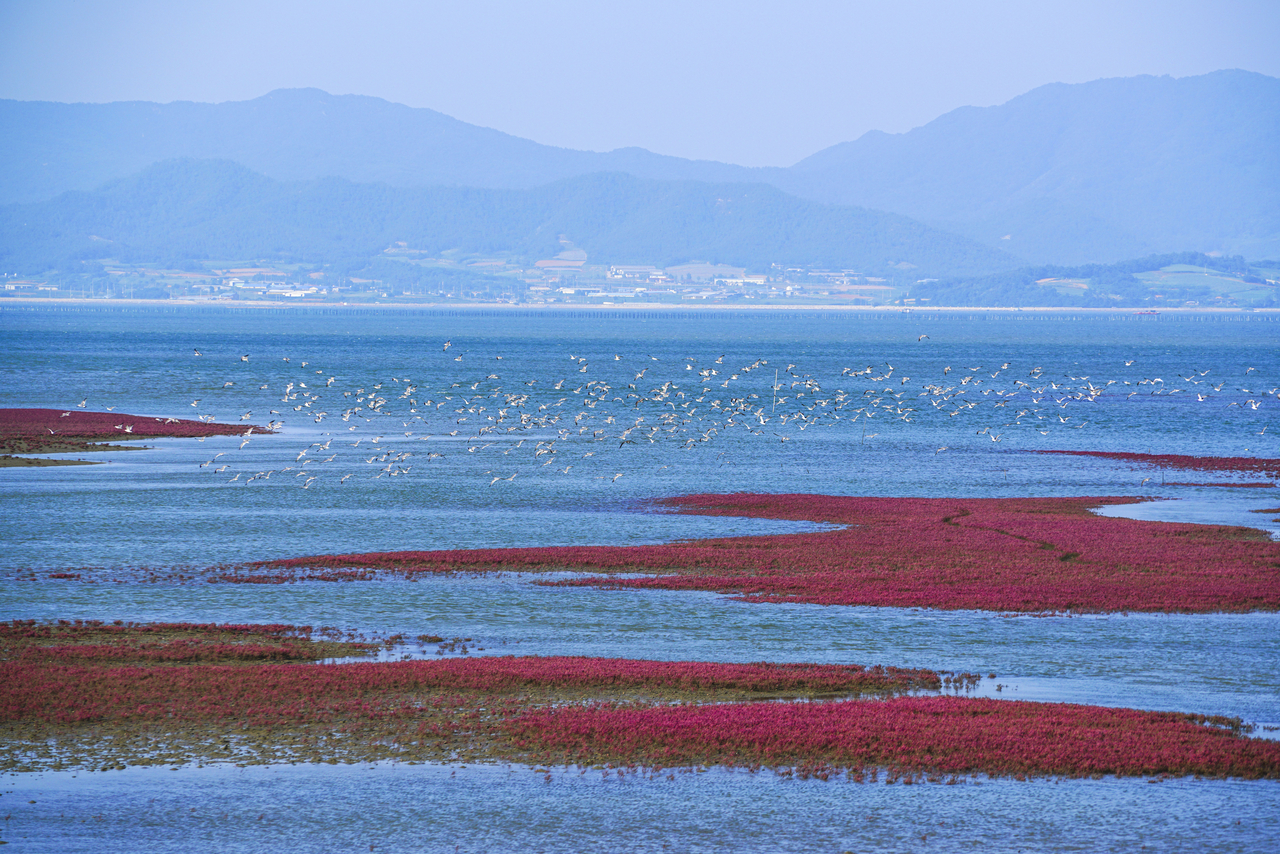
Home to more than 2,400 species, including endangered migratory birds, South Korea's tidal flats have gained broader recognition as a UNESCO World Heritage site.
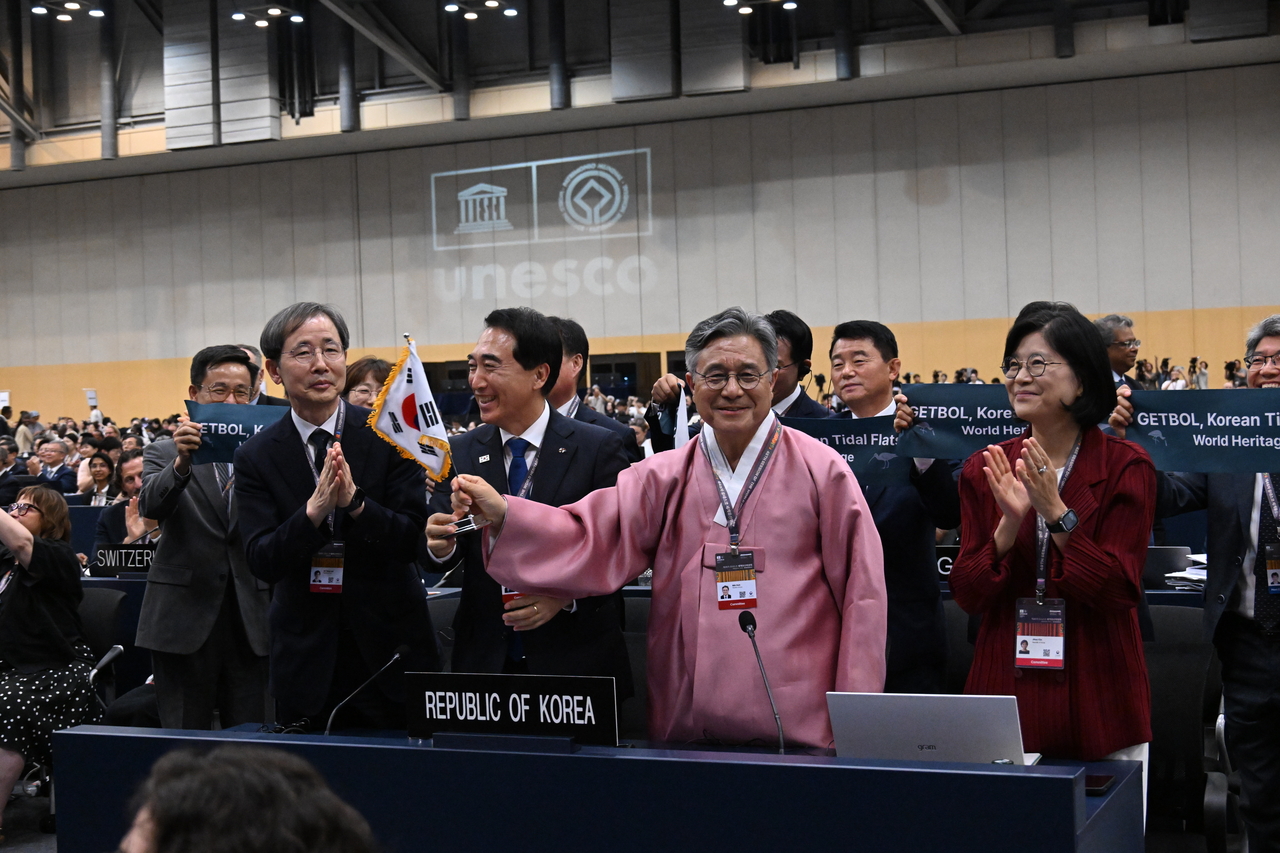
UNESCO's World Heritage Committee on Saturday approved a major expansion of South Korea's "getbol," or tidal flats, adding four new coastal areas to the World Heritage List during its annual session in Busan.
The decision expands the site, first inscribed in 2021, from four to six components with the addition of tidal flats in Seosan, South Chungcheong Province, and Goheung, Muan and Yeosu in South Jeolla Province.
The four original tidal flat properties are listed as the Boseong-Suncheon Getbol, the Shinan Getbol, the Gochang Getbol and the Seocheon Getbol.
The tidal flats of Goheung and Yeosu are grouped with the Boseong-Suncheon Getbol, while Muan's Tandoman Getbol is combined with the Shinan Getbol. Muan's Hamhaeman Getbol and the Seosan Getbol are listed separately, bringing the number of unique properties to six.
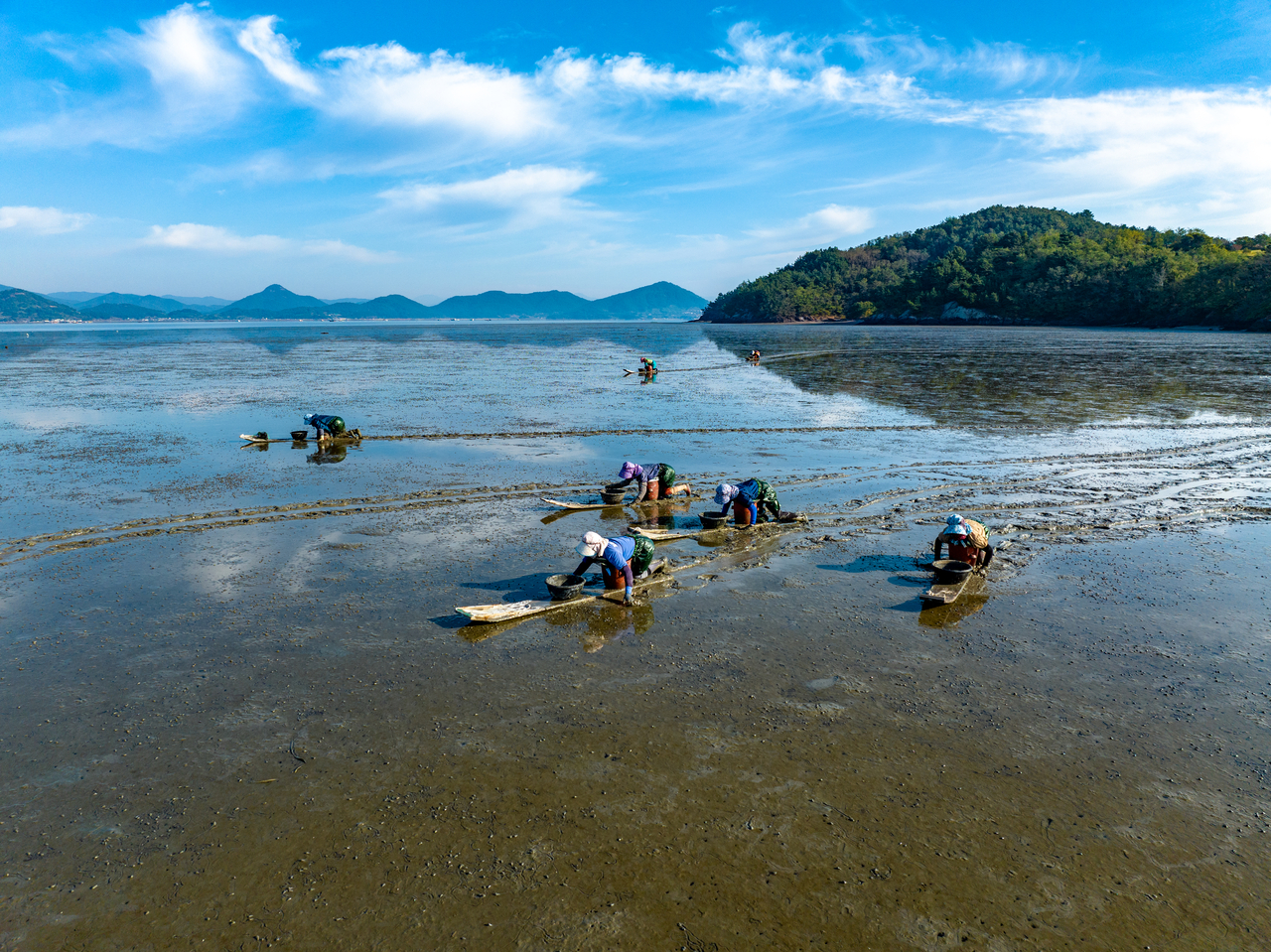
The decision approves a significant boundary modification, extending and reconfiguring the site as a serial property. The newly designated areas increase the protected World Heritage property by nearly 28,000 hectares, with an additional 24,800 hectares designated as buffer zones, according to the World Heritage Promotion Team of Korean Tidal Flats.
"In total, the nominated property would increase the area of the existing property by nearly 22 percent," said Tim Badman, director of the World Heritage Programme at the International Union for Conservation of Nature.
Badman said the expansion would significantly strengthen the site's ecological value along the East Asian-Australasian Flyway, one of the world's most important migratory bird routes.
"The five new areas are demonstrably important tidal flat areas for which local support for World Heritage nomination has been secured," he said. "The property would substantially increase the number of bird species and the wider marine biodiversity, support numerous globally threatened species and internationally important bird populations."
Following the extension, UNESCO updated the property's official World Heritage description on its website, noting the enlarged serial property "further represents the diversity of estuarine, open-coast, archipelagic and semi-enclosed tidal flats."
The description continues: "Shaped by a complex combination of geological, oceanographic and climatic conditions, the property contains a variety of geomorphological features, including sand spits, cheniers, tidal channels, tidal gullies and numerous islands. These highly productive ecosystems support complex ecological communities, an exceptionally high diversity of tidal-flat invertebrates, and critical habitats for migratory birds, as well as endemic and threatened species."
The decision came during the 48th session of the World Heritage Committee, which South Korea is hosting for the first time since joining the World Heritage Convention in 1988. The session runs through July 29.
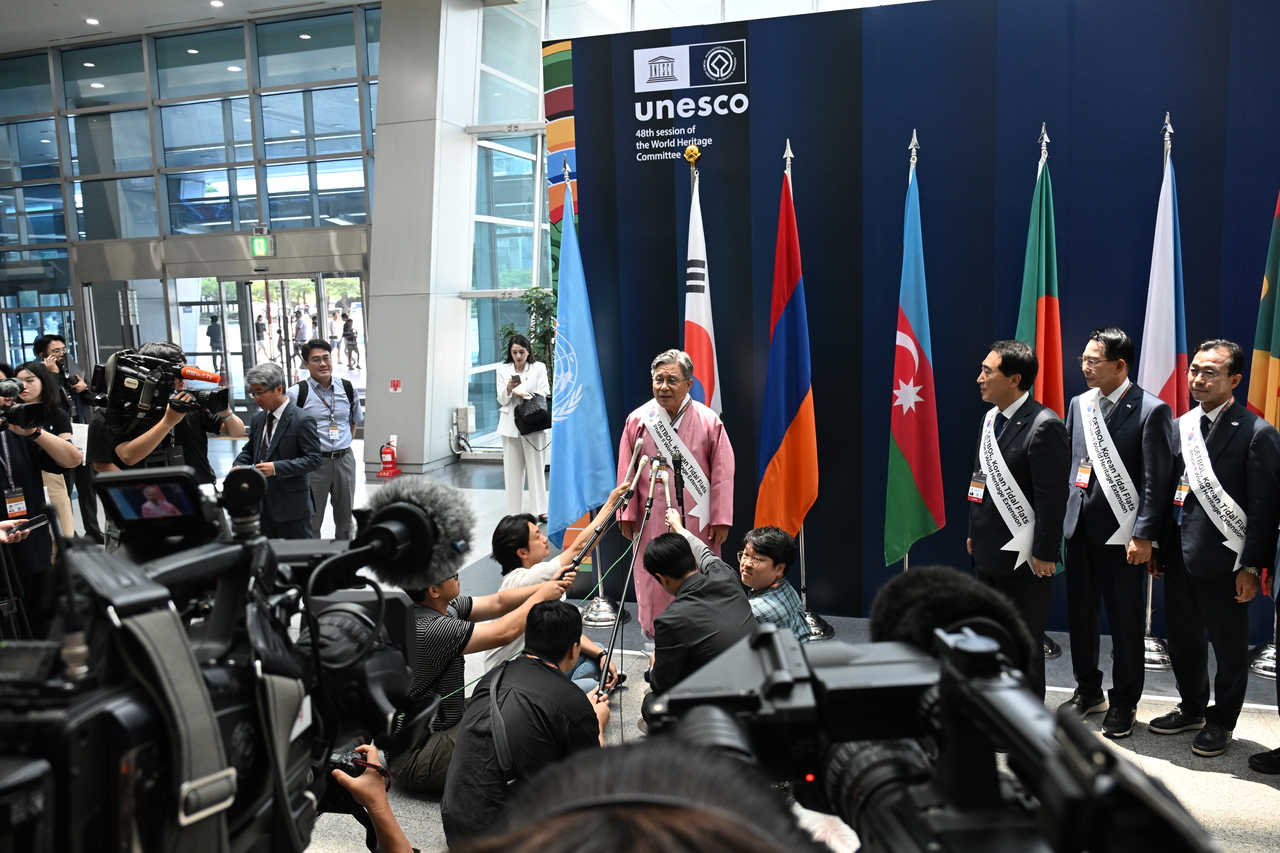
Huh Min, administrator of the Korea Heritage Service, welcomed the decision, calling it "a highly meaningful achievement" that further strengthens both the biodiversity conservation value and the integrity of Korea's tidal flats.
"We hope this inscription will serve as an opportunity to further expand international cooperation to protect the Yellow Sea ecosystem and the East Asian-Australasian Flyway," Huh said.
hwangdh@heraldcorp.com