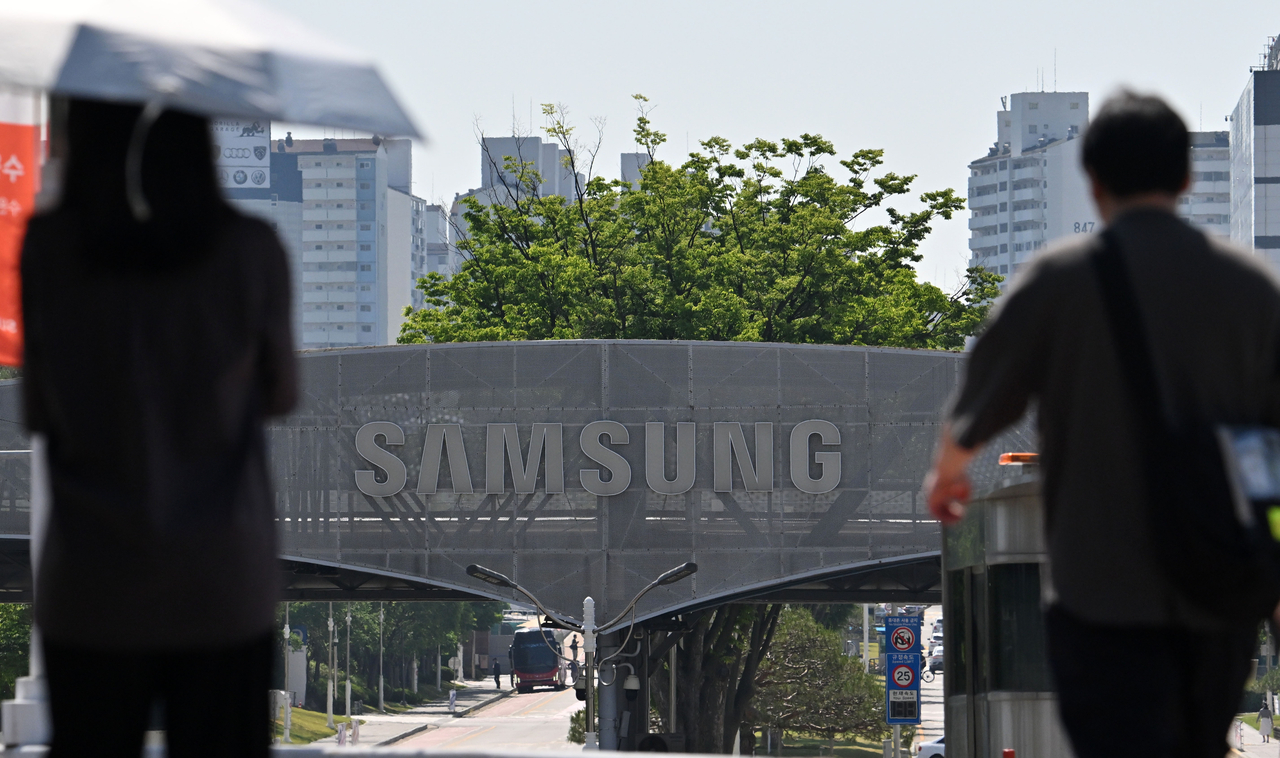
Workers in South Korea do not all face the same circumstances.
한국의 근로자들이 모두 같은 상황에 처한 것은 아니다.
Opinions are split over the recent labor unions’ fights for performance bonuses at some big companies, depending on workers’ company size, age and job category.
최근 몇몇 대기업에서 성과급을 두고 노조가 벌인 투쟁에 대해 기업규모, 연령, 직종에 따라 근로자들의 의견이 분분하다.
In particular, workers at smaller firms feel relatively deprived by the massive performance bonuses being demanded by unions at Samsung Electronics and SK hynix. The controversy surrounding performance bonuses at these companies resonates more sensitively with many workers because the size of the bonuses is far removed from their own wage levels.
특히 중소기업 근로자들은 삼성전자와 SK하이닉스 노조가 요구하는 엄청난 규모의 성과급에 상대적 박탈감을 느끼고 있다. 이 회사들의 성과급을 둘러싼 논란은 많은 근로자들에게 더욱 민감하게 와닿는다. 보너스의 규모가 자신들의 임금 수준을 훨씬 뛰어넘기 때문이다.
Data from the National Tax Service’s 2024 earned-income tax filings showed that the average salary of South Korean workers came to approximately 45 million won ($29,800) annually, or 3.75 million won on a monthly basis. Yet the median annual salary — the midpoint in the income distribution — stood at only 34.17 million won, or 2.85 million won a month.
국세청의 2024년 근로소득세 신고 자료에 따르면 한국 근로자 평균 연봉은 약 4천5백만원으로 월급으로는 375만원 선이다. 그러나 중위 연봉(소득 분배에서 정중앙)은 3천417만원으로 월급으로는 285만원 수준에 그친다.
The average exceeds the median by 10.83 million won. These figures indicate that a small number of high-wage earners are driving up the average so that most workers earn much less than the statistical average.
평균은 중위 연봉보다 1천83만원 높다. 이러한 수치는 대다수의 근로자가 통계상의 평균보다 훨씬 낮은 임금을 받는데도 소수의 고임금 근로자들이 평균치를 올리고 있다는 것을 뜻한다.
In this situation, the performance bonuses sought by the union at Samsung Electronics are bound to deepen the sense of disconnect felt by many workers.
이러한 상황에서 삼성전자 노조가 요구하는 성과급은 다수의 근로자들이 느끼는 괴리감을 심화시킬 수밖에 없다.
Demands by unions at large corporations for performance bonuses that small and medium-sized company workers would struggle to earn even after decades of work are likely to be seen as greed on the part of high-income big-business unions, making them difficult for most people to sympathize with.
대기업 노조가 중소기업 근로자가 수십년간 근무해도 받기 어려운 수준의 성과급을 요구하는 것은 고임금 대기업 노조의 탐욕으로 비춰질 수 있다. 대중이 쉽게 공감하기 어려운 대목이다.
Especially, if a model of tying performance bonuses to a fixed share of operating profits takes root at major industry players like Samsung Electronics, the compensation gap between large corporations and smaller companies unable to sustain such a system will inevitably expand.
특히 삼성전자와 같은 선도 기업의 영업이익에 고정된 비율의 성과급을 연동시키는 시스템이 구축된다면 대기업과 그러한 시스템을 유지하기 어려운 소규모 기업간의 보상 격차는 커질 수밖에 없다.
The 2024 results on income from wage and salary jobs, released by the Ministry of Data and Statistics, showed that the average monthly pay for employees at large firms reached 6.13 million won, about twice that of employees at small and medium-sized companies, who earned 3.07 million won on average. Wages at large corporations rose 3.3 percent from a year earlier, while those at small and medium-sized companies increased only 3.0 percent. The gap may widen still further as big-company unions demand a fixed share of operating profits as performance bonuses.
통계청이 발표한 2024년 임금근로일자리 소득 결과에 따르면 대기업 근로자의 월평균 소득은 613만원으로 중소기업 근속자의 307만원의 2배에 달했다. 대기업 임금이 전년 대비 3.3퍼센트 상승한데 비해 중소기업에서는 3퍼센트에 그쳤다. 그 격차는 대기업 노조가 성과급으로 영업이익의 일정 부분을 요구함에 따라 더 커질 수 있다.
Especially by age, the difference widened sharply: 1.21 million won among workers in their 20s, 2.44 million won among those in their 30s, 3.93 million won for workers in their 40s and 4.56 million won for those in their 50s.
연령별로 특히 그 차이는 크게 벌어진다. 20대 근로자는 121만원, 30대는 244만원, 40대는 393만원, 그리고 50대는 456만원이다.
The divide between regular and non-regular employees is also becoming larger. According to the Ministry of Employment and Labor, the hourly wages of non-regular workers fell for two consecutive years, reaching only 65.2 percent of regular employees' pay last year, the biggest shortfall in 11 years.
정규직과 비정규직 근로자 간의 격차 또한 더 커지고 있다. 고용노동부에 따르면 비정규직 노동자의 시간당 임금은 2년 연속 하락해 11년만의 최저치인 정규직 작년 임금 대비 65.2퍼센트 수준을 기록했다.
This means that a non-regular worker earned only 652,000 won for every 1 million won earned by a regular employee. Last year, the hourly wage of regular workers rose 3.2 percent from a year earlier to 28,599 won, while that of non-regular workers increased only 1.3 percent to 18,635 won. Even allowing for the fact that many non-regular workers are older or work shorter hours, the imbalance is still severe.
정규직 노동자가 1백만원을 번다면 비정규직 임금은 65만2천원에 불과했다는 의미다. 작년 정규직 노동자의 시급이 전년 대비 3.2퍼센트 오른 2만8천599원인 반면 비정규직은 1.3퍼센트 상승에 그친 1만8천635원이었다. 비정규직 노동자들이 나이가 더 많거나 더 적은 시간 일한다는 점을 감안한다고 해도 불균형은 여전히 심각하다.
At a time when pay and benefit gaps between large corporations and smaller firms are already widening, if disparities in performance bonuses also expand based on company size rather than individual achievement, the dual labor market will deteriorate to an irreversible level.
대기업과 중소기업 간의 임금 및 복지 격차가 이미 벌어지고 있는 상황에서 성과급의 격차마저 개인의 성과가 아니라 기업 규모에 따라 커진다면 이원적인 노동 시장은 되돌릴 수 없는 수준으로 악화될 것이다.
Unless the severe inequality problem is tackled, both social unity and economic growth will be at risk. Solutions should be sought to keep social conflict from worsening further. The labor dispute at Samsung Electronics over record operating profits generated by the AI semiconductor super-boom is prompting a broader rethinking of Korea's overall labor market, beyond pay conflict.
심각한 불평등 문제가 해결되지 않고서는 사회적 통합과 경제 성장 모두 위기에 처할 것이다. 사회적 갈등이 더 심화되는 것을 막기 위한 해결책이 도모되어야 한다. AI 반도체 초호조에 힘입은 삼성전자의 역대급 영업이익을 두고 벌이는 노사간 갈등은 임금 분쟁을 넘어 한국의 노동 시장 전반에 걸쳐 더 폭넓은 재고를 촉발한다.
resonate 공명하다
median 중위
disparities 격차
deteriorate 악화하다
khnews@heraldcorp.com