SEOGWIPO, Jeju Island — Envoys from five Central Asian countries predict that the inaugural Korea-Central Asia Summit in September will open a new phase in relations with South Korea, as both sides seek deeper cooperation in energy, critical minerals, artificial intelligence, infrastructure and cultural exchanges.
The summit will mark the first leaders' meeting between South Korea and the five Central Asian nations as a group, elevating a dialogue mechanism launched in 2007 to a summit-level framework.
The summit comes as Seoul seeks to diversify supply chains, secure critical minerals and strengthen partnerships with resource-rich middle powers, following similar summit diplomacy with ASEAN, Africa and Pacific Island nations.
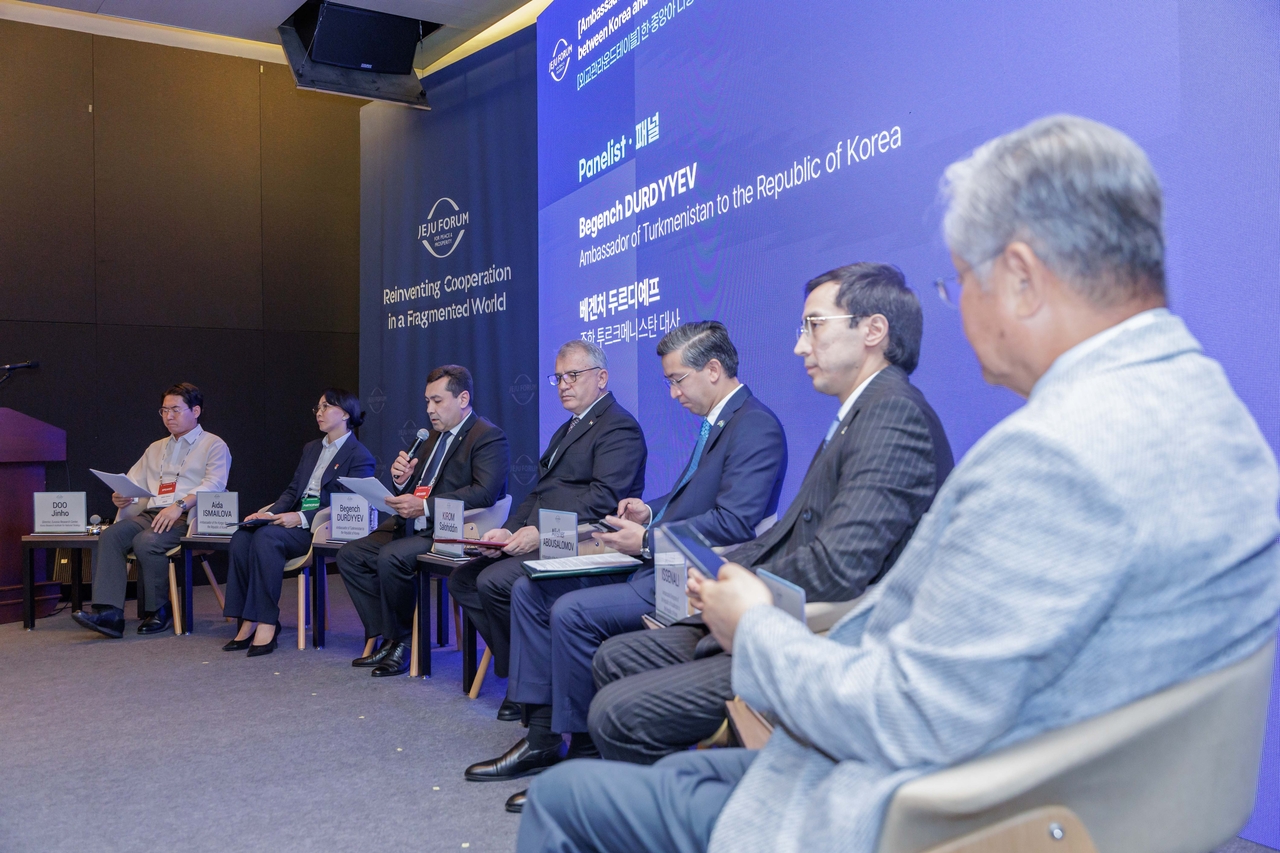
Ahead of the summit, the ambassadors described the new framework as an opportunity to move beyond project-based cooperation to a broader strategic partnership focused on resilient supply chains, advanced manufacturing, clean energy and emerging technologies. The ambassadors met on the sidelines of the Jeju Forum for Peace and Prosperity on Jeju Island on Wednesday.
While each country promoted different investment opportunities, the envoys delivered a common message: Central Asia wants to position itself not merely as a supplier of raw materials but as an industrial, technology and logistics partner for South Korea.
AI, digitalization, clean energy and critical minerals emerged as recurring priorities, reflecting the region's push to attract technology-intensive investment rather than rely solely on commodity exports.
"We are confident that the forthcoming historic summit will elevate our existing relations to a new level," Tajik Ambassador Salohiddin Kirom told The Korea Herald.
Kirom called for joint investment funds, ODA-backed infrastructure projects and Korean technology parks in Tajikistan's free economic zones to encourage greater Korean investment, identifying tungsten, critical minerals and textiles as priority sectors.
"A Korean company is already conducting preliminary work at a tungsten mine," he added.
The emphasis on critical minerals aligns with South Korea's efforts to diversify supplies used in semiconductors, batteries and defense manufacturing amid increasingly competitive global supply chains.
Uzbek Ambassador Alisher Abdusalomov said governments are working to ensure the summit delivers concrete outcomes.
"We are working very hard to achieve tangible results," he told The Korea Herald.
Uzbekistan has identified energy cooperation as a top priority, with its rapidly expanding renewable energy sector creating openings for partnerships in hydrogen, smart grids, energy storage and advanced manufacturing.
Abdusalomov said Uzbekistan sees significant potential for AI-driven cooperation with South Korea across agriculture, industry and healthcare, but stressed that projects must be commercially viable.
"For the private sector, cooperation must also make business sense," he said, adding that the summit aims to "build long-lasting cooperation."
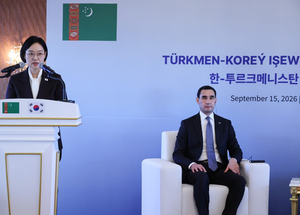
Thanking the Jeju Peace Institute for hosting the discussion ahead of the summit, Turkmen Ambassador Begench Durdyyev said the Korea-Central Asia Summit marks "a new stage" in relations, moving cooperation beyond individual projects toward a strategic partnership.
Turkmenistan and South Korea have signed 118 bilateral agreements and held five summit-level meetings since establishing diplomatic ties in 1992, Durdyyev said.
Durdyyev pointed to existing cooperation as evidence that the relationship is already deepening, citing 17 Korean investment projects worth more than $12 billion, alongside growing collaboration in shipbuilding, healthcare and smart cities.
Turkmenistan marks 35 years of independence this year, with its foreign policy of permanent neutrality and peaceful cooperation shaping its longstanding partnership with South Korea, he said.
Kyrgyz Ambassador Aida Ismailova promoted multibillion-dollar infrastructure projects, climate cooperation and critical minerals, while highlighting growing tourism and transport links with South Korea.
According to Ismailova, cooperation in energy, industry, digitalization and human capital could create strong synergies between Korea and Central Asia.
"This summit will identify new priorities for cooperation," she said, adding that Korea's technology could support Kyrgyzstan's climate goals and value-added processing of critical minerals, including antimony and silicon.
Kazakh Ambassador Asset Issenali told The Korea Herald he expects the summit to deliver tangible results and usher in a new phase of regional cooperation.
He pointed to digitalization, artificial intelligence and transport corridors, saying Kazakhstan aims to become a fully digital state within three years.
"There is tremendous potential in reviving the New Silk Road, developing the Trans-Caspian International Transport Route (Middle Corridor), and advancing the digitalization of logistics," Issenali said.
"The Korean diaspora in our countries plays a vital role as a living bridge of friendship," he said.
sanjaykumar@heraldcorp.com