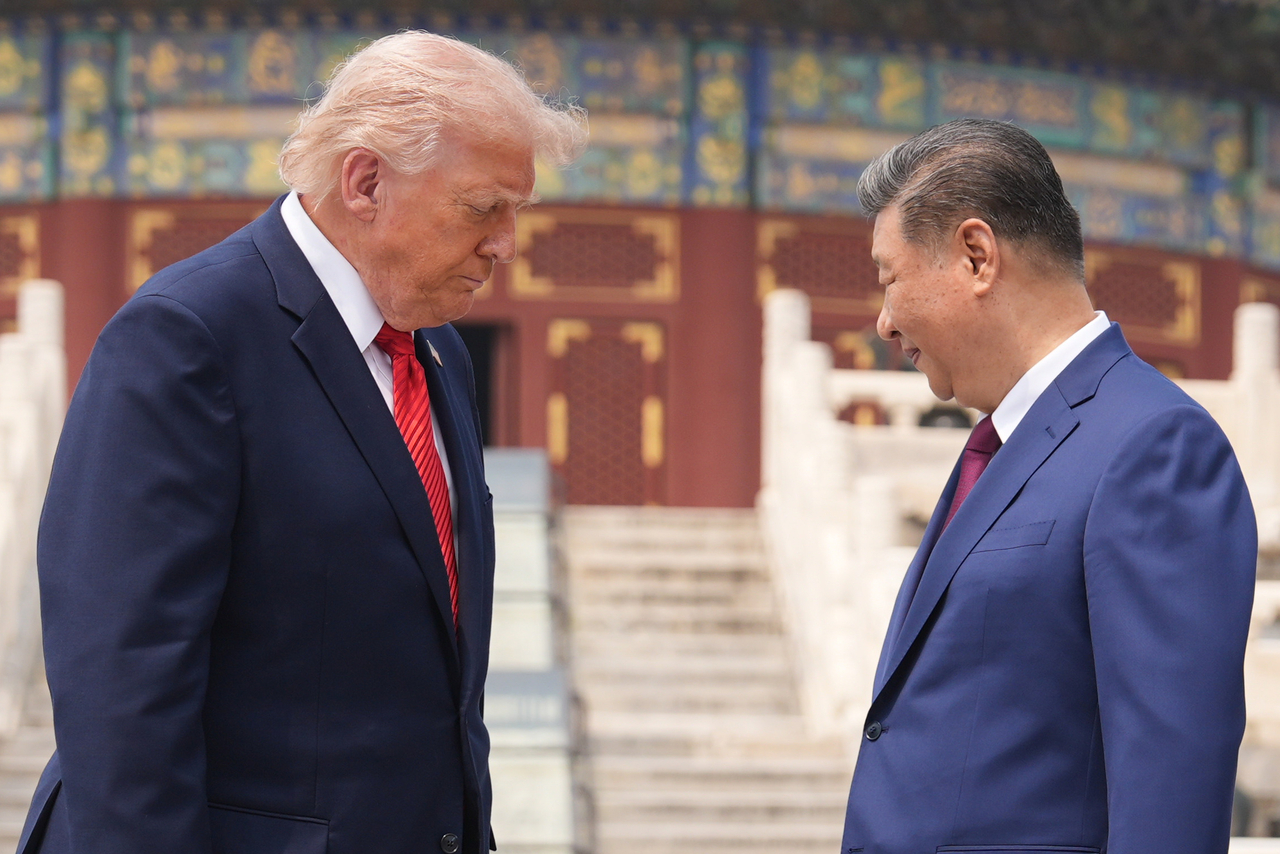
The most striking outcome of the US-China summit in Beijing last week was what it did not produce.
지난주 베이징에서 열린 미중 정상회담의 가장 두드러진 결과는 아무런 성과도 내지 못했다는 것이었다.
After days of ceremony and carefully calibrated warmth between US President Donald Trump and Chinese President Xi Jinping, there was no joint statement, no defined road map and no resolution of the disputes that define US-China relations.
도널드 트럼프 미국 대통령과 시진핑 중국 수석은 수일간의 행사에서 신중하게 계산된 호의를 보였으나 공동성명도, 명확한 로드맵도 미중 관계에 큰 영향을 끼치는 분쟁에 대한 해결책도 내어놓지 않았다.
Instead, both leaders spoke of cooperation and “strategic stability” while leaving the substance vague. The meeting lowered the immediate risk of escalation, but clarified little about the path ahead. For South Korea, that ambiguity is the real message.
대신 양측 정상은 내용은 모호하게 둔 채 협력과 "전략적 안정"을 논했다. 회담으로 당장 상황이 악화될 위험은 낮추었으나 앞으로 나아갈 방향에 대해 밝혀진 것은 거의 없었다. 한국에게는 그 모호함이 진정한 메시지다.
This was a summit of signals rather than solutions. Both sides highlighted limited convergence, including a shared position that Iran should not acquire nuclear weapons and a stated commitment to keeping the Strait of Hormuz open.
이번 정상회담은 해결책보다는 서로의 의중을 탐색하는 자리였다. 양측 모두 의견 수렴에는 한계가 있다는 것을 분명히 했다. 이란의 핵무기 도입에 반대하는 입장 공유 그리고 호르무즈 해협을 개방된 상태로 유지해야 한다는 의지를 천명한 것을 포함해서다.
Yet even here, alignment was partial and loosely defined. On the core economic disputes that shape the relations, tariffs, semiconductors and rare earths, there was no discernible progress. Announcements of Chinese purchases of US goods suggested incremental deals, but fell short of a broader settlement.
그러나 여기에서마저도 의견이 일치된 것은 부분적이고 두루뭉술했다. 양국 관계를 규정하는 주요 경제적 갈등, 관세, 반도체, 희토류 등에 있어 눈에 보이는 진전은 없었다. 중국이 미국산 제품을 구매하겠다는 발표로 단계적인 합의가 이뤄지고 있음을 시사했으나 포괄적인 합의에는 미치지 못했다.
What emerged more clearly is a pattern that now defines the global order. The US and China are settling into managed rivalry, where cooperation is selective and transactional and competition remains structural.
더 분명해진 것은 작금 세계 질서를 규정하는 패턴이다. 미국과 중국은 협력은 선택적이고 거래적이며, 경쟁은 구조적으로 남아있는 통제된 라이벌 구도로 들어서고 있다.
Washington continues to pursue economic nationalism through tariffs and export controls. Beijing, for its part, is advancing a long-term strategy that blends industrial policy with geopolitical ambition. Both sides seek to avoid confrontation, but neither is prepared to yield on fundamentals.
미국 정부는 계속해서 관세와 수출 통제를 통해 경제적 자국 우선 주의를 추구하고 있다. 한편 중국 정부는 산업 정책과 지정학적 포부를 결합한 장기적 전략을 발전시키고 있다. 양국 모두 충돌은 피하고 있으나 본질적인 것에 있어서 양보할 준비는 되어있지 않다.
The fault lines remain both visible and volatile. Taiwan stands at the center, with Beijing warning that mismanagement could lead to conflict and Washington maintaining ambiguity. Technological competition shows no sign of easing, with export controls and supply chain restrictions left untouched.
갈등의 불씨는 여전히 눈에 보이며 언제든 악화될 수 있다. 대만이 그 중심에 있다. 중국 정부는 여차하면 분쟁으로 이어질 수 있다고 경고하고 미국 정부는 모호한 태도를 유지중이다. 기술적 경쟁은 누그러질 기미를 보이지 않고 수출 통제와 공급망 제한은 손대지 않은 채다.
Even the apparent agreement on Hormuz offers limited assurance, given the lack of enforcement and the two sides' divergent positions on Iran. These tensions are not dormant but deferred, raising the likelihood of recurring disruptions that will extend beyond the bilateral relationship.
호르무즈 관련 같은 의견을 보여준 것조차 강제수단의 부재 그리고 이란에 대한 양측의 입장차로 확신을 주기에는 역부족이다. 이러한 갈등은 사라진 것이 아니라 미뤄진 것이며 이에 혼란이 반복되어 그 파장이 양국 관계를 넘어 확대될 가능성은 높아진다.
For South Korea, the implications are significant. Its economy remains tied to both powers, reliant on the US for security and on China for trade. This dual exposure is becoming harder to manage as both countries raise barriers in technology, energy and supply chains.
한국에 있어 그 함의는 무겁다. 한국의 경제는 양강에 긴밀히 연관되어 있다. 안보에 있어서는 미국에 무역에서는 중국에 의존하고 있는 것이다. 양국 모두 기술, 에너지, 공급망에서 장벽을 높이면서 이러한 이중적인 위험을 관리하는 것은 더욱 어려워지고 있다.
Semiconductors, critical minerals and energy imports are all vulnerable to policy shifts. At the same time, the Korean Peninsula faces the risk of being treated as a secondary issue within broader US-China bargaining.
반도체, 핵심 광물, 에너지 수입 모두 정책 변화에 민감하다. 동시에 한반도는 포괄적인 미중 협상에서 부차적인 이슈로 취급될 위험에 처해있다.
The experience of other middle powers offers a partial guide. Japan, facing similar energy vulnerabilities, has demonstrated pragmatic diplomacy that prioritizes outcomes over alignment. Its engagement in the Middle East reflects a willingness to act with flexibility even within a firm alliance framework.
여타 중견국들의 경험이 일부 방향을 제시해준다. 유사한 에너지 취약성을 가지고 있는 일본은 실용외교를 선보이며 노선을 일치시키는 것보다 결과를 우선시했다. 중동 문제개입은 공고한 동맹 체제 내에서도 유연성을 가지고 움직이려는 의지를 반영한다.
South Korea’s challenge is not identical, but the lesson is relevant. Strategic space is preserved not by rhetorical balance but by active, interest-driven engagement.
한국의 과제는 그와 동일하지는 않으나 시사점은 분명 있다. 전략적인 여유는 수사적으로 균형을 잡는 것이 아니라 적극적으로 이익에 따라 개입하는 것으로 유지된다는 것이다.
To that end, Seoul must maintain alliance credibility with the US while preserving functional ties with China. In addition, it must build leverage by strengthening competitiveness in chips, batteries and other critical technologies, while reducing dependence on single-source supply chains.
그러기 위해서는 한국 정부는 미국과 동맹으로서의 신뢰를 유지해야 하며 동시에 중국과 실리적 관계를 지켜야 한다. 이에 더해 반도체, 배터리, 여타 핵심 기술에 있어서 경쟁력을 강화하는 한편 특정 공급망 의존도를 낮춤으로써 협상력을 키워야 한다.
Diplomatic agility will also matter more, particularly in responding to external shocks such as disruptions in the Middle East or shifts in trade policy.
외교적 기민함 또한 더욱 중요해진다. 특히 중동에서의 정세 불안이나 무역 정책 변화와 같은 외부적 충격에 대응하는데 있어는 더욱 그러하다.
The Beijing summit did not reset US-China relations. It stabilized them at a level of managed tension that is likely to persist. Competition, coordination and latent conflict will continue to coexist, shaping a system that is more complex and less predictable.
베이징 정상회담은 미중 관계를 재정립하지 않았다. 지속될 가능성이 높은 통제 가능한 긴장 수준으로 안정시켰다. 경쟁, 협의, 잠재적 갈등은 앞으로도 공존할 것이며 좀더 복잡하고 예측하기 어려운 체제를 구성할 것이다.
For South Korea, the task is not to wait for clarity but to function effectively without it. The priority is to preserve room to maneuver in a world where stability is provisional and advantage accrues to those with the discipline and agility to adapt.
한국의 과제는 상황이 명확해지는 것을 기다리는 것이 아니라 명확하지 않은 상태에서도 효과적으로 움직이는 것이다. 안정은 일시적이고 자제력을 가지고 기민하게 적응해나가는 국가들이 우위를 점하는 세계에서 최우선되어야 하는 것은 운신의 폭을 유지하는 것이다.
calibrate 눈금을 맞추다
convergence 수렴
alignment 지지, 일치
incremental 증가하는
divergent 나뉘는
dormant 활동을 중단한
latent 잠재하는
provisional 일시적인, 잠정적인
accrue to ~에 생기다
khnews@heraldcorp.com