Customer qualification begins as chipmakers compete for next year's AI accelerator orders
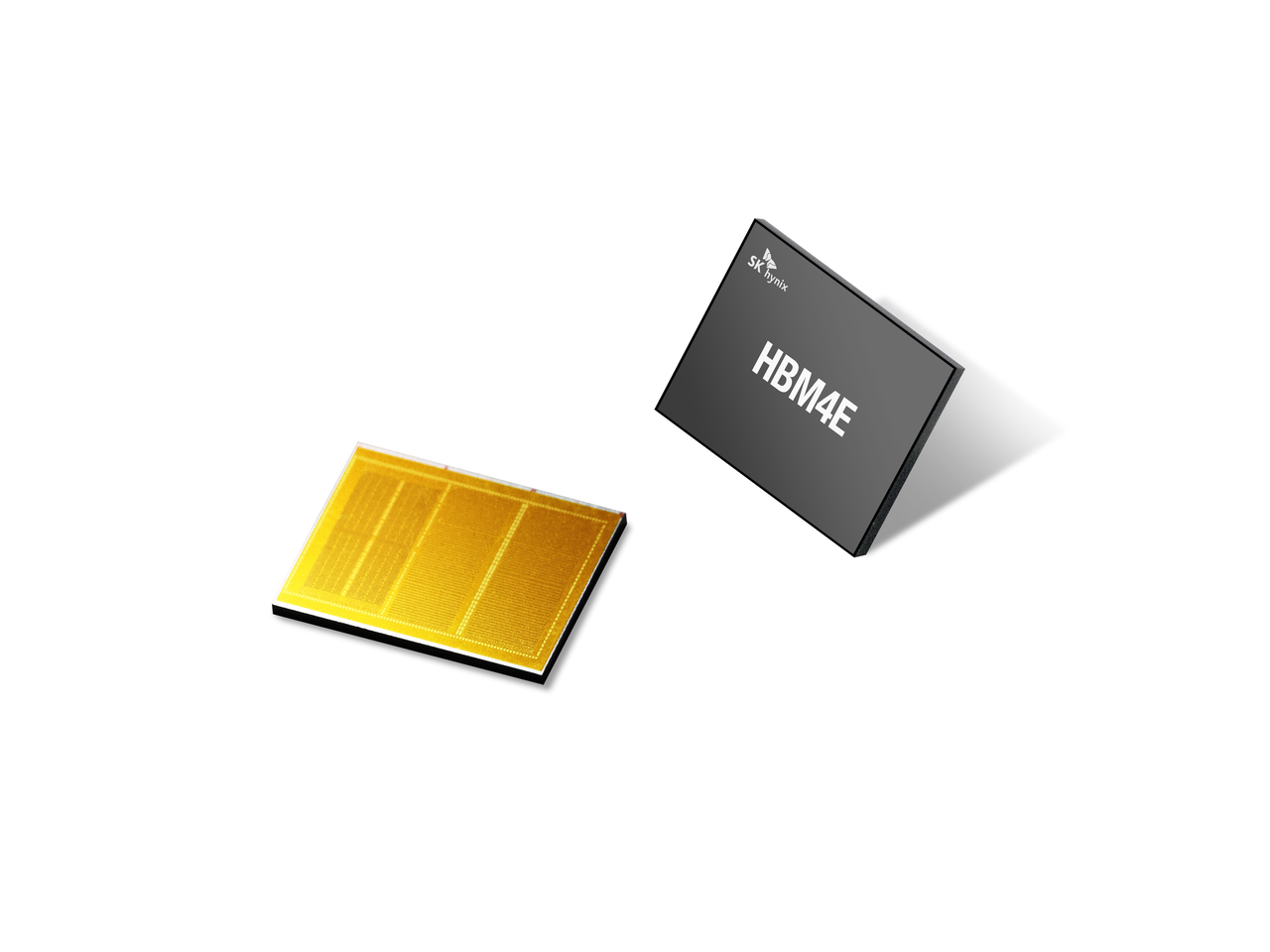
SK hynix said Thursday it has shipped samples of its 12-layer HBM4E, the next generation of high-bandwidth memory for artificial intelligence, to major customers, moving the company into the customer-qualification stage roughly three weeks after rival Samsung Electronics claimed the industry's first such shipment.
The announcement moves the HBM4E contest toward the more decisive phase in which AI chipmakers verify the memory inside their actual accelerator platforms.
In high-bandwidth memory, which is packaged alongside GPUs to ease the data bottlenecks in AI training and inference, sample delivery is the entry point to customer validation rather than proof of mass production. The stage carries added weight for HBM4E because the generation is moving toward more customized designs: logic base dies are tailored to individual customers, raising the value of early validation slots.
SK hynix said its 12-layer part delivers 48 gigabytes of capacity and pin speeds of up to 16 gigabits per second, while improving energy efficiency by more than 20 percent over the previous HBM4 generation.
The company applied its Advanced MR-MUF packaging process, which fills gaps between stacked chips with a protective material to reinforce structural stability and dissipate heat. It said the process cut thermal resistance by about 17 percent compared with HBM4, a gain that matters as faster memory generates more heat in dense computing environments.
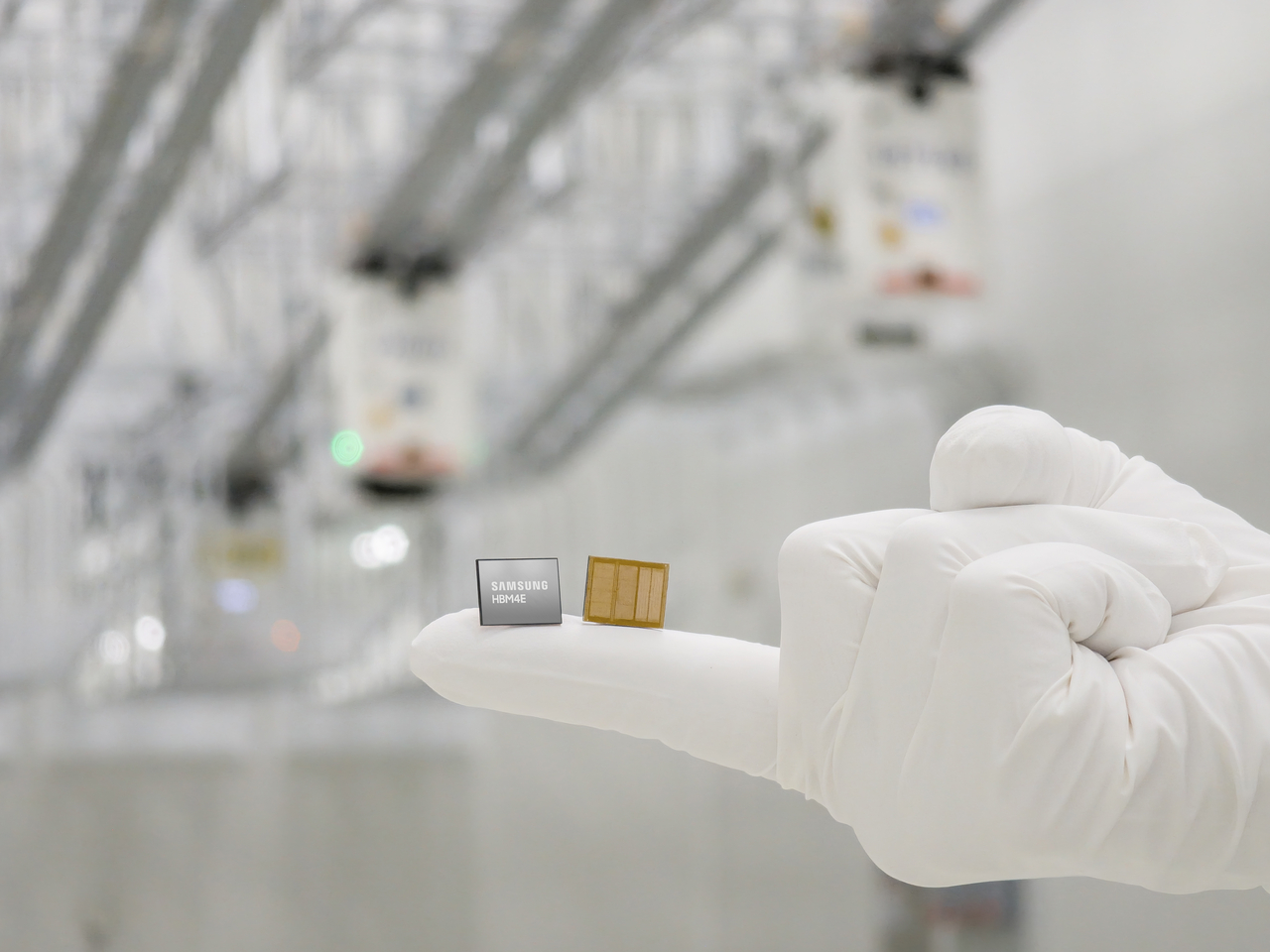
The competitive framing is notable. Samsung announced on May 29 that it had begun shipping the world's first 12-layer HBM4E samples, citing matching figures of 48 gigabytes and 16 gigabits per second. Samsung has highlighted its in-house path for the part, pairing its 1c DRAM with a 4-nanometer foundry logic base die, an approach it frames as a barrier rivals cannot easily match.
SK hynix did not claim a first. Instead it leaned on its track record across HBM3, HBM3E and HBM4 to argue it can carry proven supply capability into the new generation. Ahn Hyun, the company's president and chief development officer, said SK hynix has "laid the foundation to strengthen its AI leadership with HBM4E," and would reinforce its position "as a full-stack AI memory creator."
"To be clear, both companies have only shipped samples so far. Neither company has said it has cleared customer qualification or begun volume production, the stages that will decide which supplier locks in orders for next year's AI platforms," an industry official said.
SK hynix leads the HBM market with a revenue share of about 58 percent as of the first quarter of 2026, according to Counterpoint Research, with Samsung and US-based Micron each trailing at roughly 21 percent. SK hynix's lead has narrowed from 69 percent a year earlier as both rivals gained ground. Micron keeps HBM4E a three-way contest as it has said its HBM4 ramp is running ahead of schedule and that it expects to start HBM4E mass production next year, giving AI chipmakers a third source as they seek to limit dependence on any single supplier.
That timing aligns with Nvidia's Rubin Ultra accelerator platform, expected next year, which is seen as the main destination for HBM4E. Nvidia's pull was on display at Computex in Taipei in early June, where chief executive Jensen Huang visited SK hynix's booth and wrote "Please make more" on an HBM4E wafer.
At the same event, SK Group Chairman Chey Tae-won said the company was ready whenever customers were, while noting it currently had a single HBM4E customer.
SK hynix did not disclose which customers received the samples, and it has not committed to a mass-production date, saying only that it will work with partners "for mass production in a timely manner."
mjh@heraldcorp.com