South Korea’s Constitution has survived tear gas, impeachment and even a midnight flirtation with martial law. Yet the latest attempt to revise it was undone by something more familiar: partisan arithmetic.
한국의 헌법은 최루탄 가스, 탄핵, 심지어 한밤중에 시도된 계엄령을 겪으면서도 살아남았다. 그러나 가장 최근 시도된 개헌이 무산된 것 이유는 우리에게 좀더 친숙한 것, 즉 정치적인 수 싸움이었다.
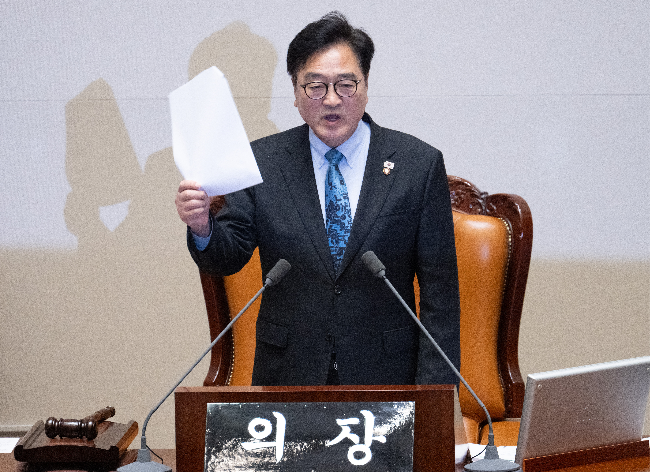
On Friday, National Assembly Speaker Woo Won-shik suspended the constitutional amendment process after days of deadlock and threats of boycott. The initiative had aimed for a national referendum during the June 3 local elections, potentially producing the first constitutional revision in nearly four decades.
수일간의 대치와 보이콧 위협 끝에 금요일 우원식 국회의장은 개헌절차 중단을 선언했다. 6월 3일 지방선거 기간에 국민투표를 진행하는 것을 목표로 한 계획이었고 근 40년만에 첫 헌법 개정으로 이어질 수도 있었다.
Instead, the effort collapsed into mutual recrimination, exposing a legislature more skilled at tactical obstruction than institutional repair.
그러나 이러한 시도는 상호간의 비난전이 되어버렸고 국회가 제도적인 개혁보다는 전술적인 방해에 더 뛰어나다는 것을 드러냈다.
The bill itself pursued only limited revisions. It avoided divisive debates over presidential term limits or sweeping structural reform. Instead, it focused on relatively achievable revisions that would add the democratic legacies of the 1979 Busan-Masan protests and the 1980 Gwangju Democratic Uprising to the constitutional preamble while strengthening parliamentary oversight of martial law declarations.
법안 자체가 추구한 것은 제한적인 개정이었다. 대통령 임기 제한이나 전면적인 구조적 개혁 등에 대한 정파적인 논쟁을 피했다. 대신 비교적 현실성있는 개헌안에 집중했다. 1979년 부마 민주항쟁과 1980년의 5·18 민주화운동의 민주주의 유산을 헌법 전문에 수록하고자 하는 한편 계엄 선언에 관한 국회의 통제권을 강화하고자 했다.
The proposal reflected the political reality after the Dec. 3, 2024, martial law crisis under former President Yoon Suk Yeol. Under the draft revision, a president would have been required to report a martial law declaration to the National Assembly without delay, while lawmakers could invalidate it within 48 hours.
개헌안은 2024년 12월 3일 윤석열 전 대통령 하에 발생한 계엄 사태 이후의 정치적 현실을 반영했다. 개정안 초안에 따르면 대통령은 계엄 선포를 즉시 국회에 알려 48시간 이내에 승인을 받아야 한다.
Public sentiment broadly favored such safeguards. Recent surveys show nearly 60 percent of respondents support constitutional revision overall, while backing for tighter legislative checks on martial law is substantially higher.
전반적인 여론은 그러한 안전조치에 찬성했다. 최근 조사에서 60퍼센트에 가까운 응답자가 개헌 전반에 지지의사를 표했다. 계엄 관련 사법적 견제 강화에 찬성하는 의견은 훨씬 더 높았다.
On Thursday, the main opposition People Power Party boycotted the parliamentary vote, leaving the assembly short of a two-thirds quorum. By the next day, procedural paralysis and filibuster threats forced Speaker Woo to abandon the vote entirely.
목요일 제1야당인 국민의힘이 국회 투표를 거부함으로써 의결에 필요한 3분의 2 정족수를 채우지 못했다. 익일 절차상 마비와 필리버스터 위협으로 우 국회의장은 투표를 완전히 포기할 수 밖에 없었다.
The main opposition insists its resistance was procedural rather than substantive. The party argued that holding a referendum alongside local elections could politicize constitutional revision and complained that the process lacked sufficient public deliberation.
제1야당은 내용보다는 절차상의 반대였다고 주장한다. 지방선거와 국민투표를 동시에 치르는 것은 개헌을 정치화하는 것이라고 주장하며 절차상 공론화가 충분치 않았다고 항의했다.
Those concerns cannot simply be dismissed. Constitutional change is not ordinary legislation. The requirement for approval by two-thirds of lawmakers exists precisely because revision is meant to rest on a broad consensus rather than a temporary parliamentary advantage.
이러한 우려를 간단히 일축할 수는 없다. 헌법 개정은 일반적인 법률 제정이 아니다. 국회의원 3분의 2의 동의 요건은 개헌이 국회에서의 일시적인 우세가 아니라 폭넓은 동의에 기반해야 하기 때문에 존재하는 것이다.
Still, the opposition’s position remains difficult to reconcile with its earlier openness to constitutional reform during the previous presidential cycle. Many of the proposed revisions, including recognition of the Gwangju Democratic Uprising, align with principles the party itself has previously endorsed.
그러나 지난 대통령 임기중 개헌에 열린 태도를 보였기에 야당의 입장을 받아들이기는 여전히 어렵다. 광주민주화운동을 인정하는 것을 포함해 제시된 개정안의 다수는 동 정당이 기존에 스스로 지지했던 원칙과 일치한다.
Refusing even to participate in the vote invited accusations that electoral calculations had overtaken institutional responsibility.
투표에 참여하는 것마저 거부함에 따라 선거 관련 셈법이 제도적 책임을 앞섰다는 비난이 불거졌다.
The ruling camp, however, cannot escape criticism either. The Democratic Party of Korea pushed ahead without establishing the bipartisan constitutional committee that such a process normally demands. Instead of persuasion, it relied on moral pressure and binary rhetoric.
그러나 여당 또한 비난을 면치 못한다. 민주당은 개헌 절차가 응당 필요로 하는 여야 합동 헌법 위원회를 구성하지도 않고 밀어붙였다. 설득 대신 도덕적인 압박과 이분법적 수사에 의존했다.
President Lee Jae Myung deepened tensions by implying that opponents of the amendment were sympathetic to unlawful martial law. That may have energized his supporters, but constitutional revision requires coalition-building, not ideological sorting.
이재명 대통령은 개정에 반대하는 이들은 불법적인 계엄을 옹호하는 것이라고 암시함으로써 대립을 증폭시켰다. 그 발언은 대통령 지지자들의 활기를 돋우었을지는 모르나 개헌에 필요한 것은 이념적 편가르기가 아니라 연대를 구축하는 것이다.
Both camps ultimately treated reform less as a national undertaking than as a variable in June’s electoral equation. The result was a predictable collapse disguised as procedural drama.
양당은 결국 개혁을 국가적 과업이라기보다 6월 선거의 한 변수로 대한 것이다. 그 결과는 절차상의 드라마로 분한 예견된 실패였다.
Dial back to 1987 when South Korea’s ninth constitutional revision emerged from negotiations between ruling and opposition representatives who, despite profound mistrust, recognized the urgency of democratic transition. Their agreement won more than 93.1 percent support in a national referendum.
여야 대표간의 협의를 통해 한국의 9차 개헌안이 도출된 1987년으로 시간을 돌려보자. 뿌리깊은 불신에도 불구하고 양당 대표는 민주적 전환이 시급함을 인식했고 그 합의안은 국민투표에서 93.1퍼센트의 지지를 받았다.
But the "1987 system" is plainly showing its age. The concentration of presidential power, regional imbalances and recurring institutional confrontation have produced years of political volatility.
그러나 "1987 시스템"은 확실히 시대와 맞지 않는 면을 보인다. 대통령에의 권력 집중, 지역적 불균형, 반복되는 제도적 상충으로 오랜 세월 정치적 변동이 계속되어 왔다.
After the local elections next month, both parties should return to the issue through a genuine bipartisan process that extends beyond symbolic revisions toward broader questions of governance and power structure.
다음달 치러지는 지방 선거 이후 여야는 진정한 초당적 절차를 통해 상징적인 개헌을 넘어 통치방식과 권력구조라는 더 거시적인 관점으로 이 문제를 다시 다루어야 할 것이다.
Otherwise, South Korea’s Constitution will remain tethered to an aging blueprint while its politics grows steadily less capable of governing the present moment.
그러지 않고서는 현재를 다스릴 한국의 정치적 역량은 점차 퇴보하는 반면 헌법은 시대에 뒤처진 청사진에 발묶인 채로 남아있게 될 것이다.
impeachment 탄핵
arithmetic 계산
amendment 개정
deadlock 교착 상태
national referendum 국민 투표
recrimination 비난, 맞대응
preamble 전문
quorum 정족수
binary 2진법의
coalition 연합, 연대
tether 묶다
khnews@heraldcorp.com