South Korea is moving to cut red tape in defense technology transfers, seeking to help local arms-makers produce and export weapons parts more quickly, as demand for Korean-made systems grows overseas.
The Defense Ministry has issued a prior announcement of a partial revision to the enforcement decree of the Defense Science and Technology Innovation Promotion Act.
The proposed revision would shorten part of the approval process for state-owned defense R&D technologies from up to two months to 30 days. It would also allow some repair parts exports to proceed without separate approval from the state-run Defense Acquisition Program Administration.
In the notice, the ministry said the revision is intended to “contribute to the revitalization of the defense industry by creating conditions for defense firms to swiftly manufacture and export repair parts and defense products.”
In many cases, defense firms need government approval for such transfers when using state-owned R&D outcomes to manufacture repair parts and other defense products. But the current process can delay production and exports when urgent parts demand arises overseas, the ministry explained.
Under the current law, transferring technologies related to state-owned outcomes from defense R&D projects can take up to three months. The process includes up to one month for the technology-holding institution to review whether a transfer is possible and calculate technology fees, and up to two months for DAPA approval.
The proposed revision would cut DAPA’s approval period for technology transfers from two months to 30 days. Weekends and public holidays would not be counted in the 30-day period.
The ministry also seeks to expand the scope of cases in which technology-holding institutions can approve technology transfers on their own, without separate approval from DAPA.
Under the revision, such self-approval would be allowed when domestic firms manufacture repair parts for export to support defense products previously exported with DAPA’s approval.
The exemption would apply when the repair parts are exported to the same end user, the ministry said.
“For weapons systems, continuous maintenance throughout their life cycle is essential,” the ministry said. “As demand for exports is expected to increase with the expansion of defense exports, it is necessary to create conditions that allow repair parts to be manufactured and exported swiftly.”
South Korea’s defense exports have grown sharply in recent years, increasing demand for follow-up maintenance and parts supply.
In 2025, South Korea’s defense export orders reached $15.44 billion, up 62.5 percent from a year earlier, according to DAPA and the Korea Institute for Industrial Economics and Trade.
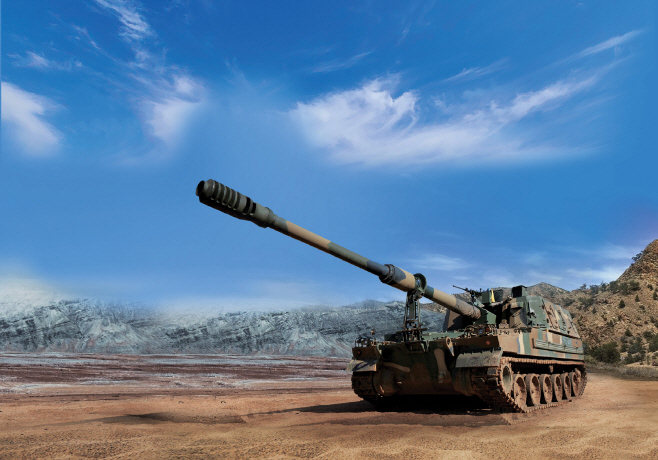
Major defense export items include K9 self-propelled howitzers and Chunmoo multiple rocket launchers produced by Hanwha Aerospace, K2 tanks made by Hyundai Rotem, FA-50 light combat aircraft built by Korea Aerospace Industries and Cheongung-II missile interceptors produced by LIG D&A.
flylikekite@heraldcorp.com