Hanwha Aerospace said Monday it has increased its stake in Korea Aerospace Industries to above five percent, signaling deeper strategic cooperation in global exports and defense projects.
The company acquired an additional 100,000 shares, or 0.1 percent, of KAI, raising its stake to 5.09 percent. In March, Hanwha Aerospace said it had secured a 4.99 percent stake in KAI — together with its affiliates, including Hanwha Systems — marking its first such investment in seven years.
The group previously held roughly a 10 percent stake in KAI through its 2015 acquisition of Samsung Techwin, now Hanwha Aerospace, before selling it off in 2018.
Hanwha Aerospace has revised its shareholding purpose from “passive investment” to “participation in management,” in line with disclosure requirements that apply when a stake exceeds 5 percent, particularly where there is an intention to influence management decisions.
The company said it plans to invest up to 500 billion won ($340 million) by the end of this year to acquire additional shares in KAI — roughly 2.96 million shares, or a 3.04 percent stake — depending on the actual purchase price. This could further increase its stake up to around 8 percent.
Hanwha noted its strategic alliance with an industry rival, KAI, comes as major players in Europe and the US have been scaling up through mergers and acquisitions, and joint venture partnerships to strengthen capabilities in areas such as satellite systems, AI and next-generation weapons.
As a result, building a “national champion” by integrating the aerospace and defense sectors has become an inevitable task in Korea, instead of fragmented domestic defense firms competing independently in global markets.
With its increased stake in KAI, Hanwha Aerospace said it aims to enhance global export competitiveness and expand cooperation in aerospace and defense projects.
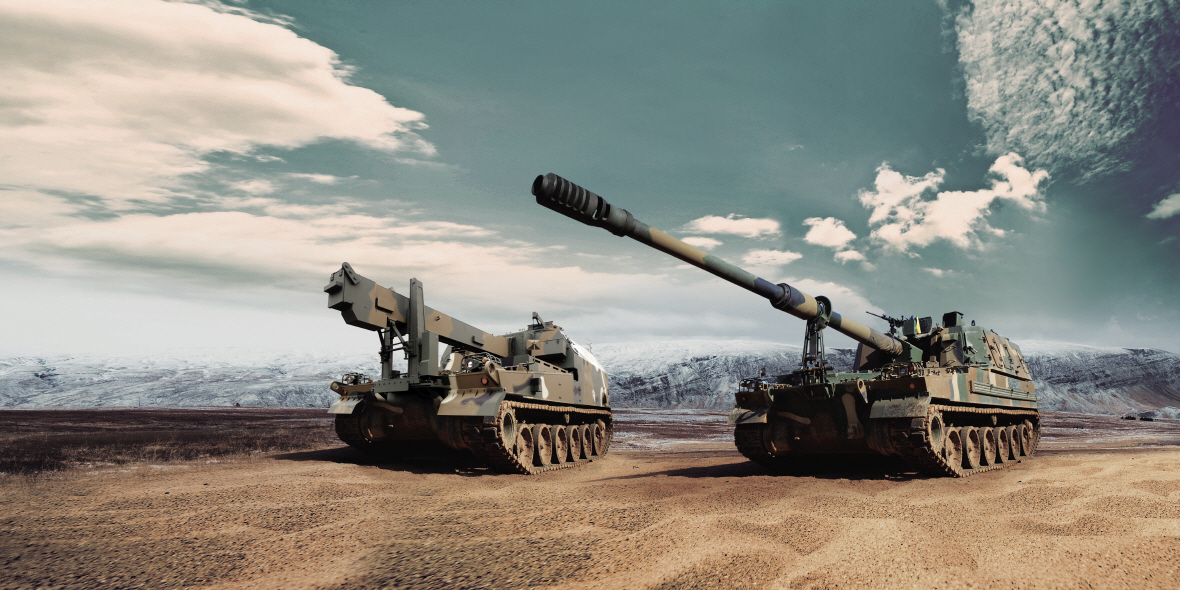
Hanwha Aerospace specializes in ground defense systems, aircraft engines, avionics, radar and space launch technologies, while KAI is Korea’s sole manufacturer of complete aircraft and possesses advanced technologies in satellite development and aerial combat systems.
Stronger ties between the two firms are expected to boost overseas orders. Both companies already derive more than half of their revenue from exports, but KAI’s aircraft business, challenged with high fixed costs, requires stable export volumes to improve profitability.
The companies have previously collaborated on projects involving the KF-21 fighter jet, long-range air-to-air missiles and helicopters. In February, they signed an agreement to expand cooperation in aircraft engine localization, uncrewed systems development and joint entry into the commercial space market.
hyejin2@heraldcorp.com