
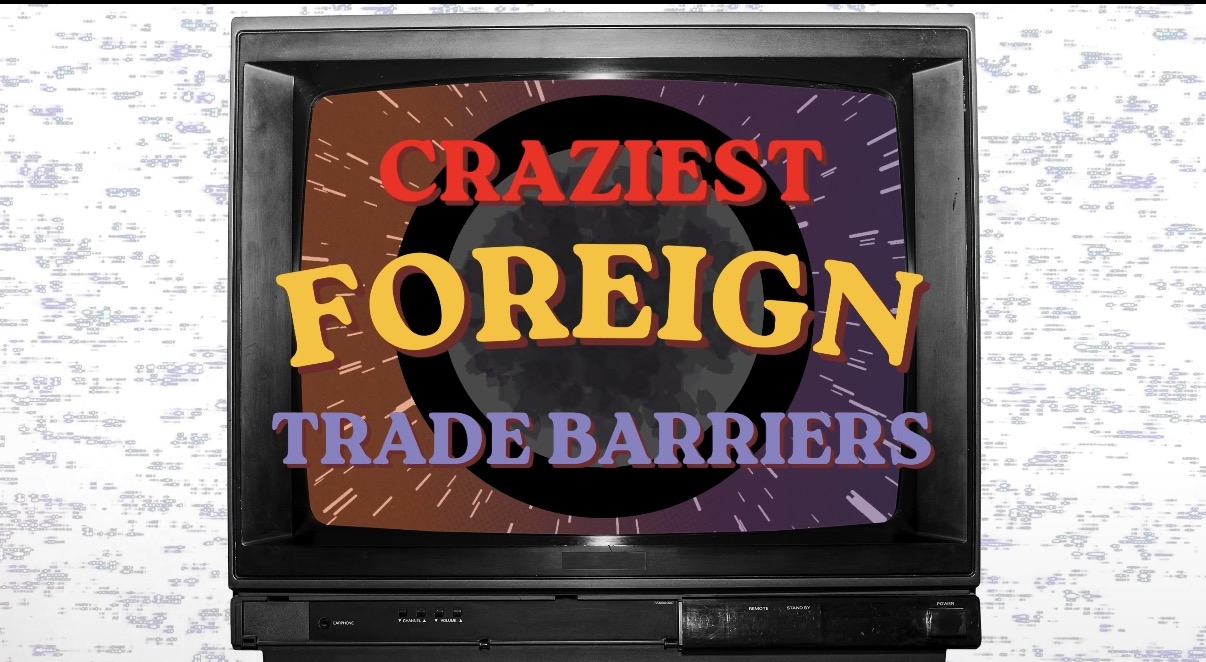
The Office of the US Trade Representative has renewed criticism of South Korea’s network usage fee policy, calling it an outlier and one of the “craziest” foreign trade barriers facing American exporters.
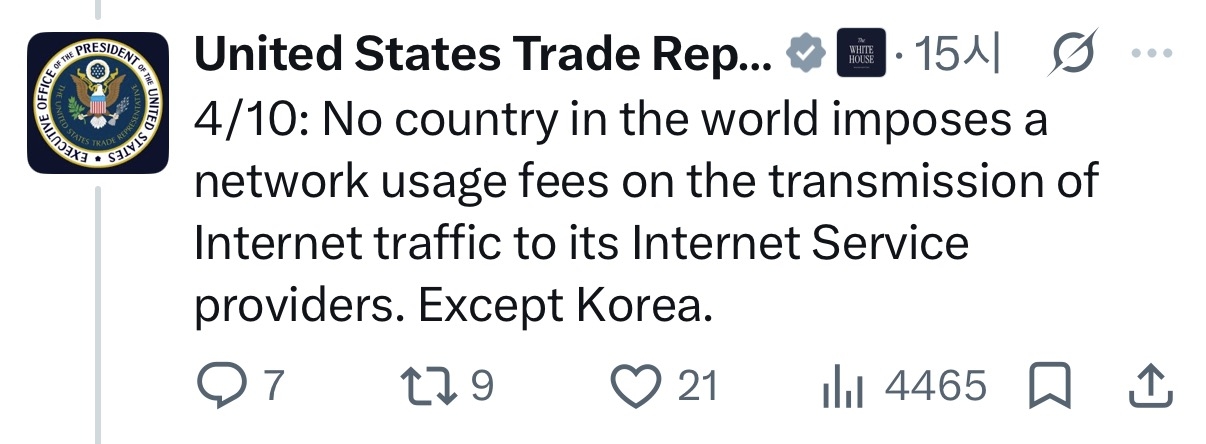
In a series of posts on X on Tuesday, the agency said, “You wouldn’t believe the lengths some countries go to stop American exports,” listing 10 examples. Korea’s so-called “sending party network pays” policy ranked fourth.
“No country in the world imposes a network usage fees on the transmission of Internet traffic to its Internet Service providers. Except Korea,” the USTR said.
Washington has long viewed the issue as a non-tariff barrier. The policy has repeatedly been flagged in the USTR’s annual National Trade Estimate report, including the latest edition released last month, where it was grouped with concerns over platform regulation, cross-border data restrictions and complex certification requirements in digital payments.
The dispute reflects a broader clash between telecom operators and global content providers over who should bear the cost of surging data traffic.
Korean telecom carriers such as SK Telecom and KT Corporation argue that major foreign platforms — including Netflix and YouTube — generate heavy network traffic without contributing proportionately to infrastructure costs. They say additional fees are needed to ensure fair cost-sharing and sustain investment, noting that domestic platforms such as Naver already pay such charges.
US tech firms reject that view, arguing that end users already pay for internet access, making additional charges a form of double-billing. They also cite net neutrality concerns, warning that traffic-based fees could lead to discriminatory treatment and undermine the open internet.
The issue is under active review in Korea. The National Assembly is considering amendments to the Telecommunications Business Act that would require global tech firms to share network usage costs.
The latest remarks suggest the dispute could remain a sticking point in bilateral trade talks, particularly as digital trade and platform regulation rise on policy agendas.
Some analysts say the criticism may be laying the groundwork for broader action under Section 301 of the Trade Act of 1974, potentially extending probes to digital services. The USTR is scheduled to hold a public hearing Tuesday at the US International Trade Commission on issues including overcapacity and forced labor across about 60 countries, including Korea.
A separate hearing on May 5 will examine overcapacity involving 16 countries, also including Korea.
A Korean government official said immediate action is unlikely, noting that a formal network usage fee regime has yet to be implemented.
“However, it is difficult to rule out the possibility that a Section 301 investigation could be expanded to cover digital sectors,” the official said, pointing to growing US scrutiny of non-tariff barriers in the digital economy.
Beyond Korea, the USTR also highlighted other trade frictions, including Turkey’s ban on US rice imports, Nigeria’s restrictions on American beef, and Australia’s regulation of video streaming platforms.
herim@heraldcorp.com


