
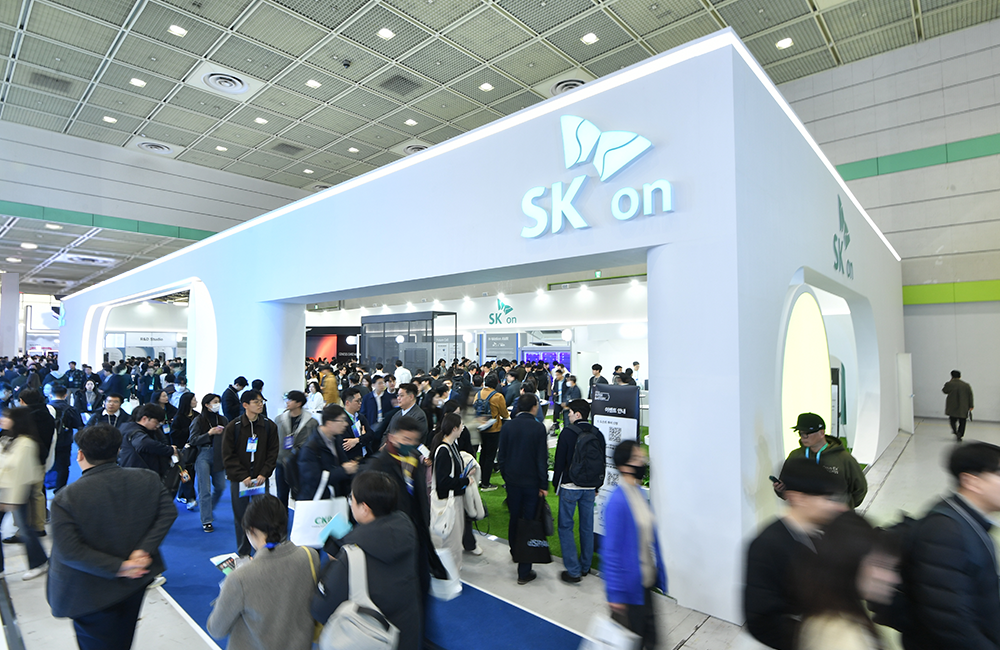
SK On said Wednesday it was establishing a new office in Tokyo as early as this month, stepping up its push into Japan’s electric vehicle and energy storage system markets.
The company recently listed its Japanese branch on its website, adding to its global footprint across the US, China and Europe.
“The Tokyo office will serve as a strategic hub to accelerate our entry into Japan’s automotive and ESS markets,” an SK On official said. “It will enable faster responses to customer needs while supporting new orders and profitability-driven growth.”
Japan, long dominated by hybrid vehicles, is seeing gradual growth in EV adoption, supported by expanded government subsidies. The Ministry of Economy, Trade and Industry recently raised subsidies for battery-powered vehicles and other clean mobility options by 400,000 yen ($270), bringing the maximum to 1.3 million yen.
According to Nikkei, Japan’s new passenger EV sales reached a record 26,959 units in the first quarter, up 80 percent from a year earlier — the first time quarterly sales have exceeded 20,000 units since 2023.
The policy environment is also shifting to reduce reliance on China, with incentives favoring batteries produced domestically or sourced through “Japan-linked” supply chains. Industry sources say this could create opportunities for Korean battery makers despite the absence of Japanese manufacturing bases.
SK On has already been strengthening ties with Japanese automakers. Last year, it secured Nissan as its first Japanese partner, signing a 15 trillion won ($10.1 billion) deal to supply 99.4 gigawatt-hours of high-nickel pouch-type battery cells for North American models between 2028 and 2034.
Japan’s ESS market is another key target, with strong growth potential. According to LS Electric, the market is projected to expand from $343.6 million in 2024 to $1.1 billion by 2030.
hyejin2@heraldcorp.com