
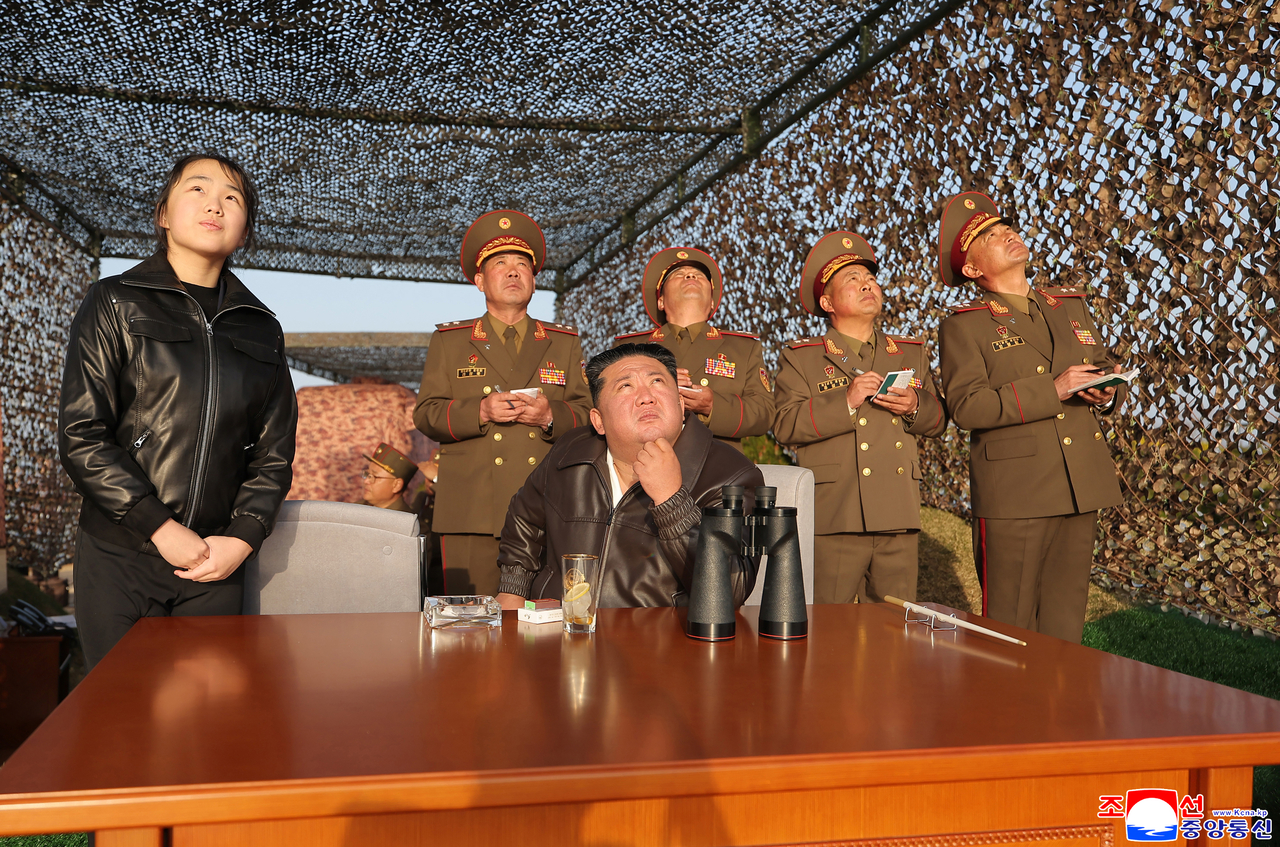
North Korean leader Kim Jong-un appears to have increasingly surrounded himself with key military and munitions officials in his public activities this year, as he intensifies the drive to advance the country’s military capabilities, a Seoul-based think tank said Tuesday.
According to the Korea Institute for National Unification, an analysis of Kim’s public appearances through March 24 showed that figures from the military industry and weapons development sectors featured prominently among those accompanying him.
Kim Jong-sik, first vice department director of the ruling Workers’ Party’s Munitions Industry Department, topped the list with four appearances alongside the leader. He was followed by Ri Il-hwan, a member of the Politburo Presidium, with three, while Munitions Industry Department Director Jo Chun-ryong, Politburo member Kim Jae-ryong and Missile General Bureau chief Jang Chang-ha each appeared twice.
Kim Jong-sik, a veteran rocket engineer, is considered a central figure in North Korea’s weapons development. He was awarded the title “Hero of the Republic” in 2012 for his contributions to missile programs and has frequently been seen at major weapons tests. He drew public attention in 2016 when he was seen smoking alongside Kim during a submarine-launched ballistic missile test, and was again spotted standing next to the leader during the launch of the country’s first reconnaissance satellite, Malligyong-1, in November 2023.
Jang Chang-ha, a former head of the Academy of National Defense Science, is also regarded as a key technocrat behind North Korea’s missile development. He has often appeared at launch sites and is known to issue test orders under Kim’s authority. In 2021, he publicly dismissed South Korea’s submarine-launched ballistic missile test as a “defective weapon,” underscoring his role as a technical voice within the regime.
Both Kim Jong-sik and Jang are believed to have played major roles in advancing North Korea’s strategic weapons, including the transition of missile fuel systems from liquid to solid propellants and the development of hypersonic technologies.
Jo Chun-ryong, meanwhile, is a specialist in military production and heavy industry, rather than a field commander. He has been linked to North Korea’s “second economy,” which refers to its defense-industrial sector, and is believed to have overseen key arms production efforts since the mid-2010s. Though relatively little is publicly known about him, his profile has led to observations that he may play a central role within the regime’s military-industrial decision-making structure. He has been subject to UN sanctions, including under Security Council Resolution 2321, as well as unilateral measures by South Korea and the United States.
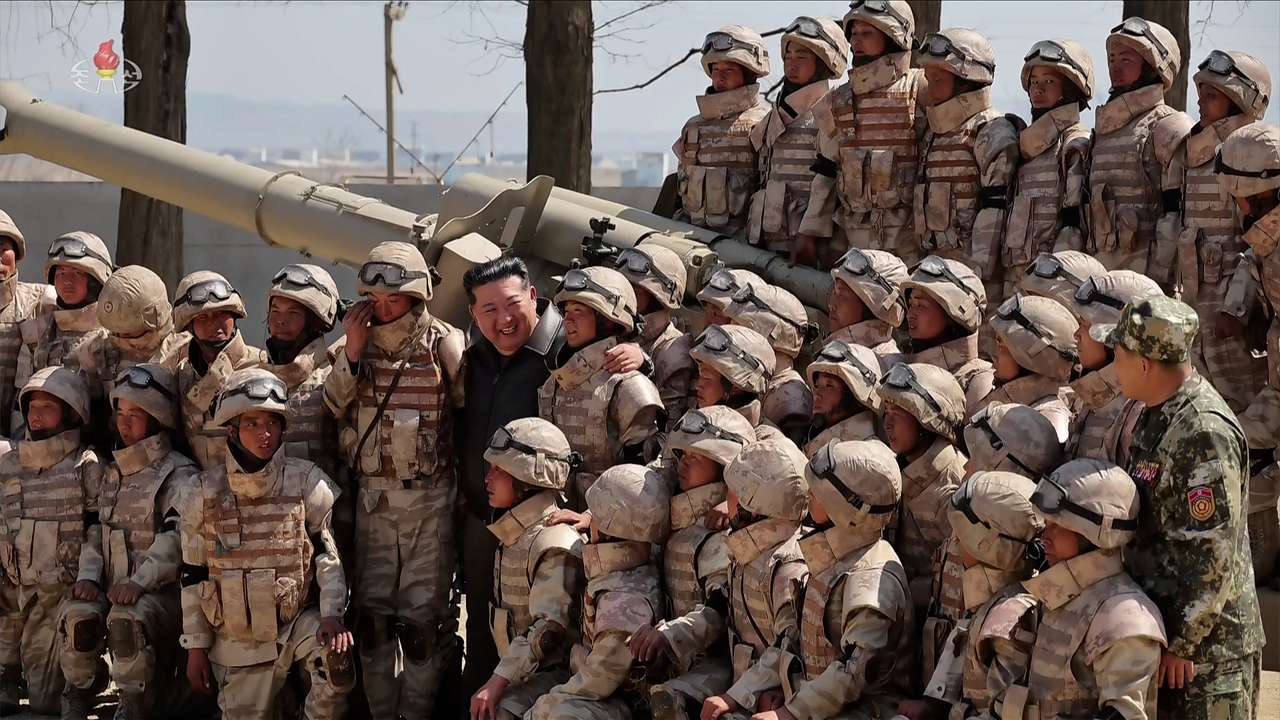
The prominence of these figures comes as Kim has in recent weeks focused on testing upgraded and newly developed missile systems. North Korea has also showcased weapons incorporating cluster munitions and carbon-fiber payloads designed to disrupt power infrastructure — capabilities not previously highlighted in its arsenal.
The frequent presence of such officials at Kim’s side reflects the regime’s emphasis on demonstrating strategic weapons capabilities, including multiple missile-related activities reported this month.
The trend also follows Kim’s directive at the ruling party’s ninth congress held in February, where he outlined a new five-year defense development plan and called for strengthening military power to levels that would instill fear in adversaries.
flylikekite@heraldcorp.com