

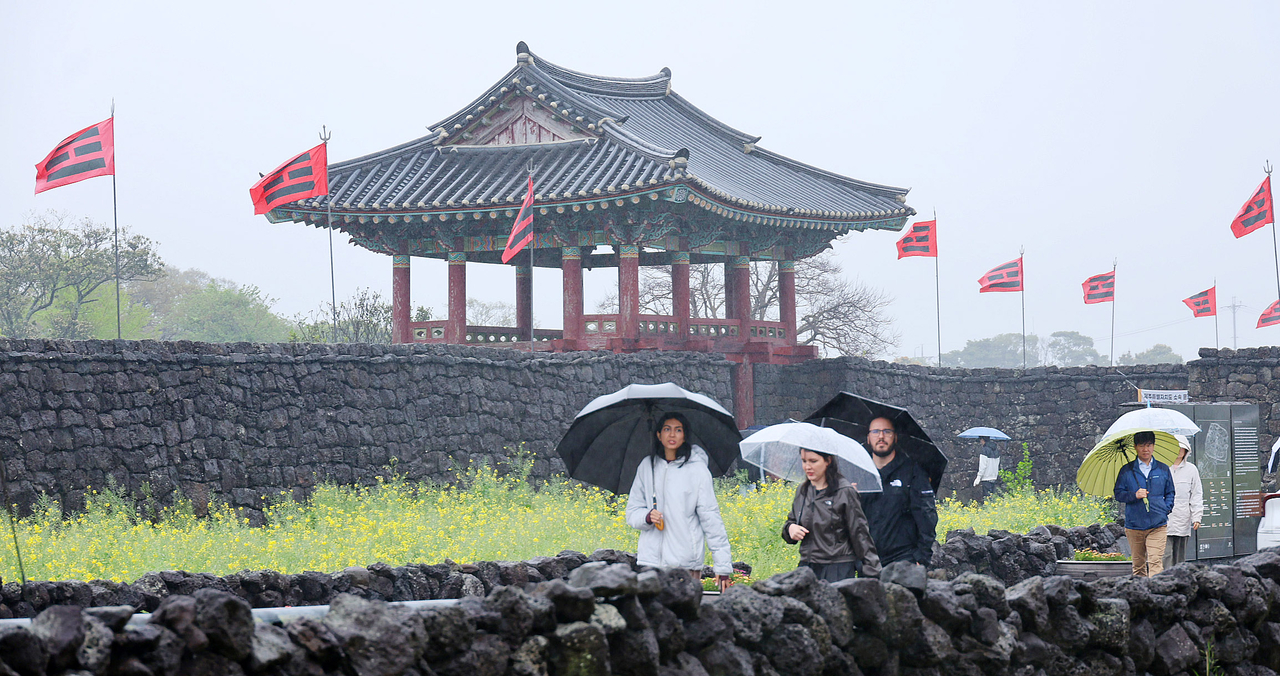
Despite steady rain, tourists continued to visit Seongeup Folk Village in Seogwipo, Jeju, on Saturday, exploring the island’s traditional heritage.
Umbrellas filled the narrow paths as visitors moved between black stone walls and thatched-roof houses.
Designated as a national folk heritage site in 1984, Seongeup Folk Village was once the administrative center of Jeongeui-hyeon during the Joseon era (1392-1910).
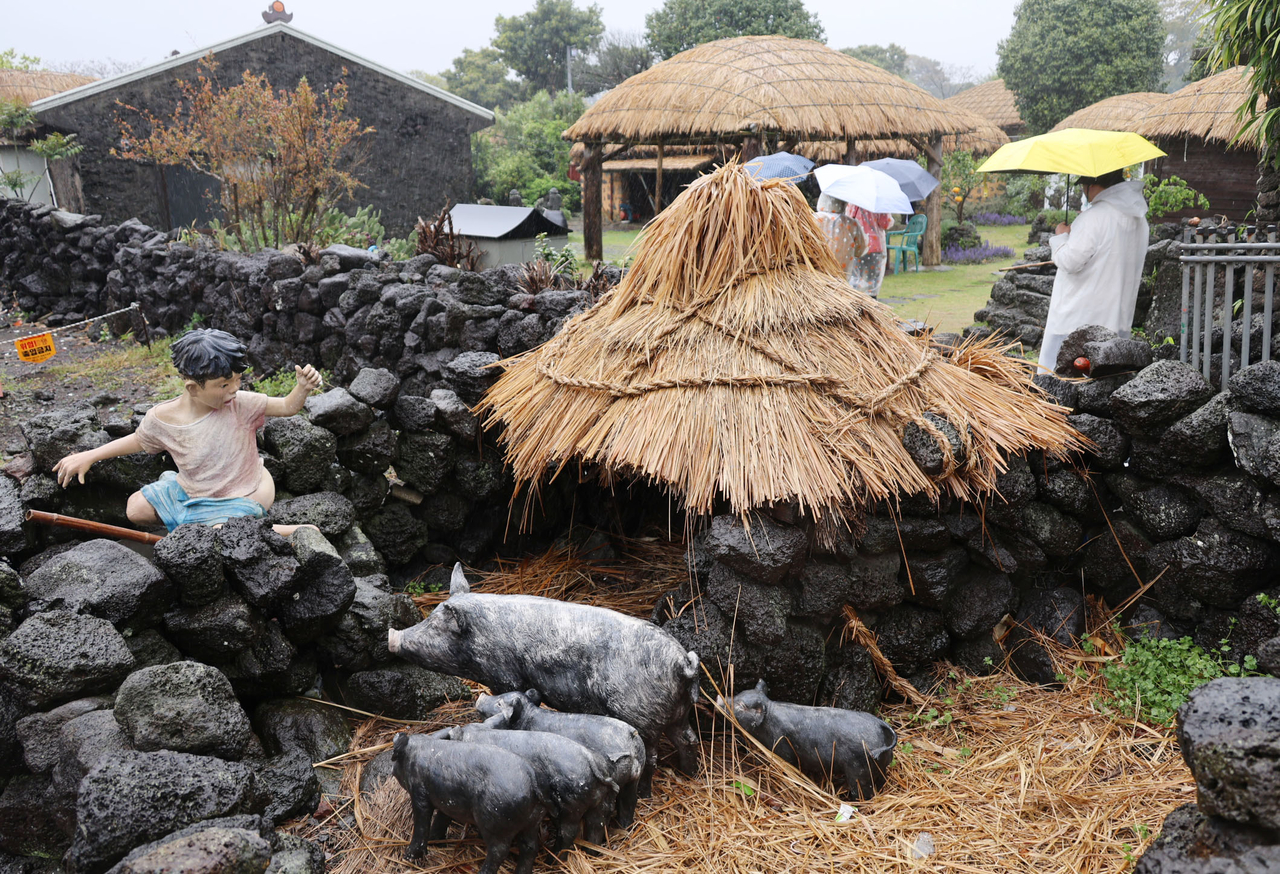
The village offers a glimpse into everyday life in old Jeju, with preserved homes, livestock and cultural elements still in place.
It remains one of the few places where both official structures and residential life from the period are preserved together.
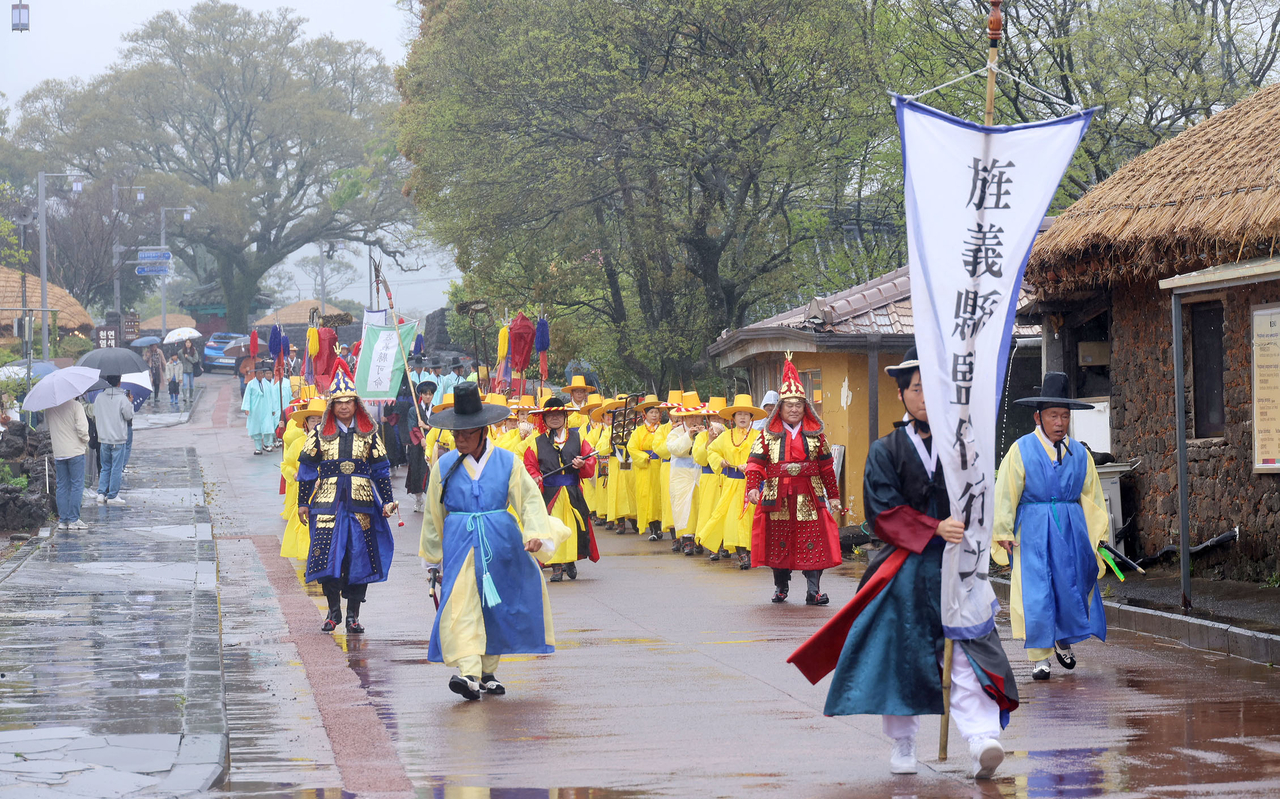
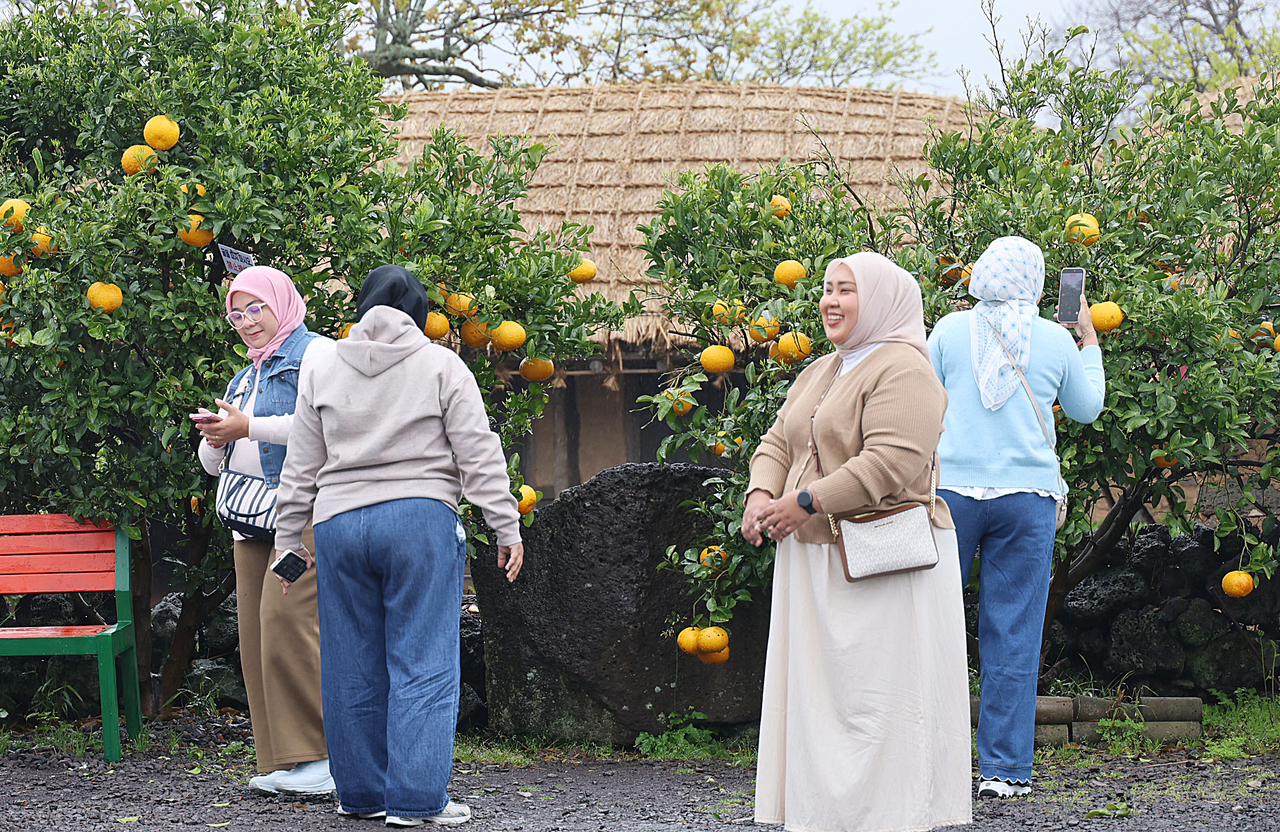
Some visitors paused to take photos among tangerine trees, while others followed traditional processions staged within the village, adding a dynamic element to the otherwise quiet, rain-soaked setting.
Scenes of pigs roaming near stone enclosures and visitors walking through citrus groves reflected a blend of living heritage and tourism.
flylikekite@heraldcorp.com