

Chung Ji-young's crowdfunded film has drawn 39,188 admissions since its Wednesday opening
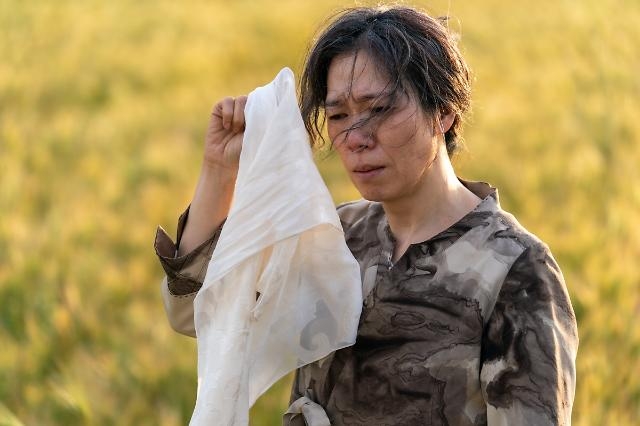
A drama revisiting the Jeju April 3 massacre has topped South Korea's independent and arthouse box office for a second straight day, the Korean Film Council's integrated ticketing system showed Friday.
"My Name," directed by Chung Ji-young, placed first on the chart that tracks independent, arthouse and smaller foreign releases outside wide commercial releases — a notable showing given that the film opened on considerably fewer screens and with fewer showtimes than most of its competition.
Set in 1998, the film stars Yeom Hye-ran ("When Life Gives You Tangerines," "No Other Choice") as Jeong-soon, a dance instructor whose buried memories of the violence on Jeju Island half a century earlier begin to resurface as she raises her teenage son.
Funded largely through crowdfunding, "My Name" received its world premiere in February at the Berlin International Film Festival's Forum section, a sidebar primarily devoted to socially engaged work.
Part of the film's strong opening has been fueled by renewed public interest after President Lee Jae Myung and first lady Kim Hea Kyung attended a screening at CGV Yongsan in Seoul on Wednesday.
The president and first lady stayed afterward to meet director Chung and cast members Yeom and Shin Woo-bin onstage.
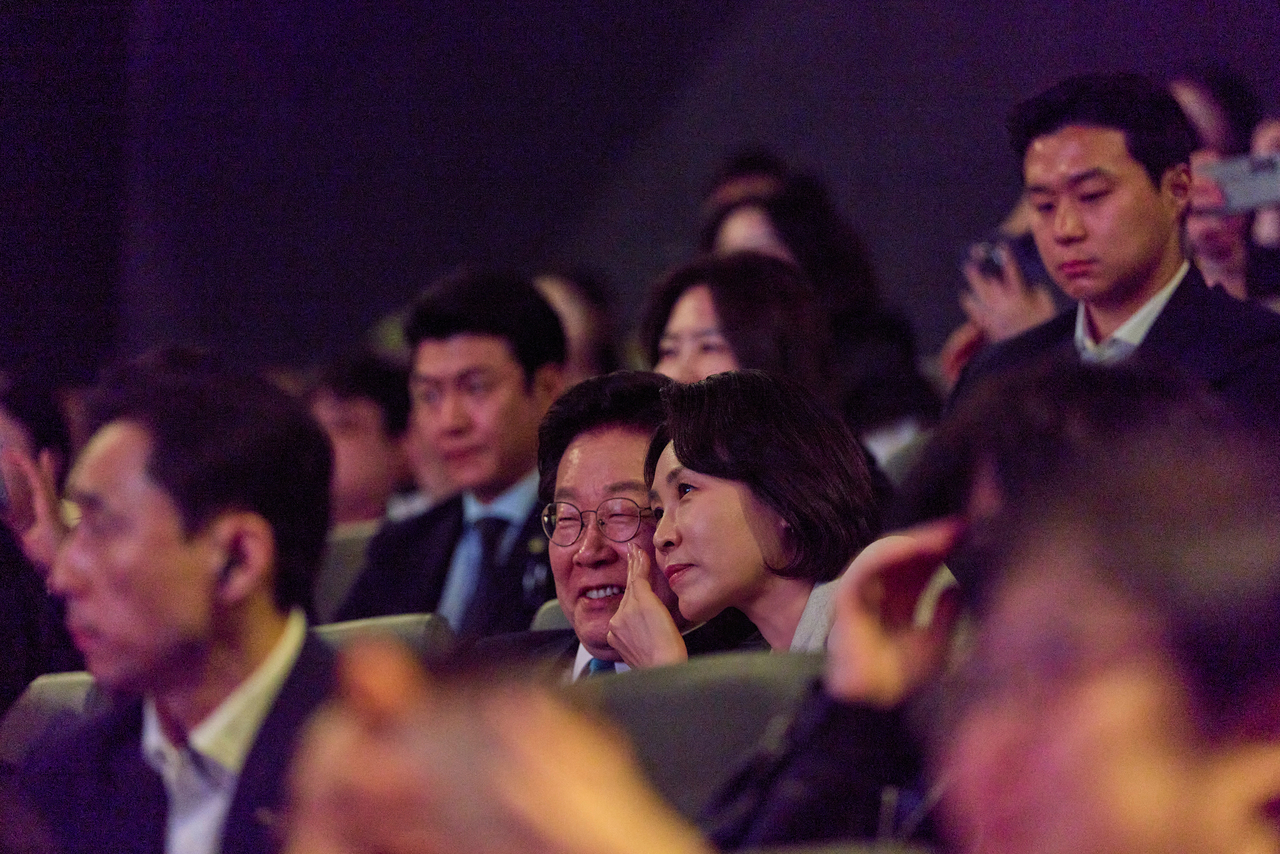
In remarks from the stage after the screening, Lee called for abolishing the statute of limitations on crimes committed by the state, saying those responsible should be held accountable "no matter how much time passes."
He added that he hoped the film would help audiences "remember Jeju's pain and discover hope and courage beyond the wounds."
The Jeju April 3 incident, as it is known in South Korea, refers to a period of political upheaval and state crackdown on the island in the years surrounding the Korean War, between 1947 and 1954.
As many as 30,000 people were killed, many of them civilians accused of communist sympathies and summarily executed by government forces and right-wing paramilitaries.
Public discussion of the events was effectively banned under successive military rulers, and survivors were long stigmatized as communist sympathizers.
An official apology and formal acknowledgment from the government did not come until after South Korea's transition to democracy through the 1990s.
"My Name" joins a small but growing body of Korean films revisiting the massacre, including O Muel's black-and-white drama "Jiseul," which won the World Cinema Grand Jury Prize at Sundance in 2013, and Ha Myung-mi's survival drama "Hallan," released late last year.
Nobel laureate Han Kang's 2021 novel "We Do Not Part," which traces a woman's journey through snow-covered Jeju as she reckons with inherited grief, has also brought the history to a wider international audience since her Nobel Prize win in 2024.
"My Name" is playing in theaters nationwide.
moonkihoon@heraldcorp.com