
Nvidia, Microsoft executives at GBF say firms must rethink human-AI workflows
Nvidia and Microsoft on Wednesday signaled that artificial intelligence remains in its early stages, but companies that rethink how humans and AI agents work together will be best positioned to generate real business value.
Speaking at the 2026 Global Biz Forum hosted by The Korea Herald and Herald Business in Seoul, the two companies framed AI as a layered industrial system rather than a standalone tool.
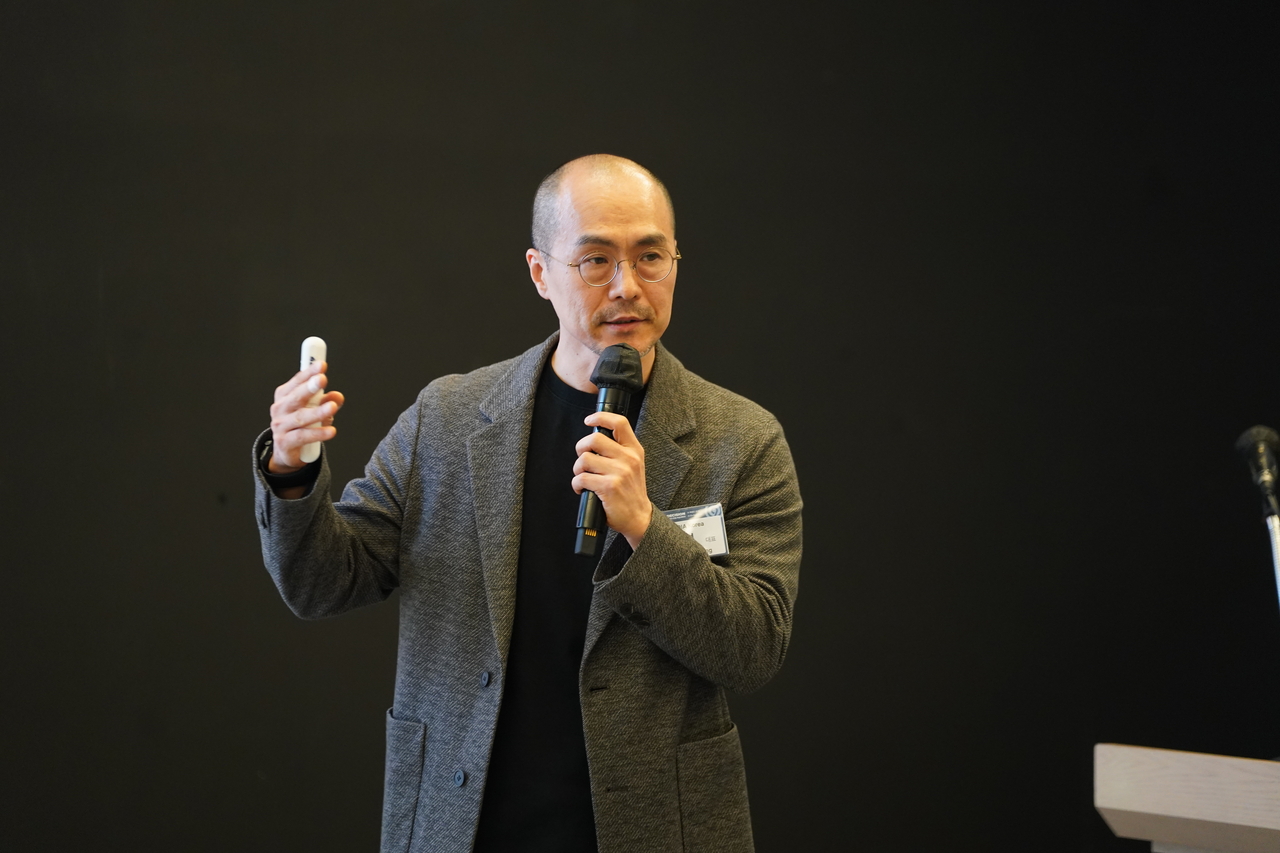
Jeong So-young, datacenter and enterprise business lead at Nvidia Korea, outlined five core layers underpinning the AI economy — energy, semiconductors such as GPUs and memory, infrastructure including data centers and cloud, models, and services — stressing that “growth must be balanced across all tiers.”
He highlighted GPU-based parallel computing as the engine behind recent advances, noting that “the scale of data and models has already moved beyond what traditional CPU-based systems can efficiently handle.”
Jeong compared the current phase of AI to the early days of electricity, saying it is “still in its infancy, but capable of triggering broad industrial change.”
He also noted that falling token-generation costs are opening the door to broader inference and service expansion. Data centers, he added, are evolving into “AI factories that generate value, not just cost centers.”
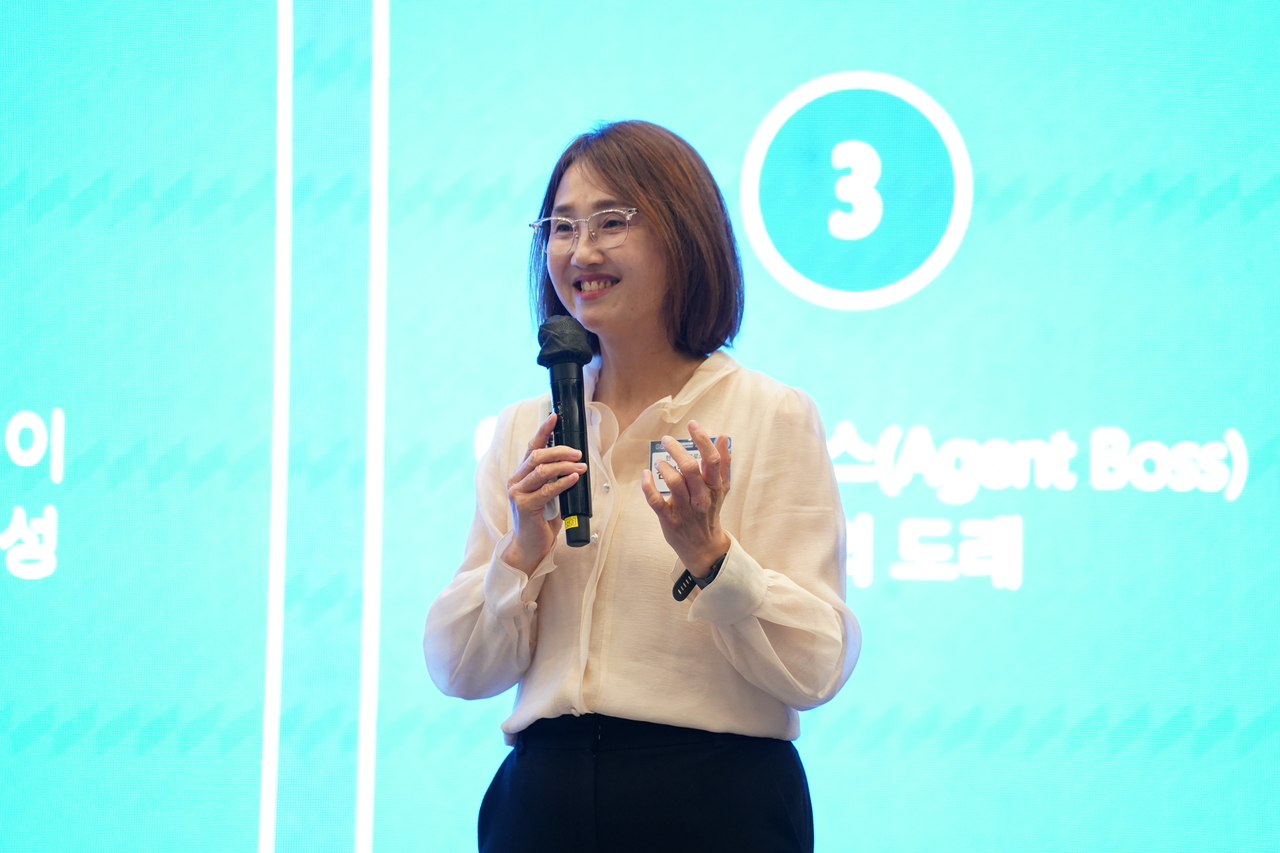
Kim Sung-mi, Azure success manager at Microsoft Korea, took a more cautious tone, pointing to a widening gap between investment and outcomes.
“Only around 5 percent of companies are seeing meaningful results from their AI investments,” she said, attributing the shortfall to gaps in data readiness, workflow design and organizational structure.
Much of the effort, she added, goes into groundwork. “Roughly 50 to 70 percent of AI projects is spent preparing data and redesigning processes, not building models.”
Employee sentiment also remains mixed. While workers welcome automation of repetitive tasks, many are still hesitant to entrust decision-making to AI.
The two companies agreed on one point: the next phase of AI will be shaped by autonomous agents.
Nvidia said AI is moving beyond prompt-based systems toward software capable of planning and executing tasks independently — from editing files and browsing the web to refining code.
Microsoft echoed that view, with Kim saying that “a hybrid model, where AI handles routine work and humans focus on creative and strategic decisions, is the most effective approach.”
That shift, she added, will require structural change. “Organizations need to move away from rigid departments toward more flexible, project-based teams where humans and AI agents work together.”
With the pace of change accelerating, Nvidia urged companies to focus on execution rather than long-term planning.
Jeong noted that in just three years since the debut of ChatGPT, model scale and processing capacity have increased more than 100-fold, adding that “three- to five-year road maps no longer hold much meaning in this environment.”
Microsoft, for its part, highlighted three priorities for effective adoption: analyzing tasks at the job level, deploying AI based on clear returns on investment, and establishing dedicated AI governance structures such as centers of excellence.
Their message was clear.
AI itself is no longer the main constraint. What will separate winners from laggards is how effectively companies integrate the technology into their operations — reshaping workflows, decision-making processes and organizational design.
AI is fast becoming a general-purpose technology, much like electricity. For companies, the real test now is execution.
yeeun@heraldcorp.com