Brief respite reveals enduring threats to maritime order, Korea’s economic security
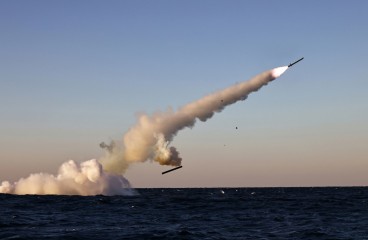
The ceasefire, finalized Tuesday with a mere 88 minutes to spare before a threatened “civilizational collapse,” is less a peace than a fragile suspension of hostilities.
While the two-week truce between Washington and Tehran has pulled the region back from the precipice, it has the quality of a tactical breather born of mutual exhaustion.
For South Korea, the quieted guns offer little comfort. The immediate kinetic threat has been replaced by a more troubling structural instability that challenges the nation’s energy security and its standing in the global maritime order.
This concern is anchored in the vast ideological gulf separating the two sides as they prepare for the Islamabad talks. The US negotiating team, led by Vice President JD Vance, has signaled a "red line" regarding the total removal of Iran’s enriched uranium.
Conversely, Tehran’s 10-point proposal demands full sanctions relief, war reparations and the recognition of its right to enrichment. These are not merely policy disagreements; they are incompatible definitions of sovereignty and victory that threaten to collapse the Saturday talks before they begin.
The fragility of this arrangement is already being tested by a "legitimate misunderstanding" on the ground. Recent Israeli strikes in Lebanon, which reportedly killed over 250 people, have prompted Hezbollah to retaliate and led Iran to threaten a withdrawal from the truce.
This regional volatility has sent Brent crude back toward the $100 mark and rattled Asian markets.
The most radical shift, however, is emerging in the proposed management of the Strait of Hormuz. US President Donald Trump’s suggestion of a "joint venture" to collect transit fees marks a stunning departure from the centuries-old principle of the global commons. Framed by the White House as a "beautiful thing" to secure the waterway, this proposal would effectively monetize access to a choke point through which 70 percent of South Korea’s oil and naphtha flows.
With the UN Security Council paralyzed by Chinese and Russian opposition to free-navigation resolutions, the Strait could become a private toll road governed by bilateral interests rather than international law.
The physical reality within the strait underscores the humanitarian and logistical stakes. Roughly 2,000 vessels remain stranded, including 26 South Korean ships and 173 sailors facing deteriorating conditions and dwindling supplies.
Despite the truce, the Islamic Revolutionary Guard Corps continues to impose "controlled transit," with reports suggesting a limit of only 10 ships per day. This bottleneck has choked the supply of naphtha and essential tech components like helium and bromine, creating a systemic shock that reverberates from petrochemical plants to semiconductor labs.
In response, President Lee Jae Myung has signaled a departure from temporary crisis management. Presiding over the National Economic Advisory Council, Lee argued that the current emergency provides a rare window to fundamentally alter the national economic system.
When low-cost asymmetric tools like drones and naval mines can repeatedly paralyze billion-dollar supply chains, the vulnerability is hard to ignore.
Diversification is no longer a strategic luxury, but a survival mandate. South Korea must accelerate its pivot toward the India-Middle East-Europe Economic Corridor and deepen energy partnerships with the US, Russia and Australia.
While the cost of retooling refineries and securing alternative routes is high, the alternative is permanent exposure to a choke point that can no longer be assumed secure.
The next two weeks will show whether diplomacy can stabilize the Middle East, but the previous maritime order has already faded. The assumption that sea lanes are a neutral global utility has been shattered by the specter of a "joint-venture" proposal.
Seoul’s task is to adapt to a world where the freedom of the seas is no longer an inherent right, but a commodity to be defended, bought and sold.
khnews@heraldcorp.com