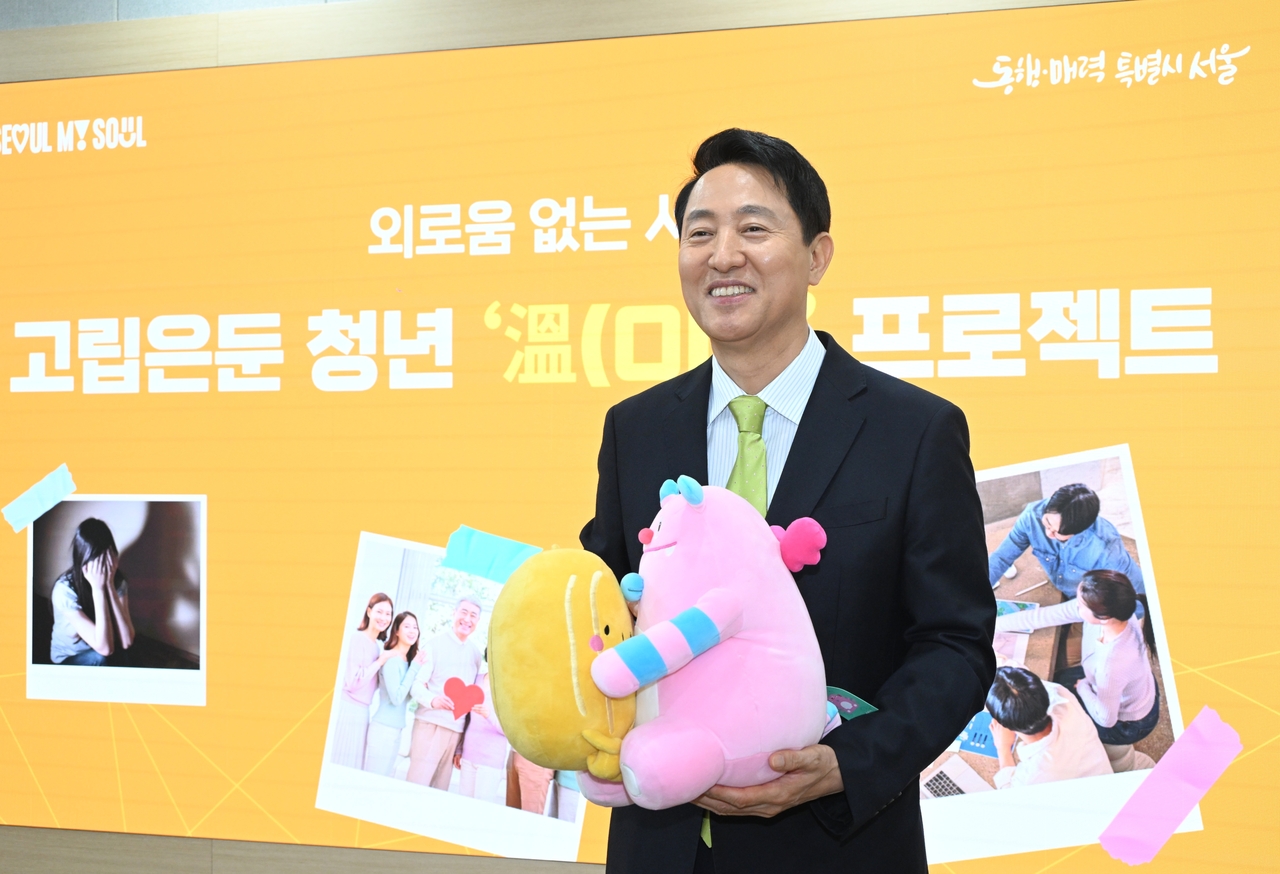
Seoul will spend more than 100 billion won ($66.4 million) over the next five years to address rising social isolation among young people, as the city estimates hundreds of thousands of residents are cut off from work, school and social life.
Mayor Oh Se-hoon said the initiative is an investment in the city’s future, not just a welfare measure.
“We will ensure that no young person is left behind in isolation and help them reconnect with society,” Oh said.
The metropolitan government on Monday unveiled the “On Project,” aimed at reconnecting isolated and withdrawn youth with families and society, with a cumulative target of 913,000 people by 2030.
A city survey last year found about 54,000 young people aged 19 to 39, or 2 percent of the population, were living in extreme withdrawal, defined as rarely leaving home for at least six months with no recent economic, job-seeking or academic activity. A further 194,000, or 7.1 percent, reported prolonged social isolation.
The plan focuses on early detection and family-based intervention, expanding screening and counseling services through local prevention and family support centers. Parent education programs will be scaled up more than tenfold this year to reach 25,000 participants, largely through online sessions.
Support for adolescents outside the school system will also be expanded, with one-stop service centers for isolated youth set to increase from four to nine by next year.
Seoul will introduce “living labs” for families, offering camps and counseling programs to help rebuild relationships, while opening five youth-focused mental health hubs near universities and major transit areas.
The city will expand 24-hour counseling services and roll out additional artificial intelligence-based mental health tools. A dedicated clinic for high-risk youth will open in July at a municipal hospital, providing treatment and financial support for those at risk of severe psychiatric conditions or self-harm.
To encourage reintegration, the program includes work experience opportunities such as digital content creation and online volunteering, along with small-group activities designed to help participants gradually rebuild social ties.
Seoul also plans to expand dedicated support centers and establish local hubs across all districts by next year.
Officials are exploring data-driven methods to identify at-risk individuals, including analyzing utility usage and food delivery patterns, alongside community-based detection systems.
hnpark@heraldcorp.com