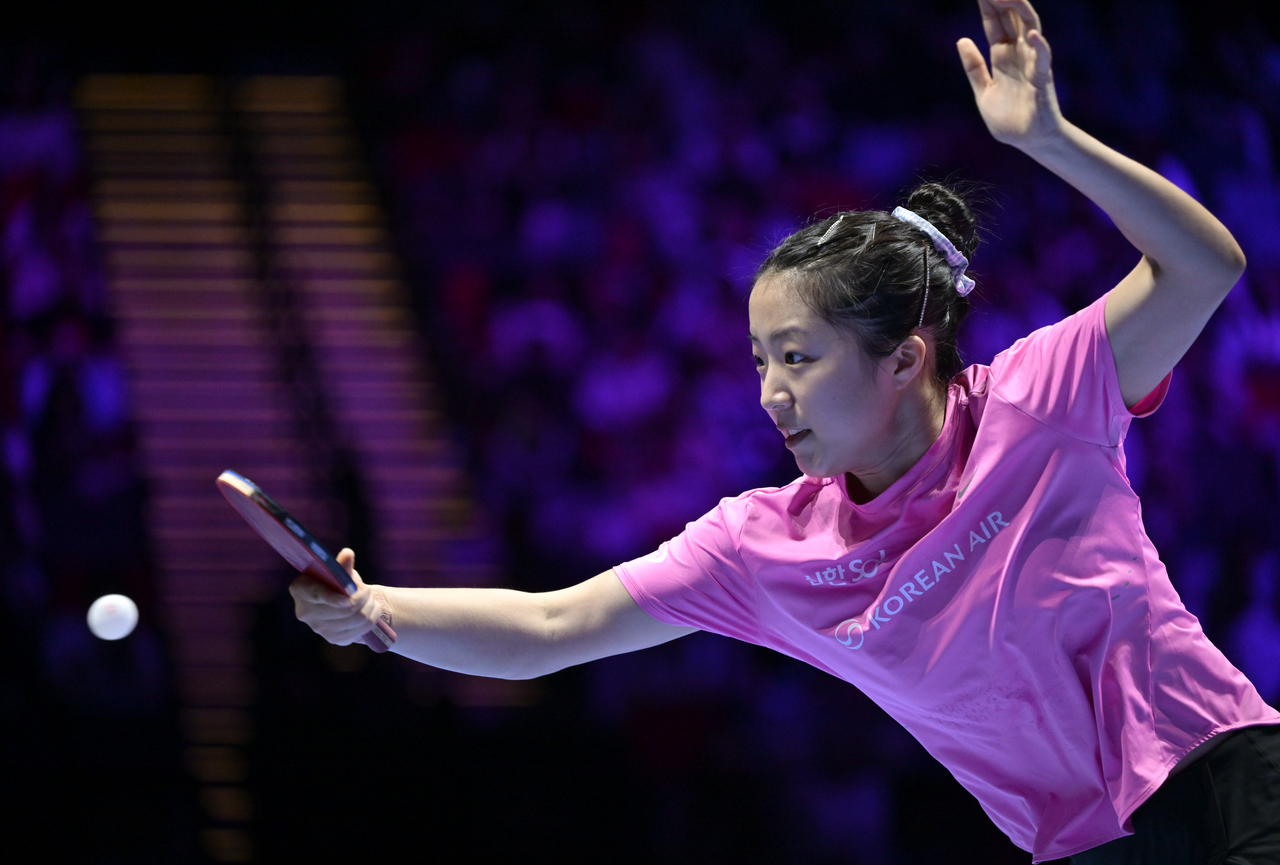
Shin Yu-bin made history in South Korean women’s table tennis by capturing the nation’s first-ever World Cup bronze medal, while also extending her generosity to those in need.
On Sunday, Shin fell to world No. 2 Wang Manyu of China in the semifinals of the ITTF World Cup Macao 2026 women’s singles, narrowly missing a spot in the final. She nonetheless secured a podium finish -- the first by a South Korean woman in the tournament’s history. The achievement is particularly significant given the event’s prestige and China’s long-standing dominance in the sport.
Shin’s philanthropy matched her athletic success. On Monday, Dangjin, South Chungcheong Province, announced that it had used a $66,000 donation from Shin, made through the Hope 2026 Sharing Campaign, to purchase 31,250 kilograms of rice for underprivileged residents. Branded “Dangjin Haenaru Shin Yu-bin Rice,” the 10-kg bags were distributed to local welfare centers and social service facilities.
The donation traces back to December last year, during the 2nd National Youth Table Tennis Festival with Shin Yu-bin at Dangjin Gymnasium. She previously made another donation in October 2024 to Dangjin and Suwon, Gyeonggi Province, bringing her total contributions to $132,000 over two consecutive years.
Shin’s relationship with Dangjin extends beyond charity. In September last year, the city named her a promotional model for Dangjin Haenaru rice, a partnership that has since expanded to include the youth table tennis festival. Her agency, Management GNS, said the donation was made in gratitude for her ongoing connection with the local community.
Shin’s giving extends to the start of her career. With her first paycheck, she bought sneakers for children at an orphanage. Since then, she has supported overseas training for elementary school table tennis players, backed women’s and youth table tennis programs and assisted vulnerable groups, including senior citizens living alone, single-parent and multicultural families, and children and adolescents in need of medical treatment.
(Translated and edited with ChatGPT/The Korea Herald)
khnews@heraldcorp.com