
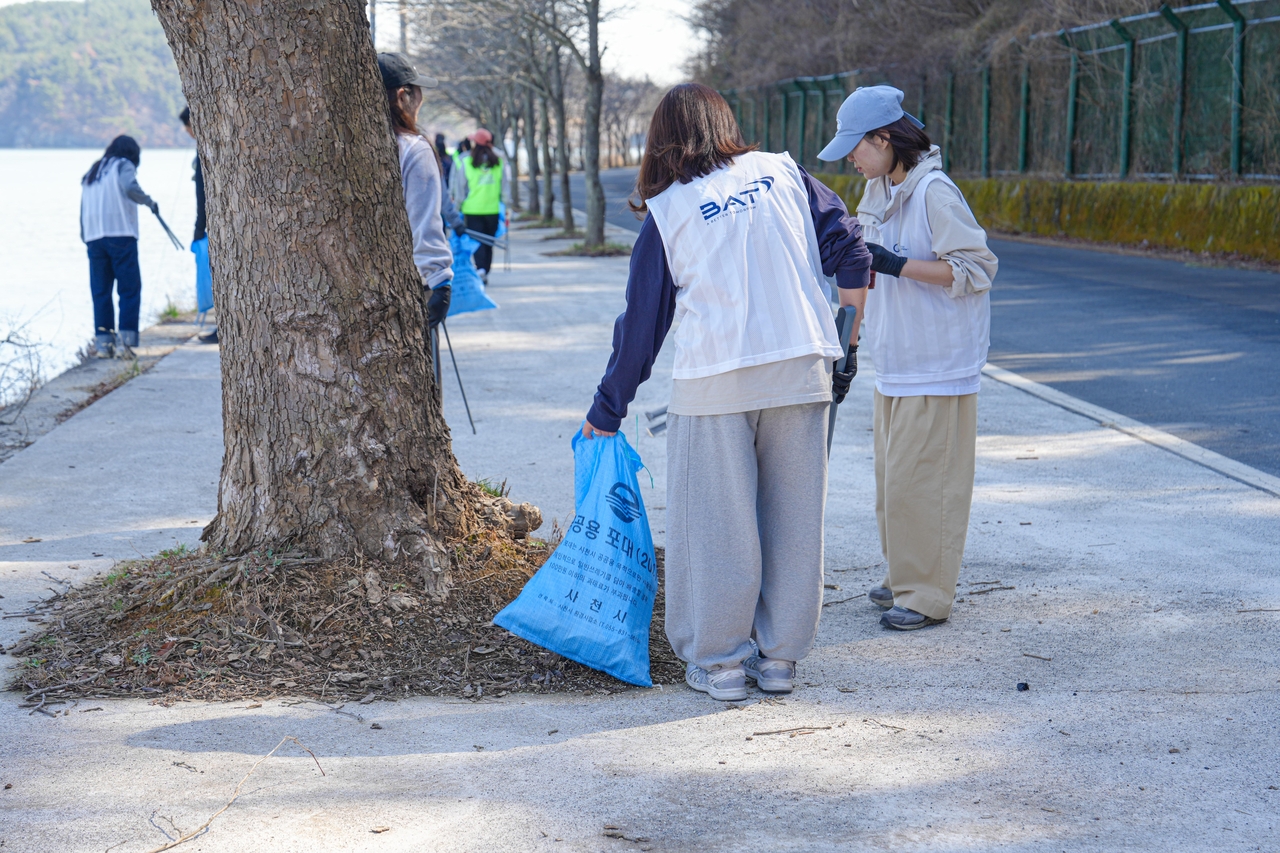
BAT Korea Manufacturing, the local production arm of global tobacco group British American Tobacco, is showcasing how ESG is evolving from one-off giving to sustained, community-focused action.
At its plant in Sacheon, South Gyeongsang Province, the company has been working with local governments, universities and public agencies to address water resource challenges — reflecting a broader trend toward participatory environmental, social and governance models that emphasize collaboration and on-the-ground impact.
The initiative has gained attention as BAT Korea Manufacturing secured the highest “Platinum” certification from the Alliance for Water Stewardship, demonstrating top-tier standards in water management and community engagement.
Expanding ESG from cleanup to conservation
Since 2023, the Sacheon plant has held annual plogging campaigns — combining jogging with litter collection — to mark World Water Day. Now in its fourth year, the program has evolved into a structured community initiative.
This year’s event, held on March 20, brought together about 70 participants from Gyeongsang National University, Sacheon City, the local chamber of commerce, and the Korea Water Resources Corporation.
Notably, the campaign expanded into Gwangpoman Bay, a protected wetland and habitat for endangered migratory birds known for its salt marsh ecosystem. The site has recently faced growing concerns over pollution and habitat degradation, underscoring the need for sustained conservation efforts.
Unlike earlier campaigns, this year’s program incorporated environmental education. Participants joined guided ecological tours, learning about wetland preservation and biodiversity while observing bird species and local ecosystems.
The shift reflects a move from simple cleanup efforts to deeper engagement with environmental issues, helping participants understand the broader role of wetlands in water resource systems.
From participation to restoration
The company’s participatory approach is closely tied to its broader water management strategy.
BAT Korea Manufacturing treats and reuses around 60,000 tons of wastewater annually from its operations, while working with local authorities on water quality monitoring and flood prevention.
More recently, the company has expanded its efforts to include restoration projects. In partnership with local university researchers, it is restoring a centuries-old well in Singi Village, which had been abandoned following the introduction of modern water supply systems.
The well, once a key drinking water source for 300 to 400 years, is being rehabilitated to potable standards, with plans for ongoing monitoring to ensure long-term sustainability.
The project aligns with key requirements under AWS certification, particularly the protection of “Important Water-Related Areas.”
jwjeon7625@heraldcorp.com