

To the Hangeul supporters, it is an act of confidence. To opponents, a passing trend. Gwanghwamun Gate stands waiting.
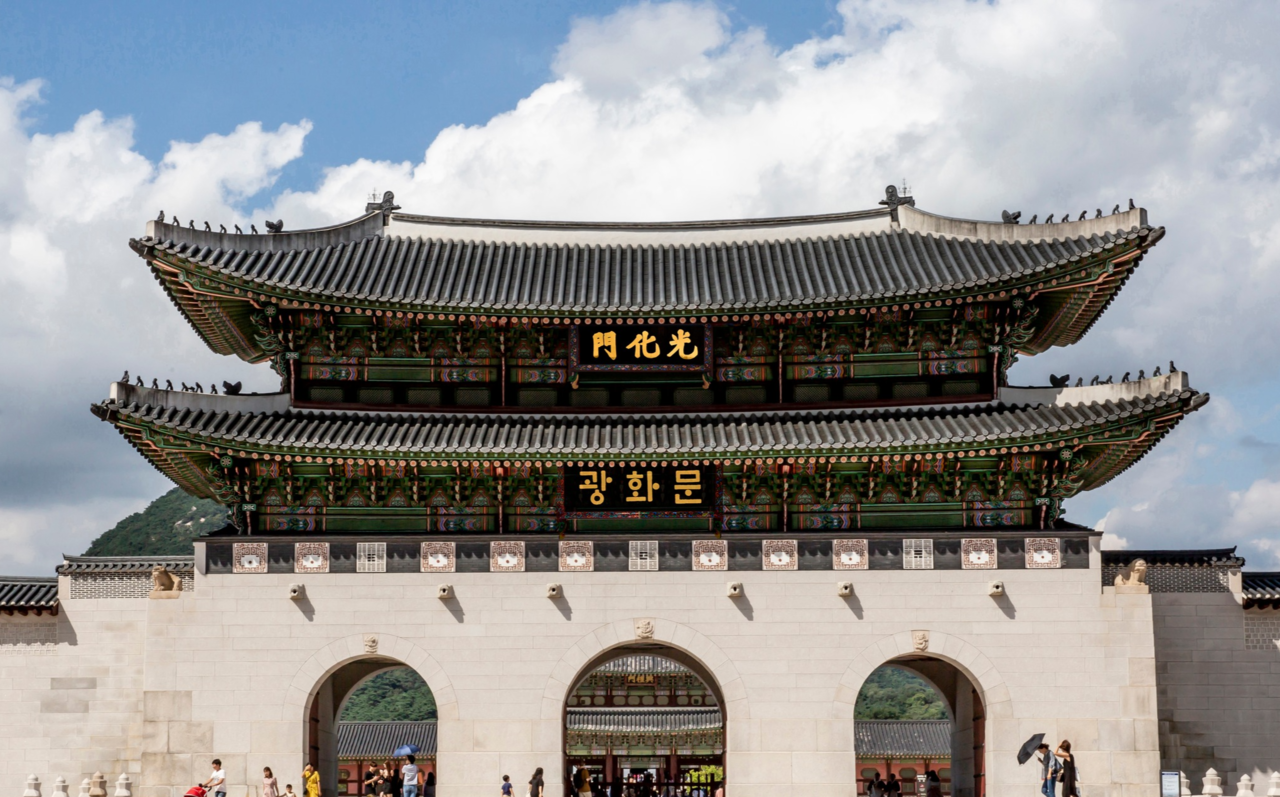
The main gate of Gyeongbokgung in central Seoul has long been more than an architectural landmark. Gwanghwamun is, as both defenders and critics tend to agree, the face of Korea.
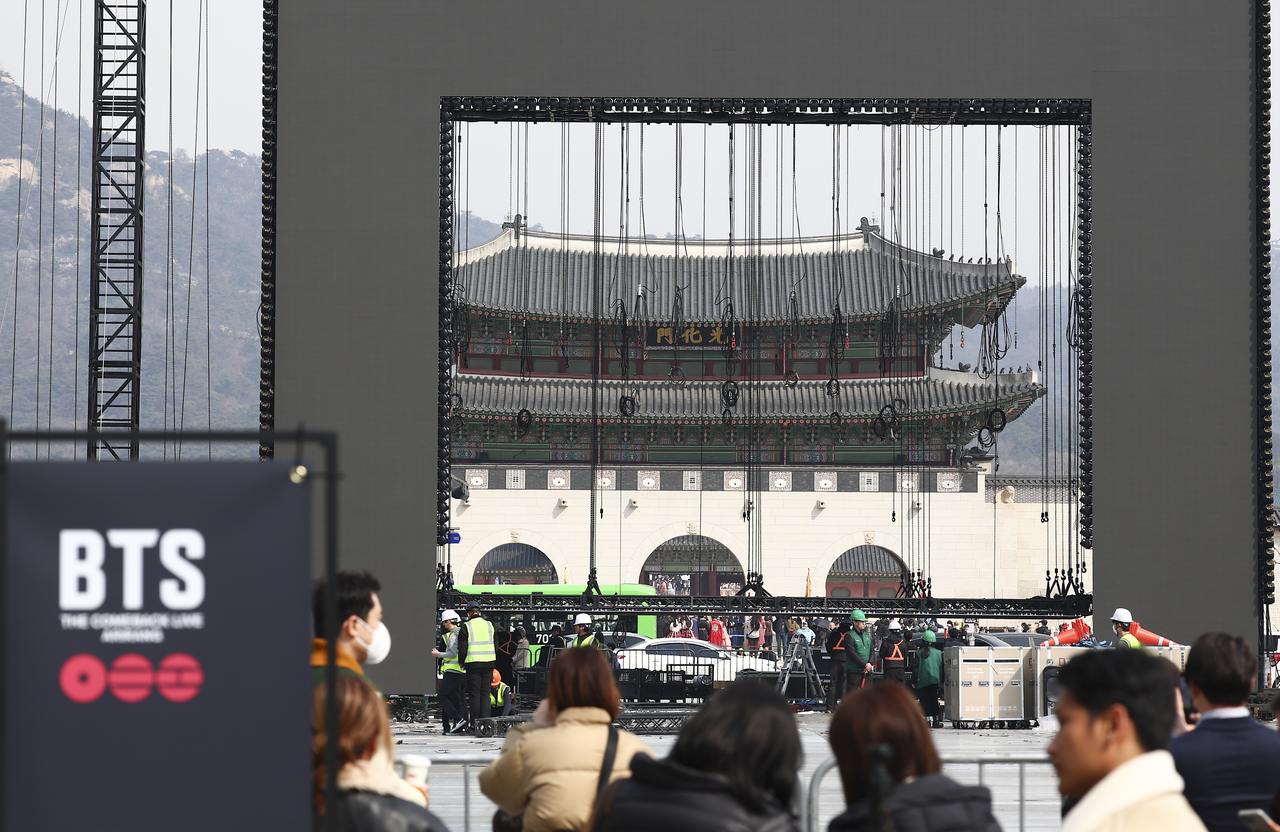
That point was driven home just weeks ago when BTS held their long-awaited reunion concert on the plaza stretching before the gate, drawing throngs of fans and beaming the image of Gwanghwamun to audiences across the globe.
Now, the gate sits at the center of a different kind of spectacle: deciding whether its sign should be written in Hangeul or Chinese characters.
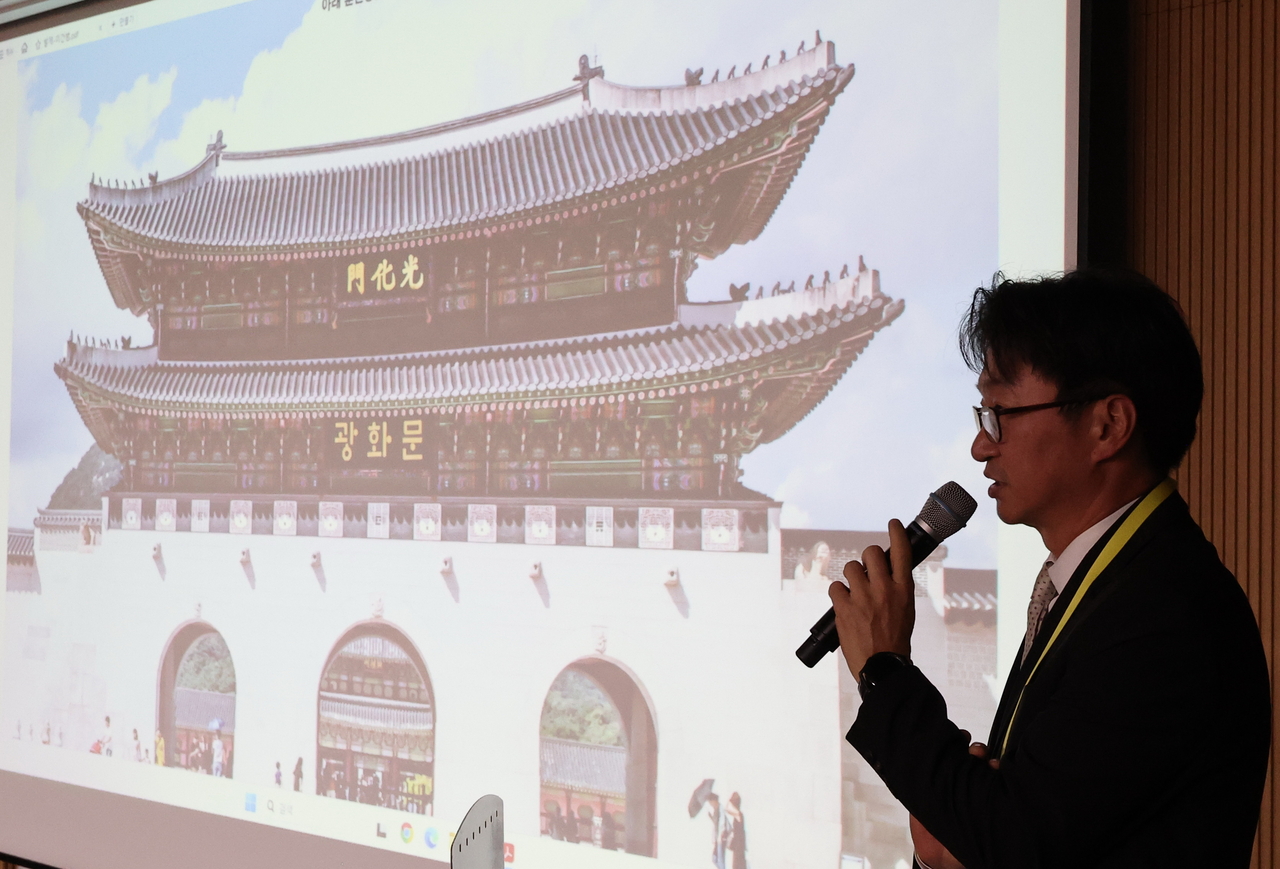
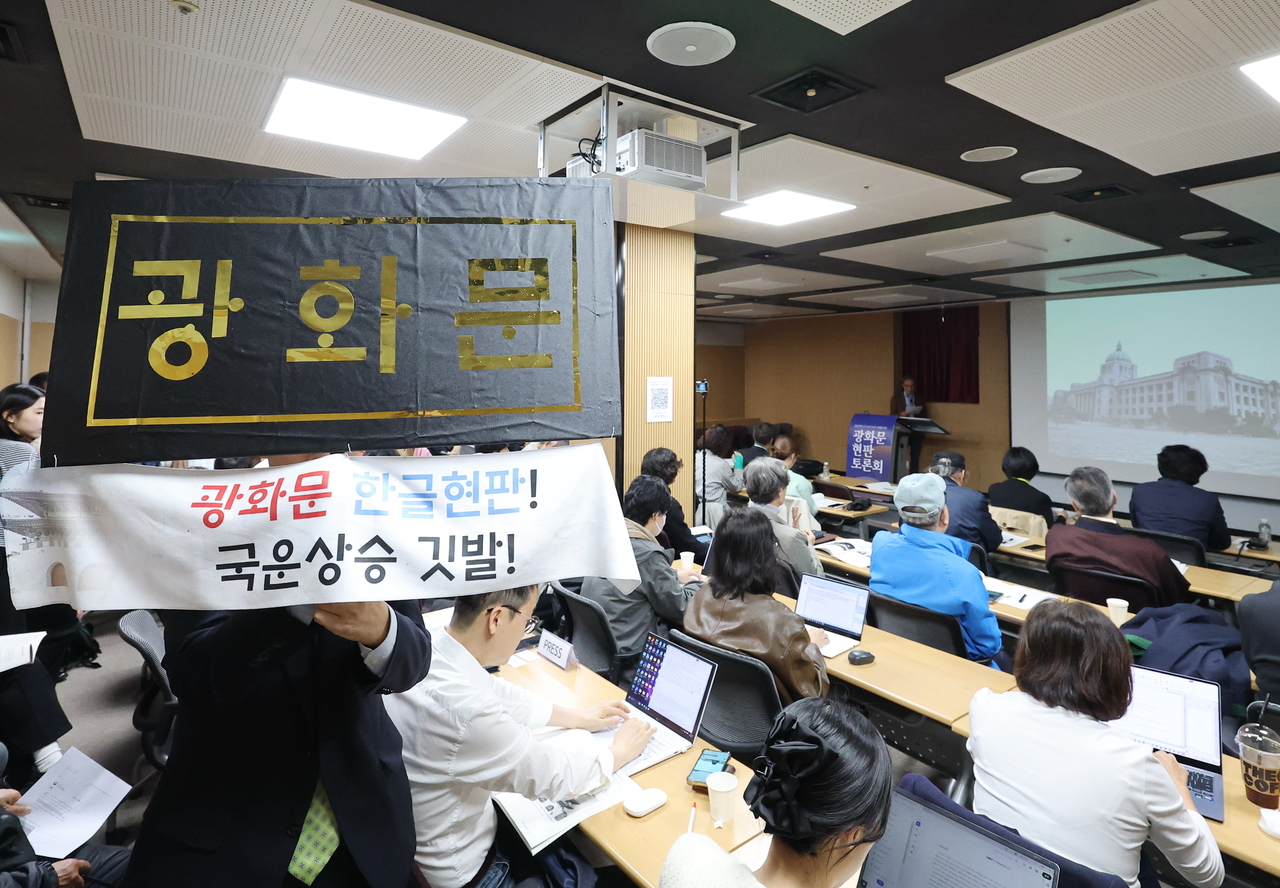
The Ministry of Culture, Sports and Tourism held a public forum Tuesday at the National Museum of Korean Contemporary History to facilitate the debate, and the room — lined with historians, architects, calligraphers and policy advocates — did not lack for opinions.
Supporters say a Hangeul sign would honor the spirit of the age as a natural reflection of Korea's surging cultural confidence. Opponents called it chasing passing trends, a mistake no serious custodian of history should make.
"Gwanghwamun is the front gate of the palace where Hangeul was born," said Kim Ju-won, president of The Korean Language Society, referring to King Sejong's creation of the Korean writing system in the 15th century. "Installing a Hangeul plaque is an act of cultural progress.
"It is a distortion of history," said Choe Jong-deok, former director of the National Research Institute of Cultural Heritage. "Modifying a cultural heritage site based on the mood of the times is manipulation of historical material evidence," he added.
Lee Keon-bum of the Hangeul Cultural Solidarity, who argued in favor of the addition, framed the debate in terms that go beyond preservation.
"We must look at this not merely through the lens of cultural heritage, but through the broader and higher lens of national identity," he said. The current Chinese-character plaque, he argued, is a category error — a question of who Korea is, not just what it has inherited.
"I used to think it should be Hangeul only," he said. "But if the two coexist, the gate becomes something new — a living record of how our history has moved, a document of cultural transition that we can offer to the world and to our descendants."
Surprisingly, the plaque now hanging above the gate is only three years old.
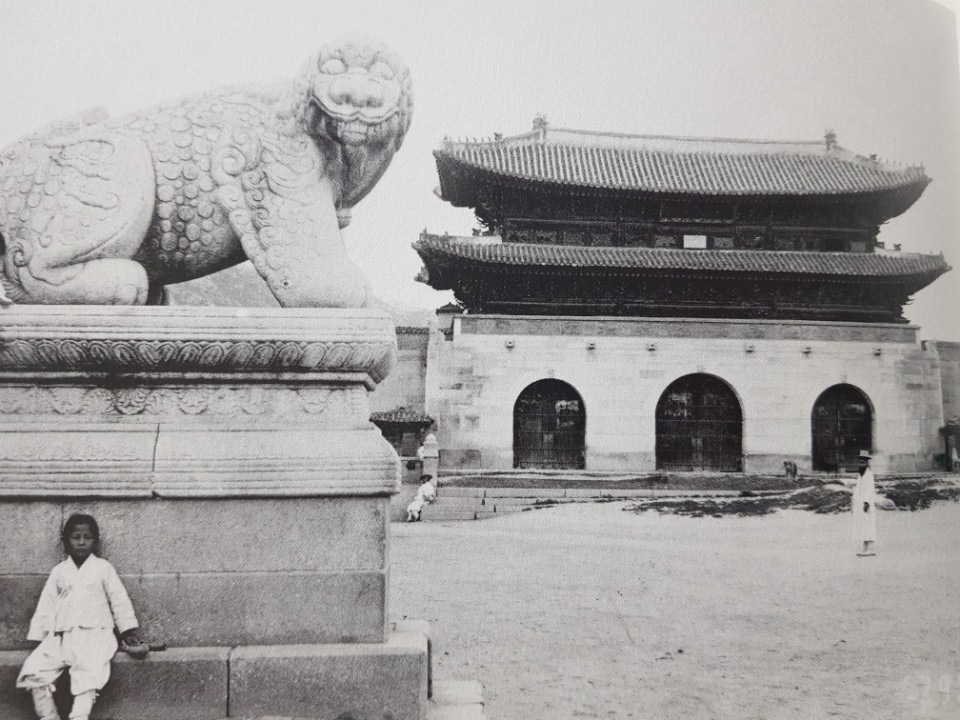
The original Gwanghwamun was built in 1395, but destroyed during the 1590s Japanese invasions and reconstructed in the 19th century. The calligraphy for its name plaque, done by a Joseon military official, was rendered in Chinese characters. That version burned during the Korean War (1950-1953).
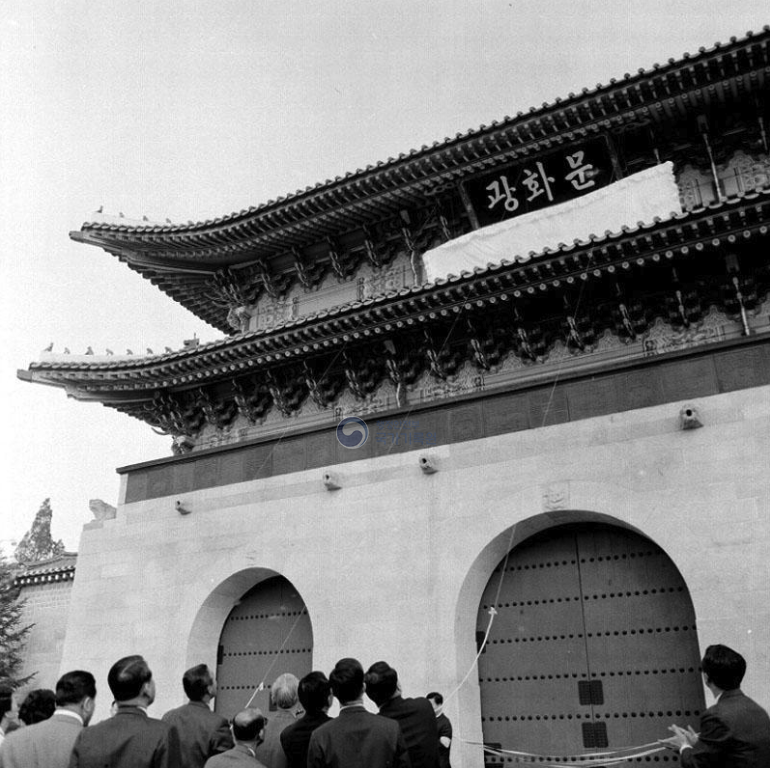
In 1968, military strongman Park Chung-hee rebuilt the gate in reinforced concrete and hung a plaque in Hangeul bearing his own handwriting. In a country deeply ambivalent about his legacy, having Park's personal calligraphy above the palace gate sat uneasily with many.
In 2010, a restoration project replaced Park's Hangeul sign with a version of the original Chinese-character plaque, reconstructed from a 19th-century black-and-white photograph. Three months later, the wood cracked. Then, historians noticed the background color was wrong. After 13 years, a corrected version finally went up in 2023.
The latest chapter began in 2024, when then-Culture Minister Yoo In-chon proposed replacing the plaque with a Hangeul version. The suggestion was swiftly blocked by the head of the Cultural Heritage Administration, who argued it violated restoration principles. This past January, current Culture Minister Choe Hwi-young brought a revised proposal to a cabinet briefing with President Lee Jae Myung: keep the existing Chinese-character plaque, but add a Hangeul plaque beneath it.
"Gwanghwamun gets enormous foreign tourism," Minister Choe told a cabinet meeting. "Having only Chinese characters doesn't seem appropriate." He cited the Forbidden City in Beijing, where plaques in both Chinese and Manchu script have coexisted for centuries, as a precedent.
The culture ministry plans to open a public comment board on its website in early April, to be followed by a survey of expert opinion and a broader national poll, before moving to concrete policy decisions.
gypark@heraldcorp.com