Busan’s Dalmaji Hill draws ultrawealthy with rare 10 billion won villas
For years, Busan’s luxury real estate story was easy to tell: look to Marine City.
With its cluster of high-rise apartments facing Haeundae Beach, the district became the city’s defining symbol of wealth. But that map is starting to shift.
Just uphill, Dalmaji Hill — Busan’s onetime enclave for the affluent — is staging a comeback, drawing a new wave of ultrawealthy buyers and reshaping the city’s luxury housing landscape.

What makes this shift notable is geography. In South Korea, ultraluxury housing has long been concentrated in Seoul and its surrounding areas. Villas priced around 10 billion won ($6.7 million) are rare even in the capital — making their emergence in Busan highly unusual.
From skyline to hillside
Dalmaji Hill was once the city’s traditional “rich neighborhood,” home to professionals, artists and business elites drawn by its panoramic ocean views and favorable topography.
But as newer developments took over the coastline, attention moved to Marine City and Centum City, where high-density towers came to define modern affluence.
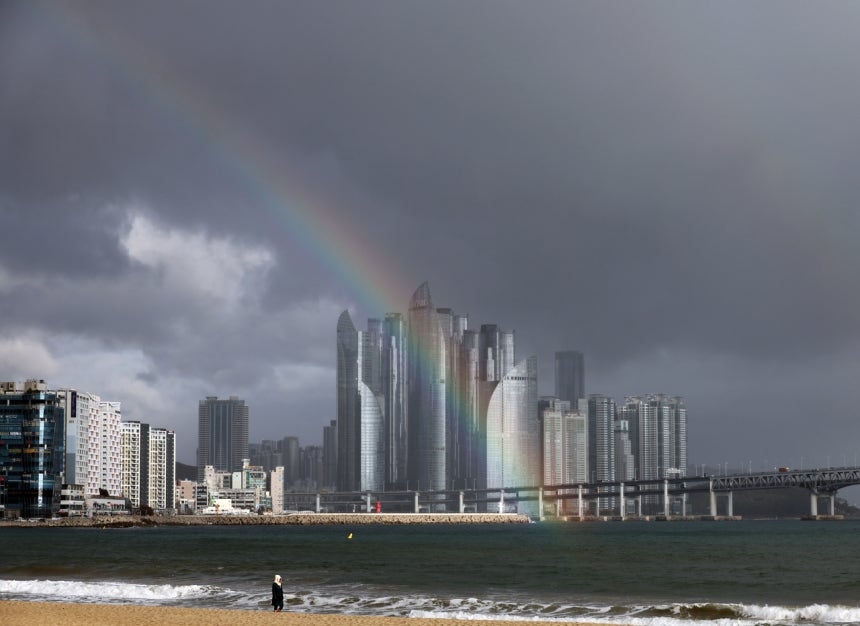
Now, the trend is reversing — but in a different form.
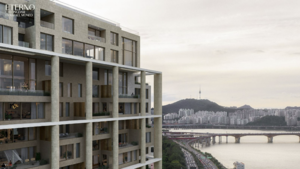
Instead of skyscrapers, developers are betting on low-rise, ultraexclusive villas: fewer units, more privacy and unobstructed views stretching across Haeundae, Gwangan Bridge and beyond.
The 10 billion won villa era
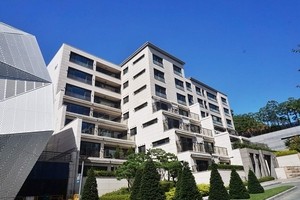
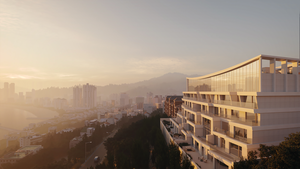
At the center of this shift is Atherton Upper House, a boutique complex of just 11 units perched on Dalmaji Hill.
With unit prices ranging from around 7 billion won to as high as 10 billion won, it marks the first time such ultrahigh-end villas have been introduced in a regional market.
The project also drew attention at launch in 2023 as Korea’s first residential development to incorporate NFT-based digital art. Works by digital artist Krista Kim are displayed across private units and shared spaces via LED panels.
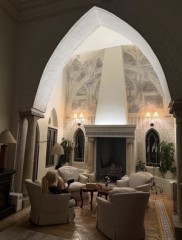
The design was led by architectural group STRX. All units feature gallery-style lounges and rooftop gardens, while larger residences offer both ocean and forest views. Parking is allocated at up to 4.1 spaces per unit.
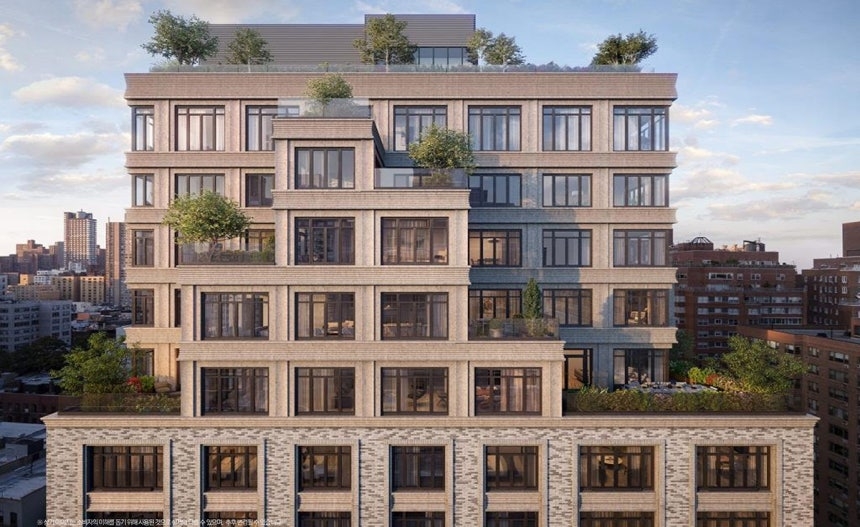
Nearby, Sangji Kailoom Haeundae follows a similar path. With just 12 units and a project scale exceeding 1.6 trillion won, it reinforces Dalmaji’s repositioning as a low-density luxury enclave.
Why Dalmaji — and why now?
Scarcity is a key factor.
Unlike Marine City’s dense skyline, Dalmaji offers what wealthy buyers increasingly value: exclusivity, space and privacy. Height restrictions — once seen as a drawback — now preserve views and limit supply, enhancing its appeal.
There is also a broader shift in how luxury is defined.
“High-net-worth buyers are moving away from standardized apartments toward more curated living spaces,” an industry official said. “Dalmaji offers that differentiation.”
The area’s layered history adds to its appeal. Once developed as a golf course during the Japanese colonial period and later used by US forces, it eventually became a residential district — even including land once owned by Samsung founder Lee Byung-chul.
A second act for Haeundae
Dalmaji’s revival could also reinforce Haeundae’s broader dominance in Busan’s property market.
The district continues to lead high-end transactions, with landmark complexes such as LCT and The Zenith commanding some of the city’s highest prices. But the shift toward Dalmaji signals a change within Haeundae itself — from high-rise density to low-rise exclusivity.
Nam Hyuk-woo, a researcher at Woori Bank’s real estate research center, described Haeundae as “the Gangnam of Busan,” citing its proximity to workplaces, coastal setting and relatively flat terrain as key advantages.
He added that the presence of multiple redevelopment projects in areas with a legacy as affluent neighborhoods could further support an improvement in market sentiment.
By Herald Business reporter Hong Seung-hee (hss@heraldcorp.com)
Edited by Korea Herald Business Desk Editor Lee Ji-yoon (jylee@heraldcorp.com)
The original Korean version of this story is available at:



![[The Ultrarich] Hanwha pitches Muwa Niseko to ultrarich skiers](https://wimg.heraldcorp.com/news/cms/2025/09/18/news-p.v1.20241224.f4ef77f895a34f18970c4429c37828f1_T1.jpg?type=h&h=240)