From smart offices to automated utilities, new Seoul education office offers glimpse into future workplaces in public sector
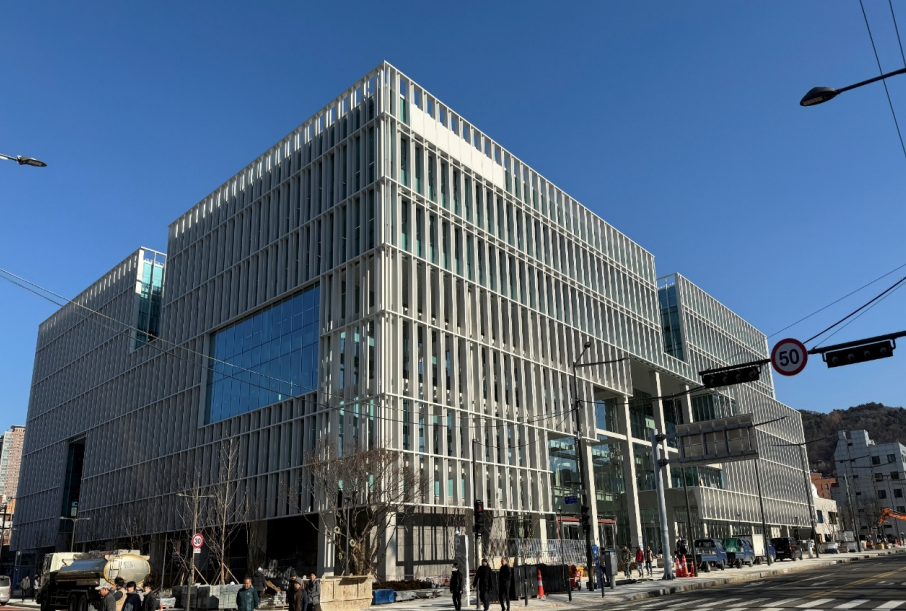
Seoul Metropolitan Office of Education staff began working Monday at their new headquarters in Yongsan-gu, Seoul, after the city’s education authority started relocating from its longtime office in Seodaemun-gu on March 16.
“We basically finished moving in on Friday, and most of our employees are now working from Yongsan,” Kang Seong-wook, a Seoul education official overseeing the relocation, told The Korea Herald. “The official opening ceremony is scheduled for April 1.”
As the newest public building completed in Seoul, the office offers a glimpse into how Korean workspaces, particularly in the public sector, are changing.
Challenging but innovative construction
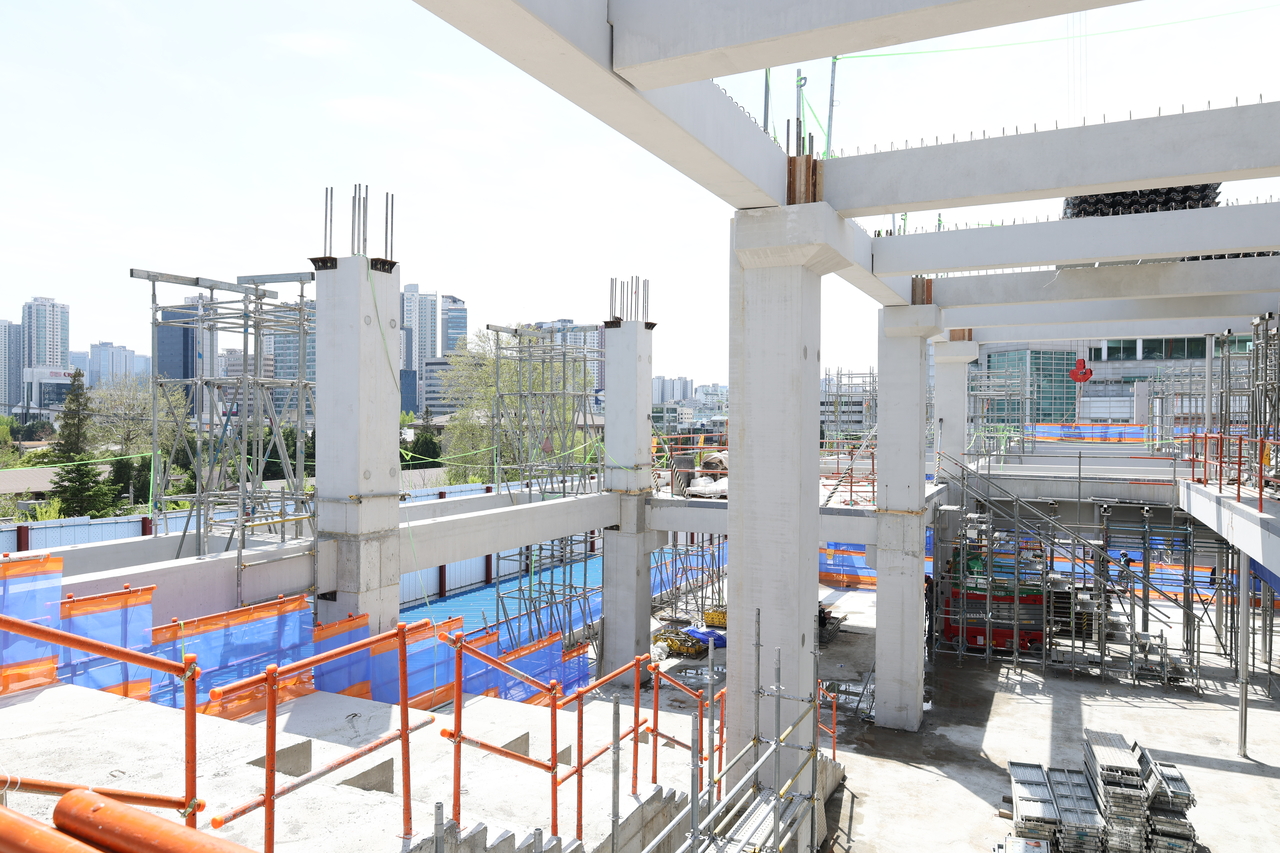
The six-story building took four years to complete after contaminated soil was discovered at the construction site, delaying construction by nearly a year.
To speed up the project and reduce costs, builders adopted a precast construction method, in which concrete components are produced off-site in reusable molds and then transported for on-site assembly.
Precast construction is generally seen as more efficient than traditional methods. But it also requires precise planning, as designs must be finalized before production begins and logistics carefully coordinated to move materials.
‘Smart office’ system
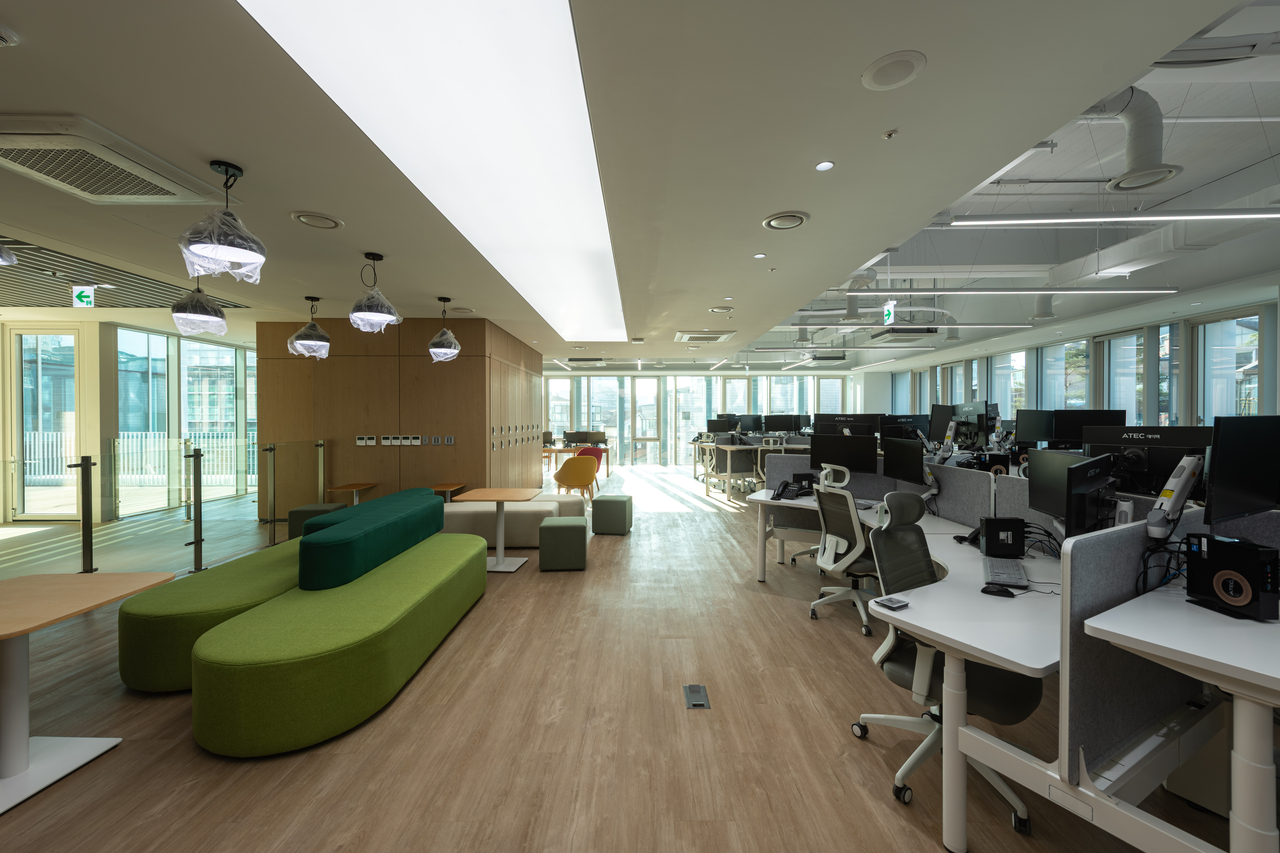
When Kang arrives at work in the morning, he selects a seat on the second floor and logs on to a computer. A digital name tag then lights up with his name.
“We operate a smart work center on the second floor that can accommodate about 10 percent of our entire workforce,” Kang said. “Within that center, employees are free to choose where they want to work.”
In addition to the second-floor center, the fourth through sixth floors also operate as smart workplaces, with no assigned desks within each department’s section.
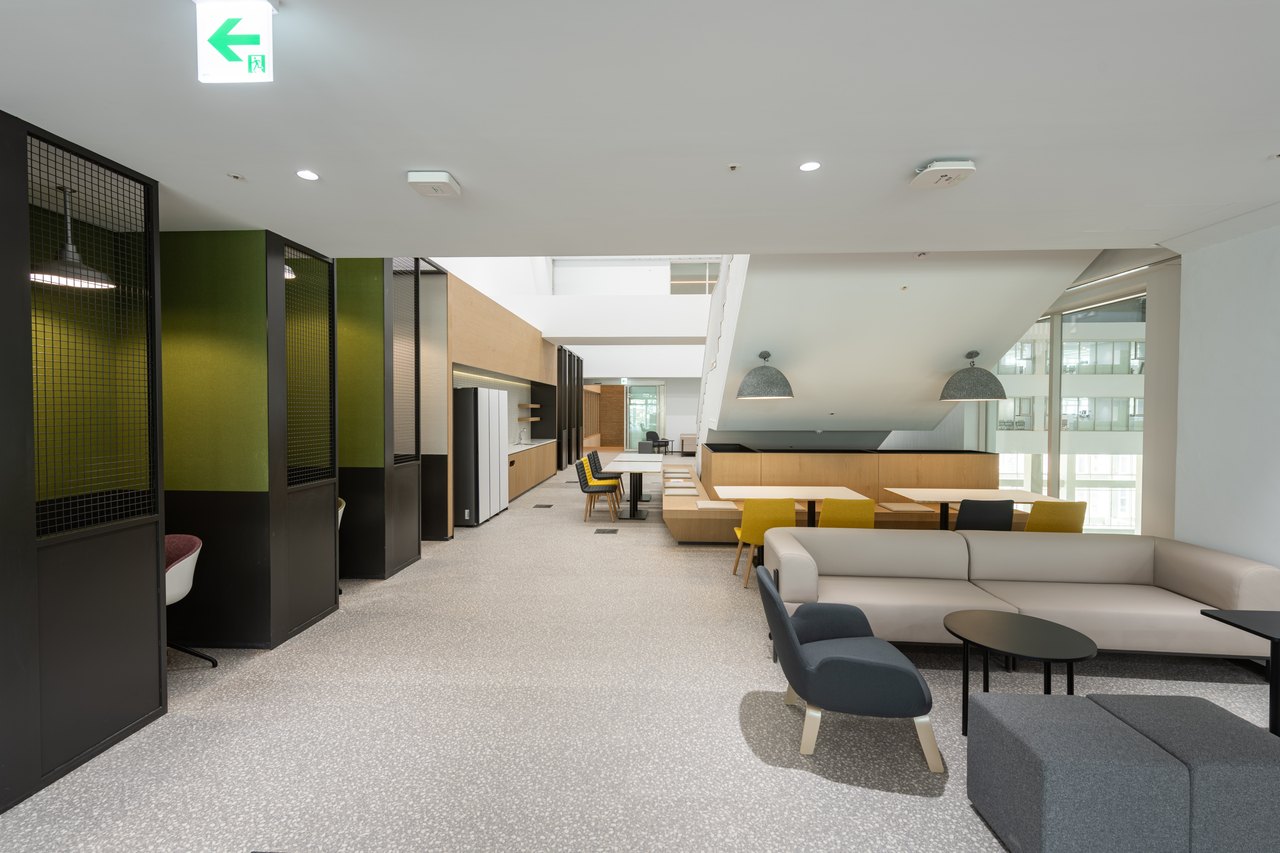
There are no partitions, and the building includes a large shared rest area.
“We wanted to break down barriers both within and between departments so employees can better understand one another’s work,” Kang said. “It is part of the government’s broader goal of innovating workspaces in public facilities.”
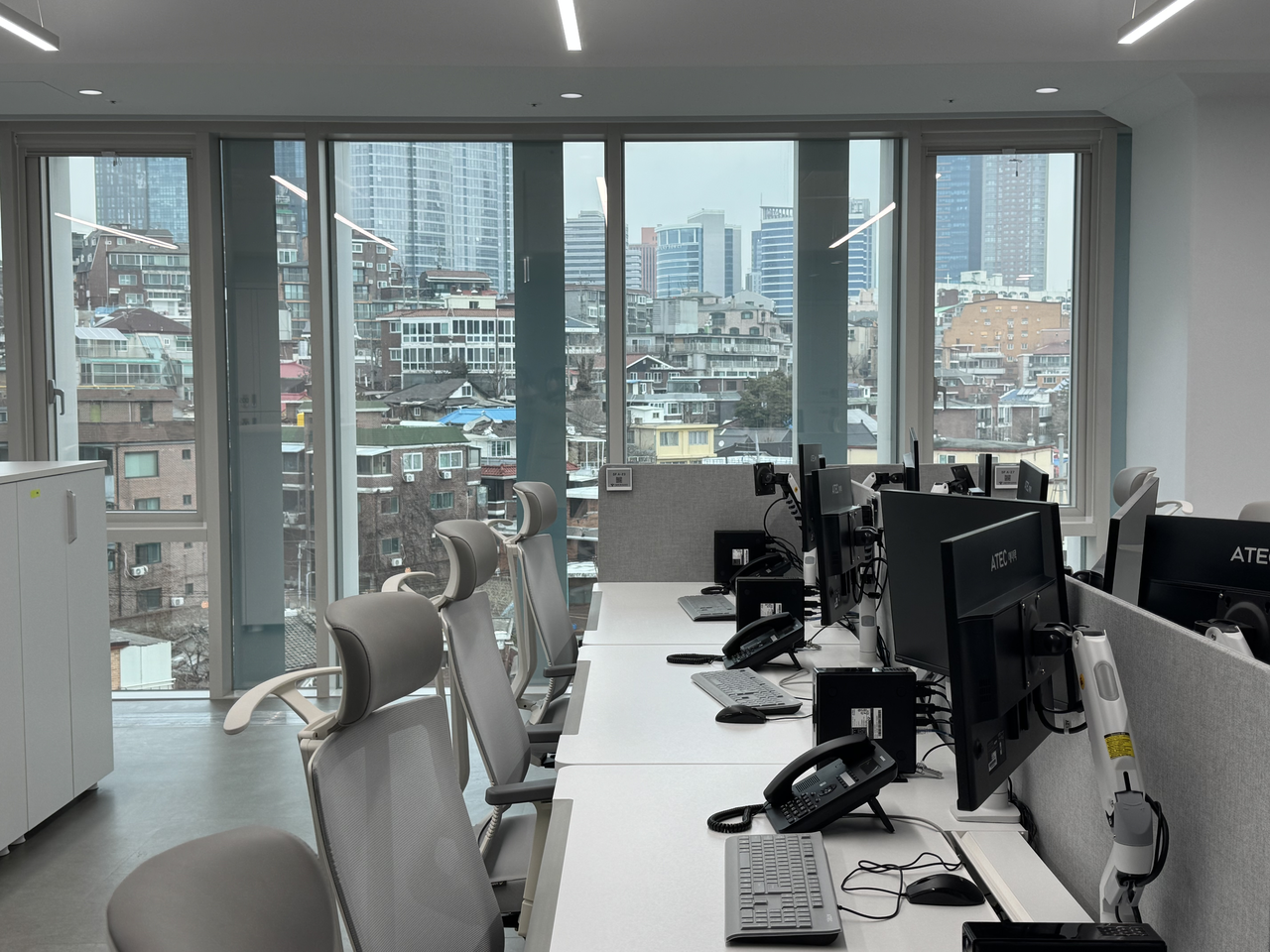
The desks and chairs are also height-adjustable, allowing employees to work while standing if they choose.
The Seoul education office said it is the first regional education office in the country to adopt a fully integrated smart office system, although the Gyeonggi Provincial Office of Education operates a partial version.
Automated building systems
The office also said utilities in the 13,000-square-meter building are managed through an automated remote-control system.
“All the lighting and around 30 mechanical and electrical systems are managed through a comprehensive control system,” Kang said.
The building is three times as energy-efficient as the education authority’s former headquarters, using geothermal energy to power its systems. Heating and cooling are delivered through floor-level vents, allowing temperatures to be adjusted more quickly while maintaining energy efficiency.
Open community space
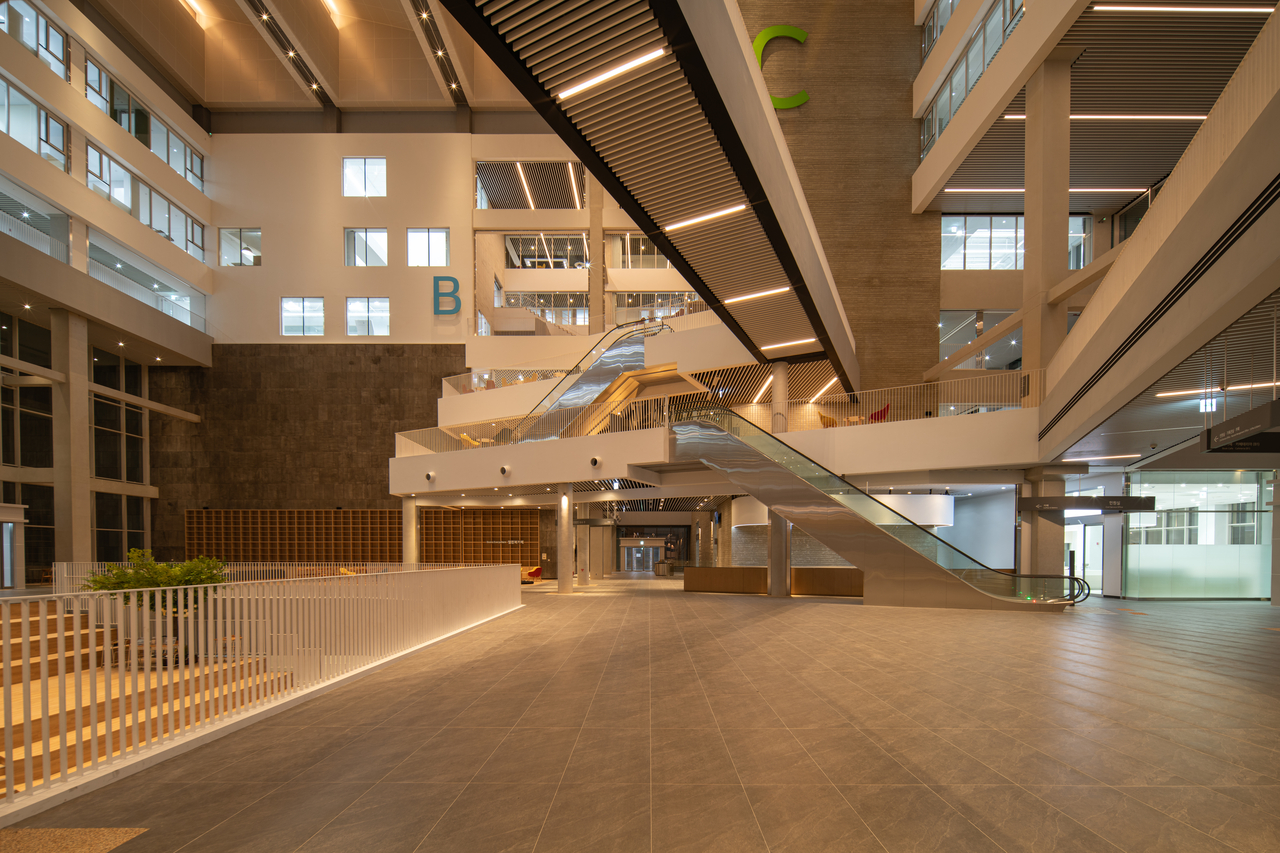
Even before the office officially opened, middle school students could be seen walking through the lobby, laughing and spending time there.
“From the basement to the third floor, we operate a shared space that is open to the local community,” Kang said.
The area includes lounges, benches and artwork, as well as three large stepped seating areas where visitors can sit and gather.
“We opened the space so that more Seoul residents could enjoy reading and take part in cultural activities here,” he said.
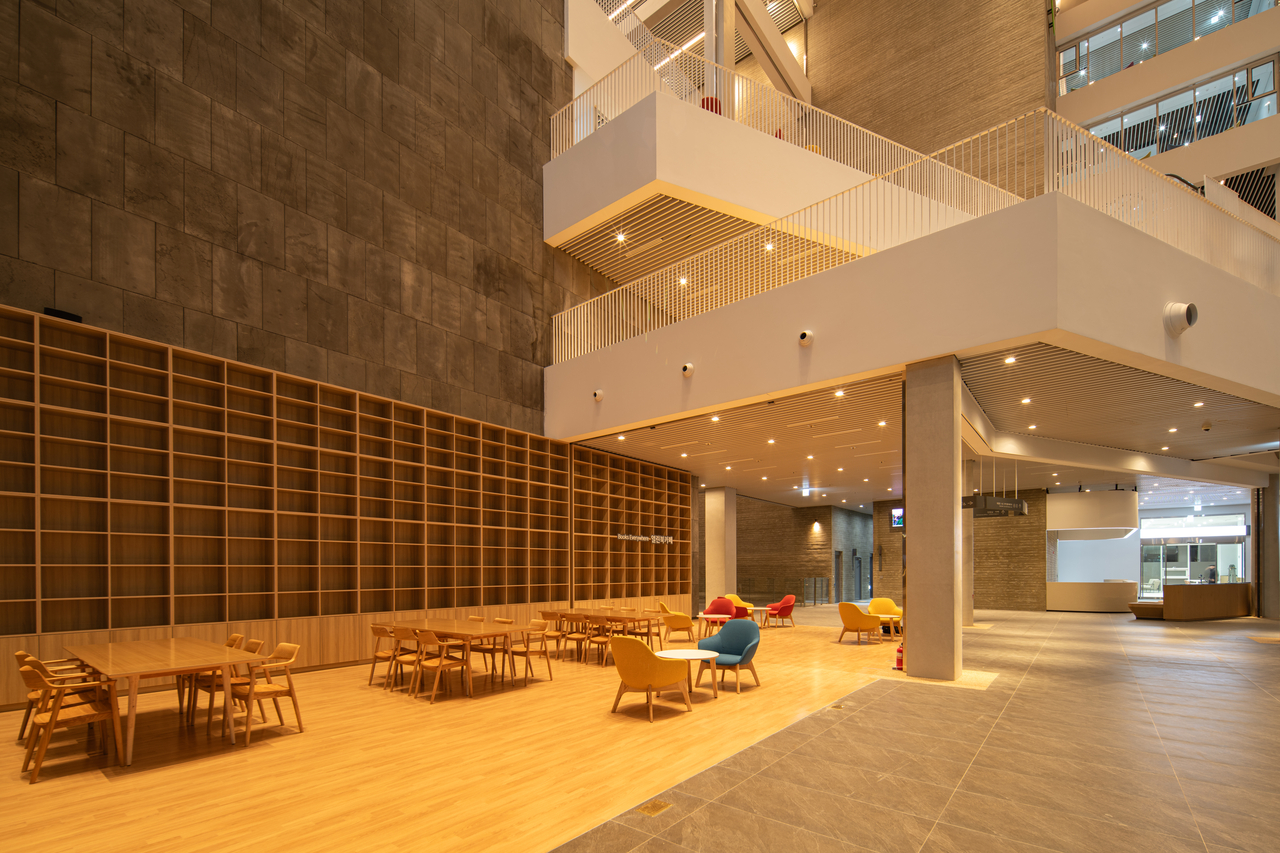
The lower floors also include large meeting rooms and auditoriums that members of the public can rent for events.
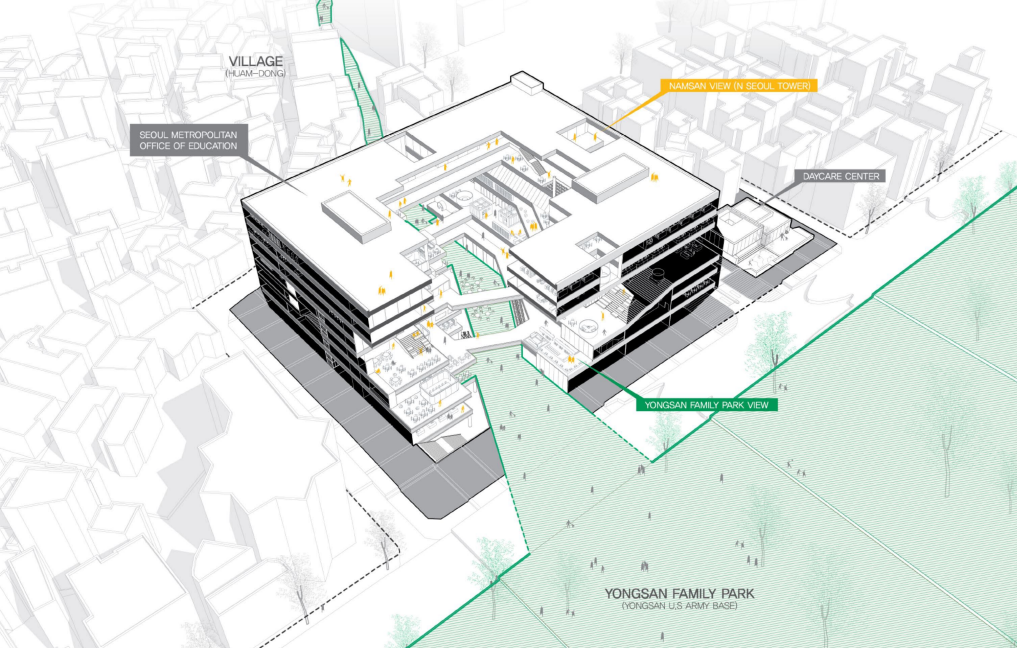
“The hope is that the building will serve as a bridge linking N Seoul Tower, the surrounding neighborhood and Yongsan Family Park,” Kang said. “We did not want it to become an eyesore that blocks the area.”
The building is located in Huam-dong, Yongsan-gu, at the foot of Namsan, home to the iconic N Seoul Tower. Across the street is the site of a former US military base, which the Seoul Metropolitan Government plans to turn into Yongsan Family Park.
"We opened this space to the public as we wanted to coexist with this neighborhood," Kang added.
seungku99@heraldcorp.com